
How to use this page
How this page helps you choose the right mini excavator
Choosing the right mini excavator comes down to a handful of decisions, and this page walks you through them in the order that matters most. Get those right and you end up with a machine that suits the work and the budget, without the expensive surprises that tend to show up after delivery. When you are ready, a single brief puts your spec in front of several verified Australian suppliers at once, so every quote you compare is built on the same requirements.
Common setups
The three most common mini excavator setups
Most buyers land on one of these three. Find the one closest to your work, then use the sections below to fine-tune the spec before you send for quotes.
Cost breakdown
What a mini excavator costs, by size class
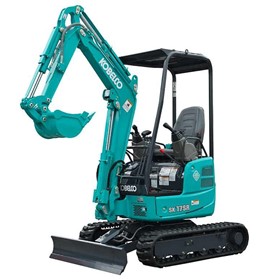
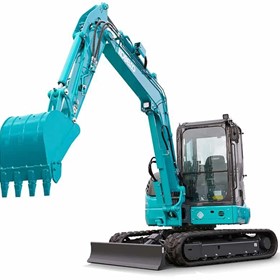
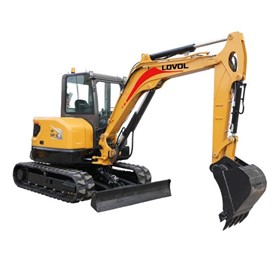
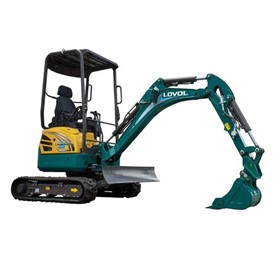
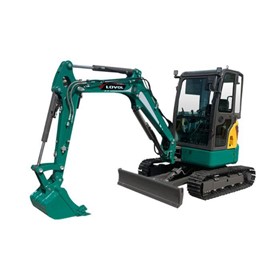
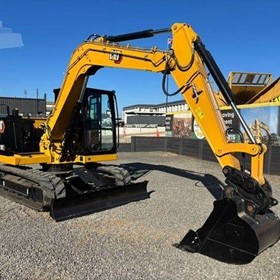
A mini excavator, also called a compact excavator or mini digger, runs from about $18,000 for a 1 t machine up to $90,000 or more at the upper end, around 3.5 t for most mini excavator buyers. Size class sets the band. Brand tier, cab versus canopy, and new versus used then swing the price within it. The machine is rarely the full cost: a hitch and a couple of attachments add to it. If you are weighing up a mini excavator for sale, start with the size class your sites and digs need. New mini excavator prices and used prices both sit within these bands, with used typically lower for the same size class.
| Size class | Typical price AUD, GST inclusive, Australian supplier | Best fit |
|---|---|---|
| 1.0 - 1.7 t | $18,000 - $35,000 | Landscapers, plumbers, and owner-builders: backyards, tight gates, and limited access |
| 1.8 - 2.5 t | $28,000 - $55,000 | The most common all-rounder for hire fleets and small civil: trenching, footings, and drainage |
| 2.6 - 3.5 t | $45,000 - $90,000 | The upper mini range: heavier drainage, landscaping, and small civil with more reach and depth |
Size class
What size mini excavator do you need
Size class is the decision everything else hangs off. It sets price, dig depth and reach, transport, and where the machine can physically go. Buyers searching for small excavators for sale are usually choosing within this range. Pick it on two limits: the tightest access it has to fit through, and the deepest, heaviest job you actually need it for.
| Size class | Best fit | Trade-off |
|---|---|---|
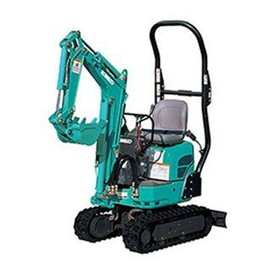
| 1.0 - 1.7 t | Backyards, tight gates, indoor and limited-access work. Clears a standard 900 mm gate with the blade up. | Easiest to transport and often towable on a car licence, but the least dig depth and reach |
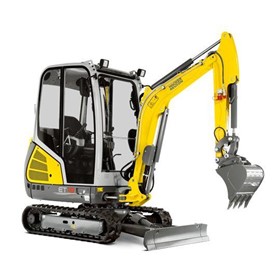
| 2 tonne | Tight sites, trades, and small trenching. A step up in dig depth while staying easy to move. | A common first machine for owner-operators who want more than the smallest class |
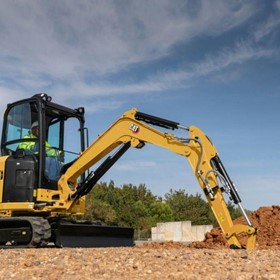
| 2.5 tonne | The stronger all-rounder: better reach and stability, still compact enough for most access. | The most popular size for hire fleets and small civil work |
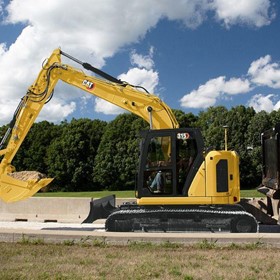
| 3.5 tonne | The upper end of the mini excavator range: heavier drainage, landscaping, and small civil. | Most dig depth and lift on this page, but needs a braked trailer or float to move |
Tail swing
Choosing your tail swing: zero or conventional
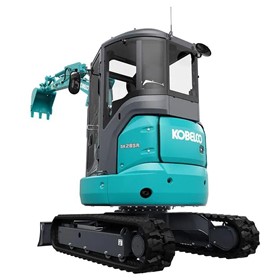
Tail swing is how far the back of the machine overhangs the tracks when it spins. It decides whether you can work hard against a wall, fence, or trench edge without clipping it. On tight residential and urban sites it is a real selection driver, not a nice-to-have.
Transport and towing
Moving the machine between sites
How you move the machine is part of buying it, not an afterthought, and it can change the size class you should buy. Many smaller machines can be towed on a standard car (Class C) licence, but the licence is only one factor: your vehicle's tow rating, the trailer's rating, and the combined weight all have to line up too.
| What to check | What it means | Why it matters |
|---|---|---|
| Combined weight | The machine, the trailer's own weight, and any attachments, added together. | The total has to sit under both your vehicle's towing capacity and the trailer's rating. The lower of the two is your legal limit |
| Licence class | A Class C licence covers a vehicle-and-trailer combination up to 4.5 t, but it is only one of the limits. | A 1.0 to 1.7 t machine on a plant trailer often stays inside a Class C licence, but you still have to check the limits below |
| Vehicle and trailer ratings | Your vehicle's towing capacity and gross vehicle mass (GVM), and the trailer's rated aggregate trailer mass (ATM), each cap the load. | The lowest of these, not the licence, sets your real legal limit. Being under 4.5 t does not on its own make a tow legal |
| Trailer brakes | Heavier trailers need brakes on all wheels: over 2,000 kg gross in NSW. | A heavier machine needs a heavier, braked trailer, which adds cost. Check your own state's threshold |
| Float transport | A 3.5 t-plus machine on a trailer usually pushes the combination past these limits. | You are then into a tilt tray or paying a transport operator for each move, an ongoing cost |
Tracks and hitch
Choosing the tracks and the quick hitch
Two parts of the machine you spec at quote time and live with afterwards: what it runs on, and how it picks up attachments. Both change the price and how the machine works day to day.
- Rubber tracks: standard on almost every mini excavator. They protect finished surfaces like driveways and lawns and run quieter, which is why they suit landscaping and residential work. They wear faster on rock and abrasive ground.
- Steel tracks or rubber pads: better on rock, demolition, and abrasive sites where rubber chews out fast. Some machines take bolt-on rubber pads over steel for mixed work. Tell the supplier your ground type.
- Mechanical quick hitch: the cheaper coupler. You get out of the cab and lock a pin by hand to change attachments. Fine if you rarely swap, slower if you change buckets all day.
- Hydraulic quick hitch: swap attachments from the cab in seconds without getting out. Worth it if you run several attachments or change them often. The common pick on 1.8 t-plus all-rounders.
- Auxiliary hydraulics: a third hydraulic line runs powered attachments like a breaker, auger, or grab. Spec it now if you plan to add them, because fitting it later costs more.
Attachments
Choosing the attachments that earn their keep
Attachments are where a mini excavator earns its keep. Most jobs need a few buckets plus one or two extras. They add to the quote, and some need auxiliary hydraulics, so decide what you need before you ask for a price.
| Attachment | What it does | What to check |
|---|---|---|
| Digging buckets | The basics. A narrow trenching bucket plus a wider mud or batter bucket cover most work. | Match the widths to your trenches and that they fit the hitch |
| Hydraulic auger | Holes for fence posts, footings, and trees. | Needs auxiliary hydraulics. Match the auger flight to the hole size |
| Hydraulic breaker | Rock, concrete, and demolition work. | Needs auxiliary hydraulics and a flow rate matched to the machine, or it underperforms |
| Grab or grapple | Rock, logs, debris, and tidy-up work. | Often hydraulic. Confirm whether it is fixed or rotating |
| Tilt bucket | Grading, batters, and clean-up without repositioning the machine. | Adds versatility for landscaping and finishing. Manual or powered tilt |
| Ripper | Breaks up hard or compacted ground ahead of digging. | A single tine, no hydraulics needed. Cheap and useful on hard ground |
New or used
New and used mini excavators for sale
A well-kept used mini excavator does most of what a new one does for a lot less, and minis hold up well. The right call comes down to hours, history, and how exactly the spec has to match your work.
Ownership costs
What the machine costs to run and own
The purchase price is the start. Fuel, servicing, and wear parts feed into what the machine costs to run over its life. A mini excavator is cheap to run next to bigger plant, but the numbers matter when you weigh buying against hiring.
| Cost area | What to expect | What moves it |
|---|---|---|
| Diesel | The main running cost, though modest on a compact machine. Primary producers can claim fuel tax credits for eligible off-road diesel. | Engine size, hours worked, and how hard you dig |
| Tracks | Rubber tracks wear and need replacing, the largest scheduled wear cost on a mini. | Ground type, hours, and rubber versus steel. Rock chews rubber fast |
| Servicing | Scheduled services at set hour intervals, plus filters, fluids, and greasing. | Hours worked and in-house versus dealer servicing |
| Wear parts and repairs | Bucket teeth, pins and bushes, and the odd hydraulic or unscheduled fix. | Material abrasiveness, how hard the machine is worked, and age |
Before you quote
What to decide before you request quotes
You do not need every spec nailed down to get useful quotes. Pin these five down and suppliers can price the right machine the first time, instead of sending back a guess.
| 1 | Size class: driven by your tightest access and your deepest, heaviest job. If you are unsure, give suppliers both numbers and let them recommend the class. |
| 2 | Tail swing: zero for tight residential and urban work, conventional for open ground, reduced for mixed. Based on your typical site. |
| 3 | Transport: whether you will tow it yourself or use a float. This can change the size class you should buy, so settle it early. |
| 4 | Hitch and attachments: mechanical or hydraulic hitch, and which attachments you need, flagging any hydraulic ones that need auxiliary lines. |
| 5 | New, used, or budget basis: new or used, whether you compare on purchase price or monthly finance, and your delivery location. |
Finance options
Finance options for your mini excavator purchase
A mini excavator is a large upfront cost, and the hitch and attachments add to it. To spread that into a monthly repayment, many buyers weigh equipment finance alongside the quote comparison. What finance looks like for your business comes down to the answers below.
| Finance question | What it helps you decide | Why it matters |
|---|---|---|
| What could the monthly repayment be? | Whether the machine fits your monthly cash flow before committing to a quote. | Most mini excavators sit in a price range where the monthly repayment is easier to weigh against the work it brings in than the upfront cost alone |
| Am I likely to get approved? | Whether your business, trading history, and the machine's value are financeable. | IndustrySearch finance works across a panel of lenders, which can improve the chance of finding a suitable approval pathway |
| Which finance structure suits the purchase? | Whether to compare options such as chattel mortgage, lease, rental, balloon payment, or low-deposit finance. | The right structure can affect ownership, monthly cost, cash flow, and how quickly you can move ahead |
Finance calculator
Estimate my repayment
Adjust the sliders to estimate your mini excavator repayments. Speak with our team for an exact quote based on your profile.
Indicative only. Compare quotes and finance options for mini excavators.
Common questions
Mini excavator questions buyers commonly ask
Quick answers to the most-searched questions about mini excavators and how IndustrySearch works.
Where can I find mini excavators for sale in Australia?
IndustrySearch lists new and used mini excavators for sale from verified Australian suppliers. Send one request and you get 3+ quotes back to compare on price, size class, spec, and lead time, instead of contacting dealers one at a time. It is free for buyers and there is no obligation to proceed.
Why use IndustrySearch to buy a mini excavator?
Most buyers want to compare a few quotes first, and on mini excavators the size class, tail swing, hitch, and attachments make the quotes harder to line up. IndustrySearch gets you 3+ quotes from verified Australian suppliers in one go, so you can compare price, spec, lead time, and service coverage side by side without ringing around dealers one by one. The service is free for buyers, and suppliers quote their normal direct prices.
How much does a mini excavator cost?
A mini excavator runs from about $18,000 for a 1 tonne machine up to $90,000 or more at the upper end of the mini range, around 3.5 tonne. Size class sets the band: $18,000 to $35,000 for a 1.0 to 1.7 t machine, $28,000 to $55,000 for the 1.8 to 2.5 t all-rounder, and $45,000 to $90,000 for a 2.6 to 3.5 t machine. Brand tier, cab versus canopy, and new versus used move the price within each band: new mini excavator prices sit toward the top and used toward the bottom for the same size class, and a hitch and attachments are quoted on top.
Is a mini excavator the same as a compact excavator or mini digger?
Yes. Mini excavator, compact excavator, and mini digger all describe the same machine: a tracked digging machine, usually up to around 3.5 tonne for most buyers. Suppliers use the terms interchangeably, so the same machine may be advertised as a mini digger for sale or a mini excavator, and the buying decision still comes down to size class, access, dig depth, tail swing, and attachments.
What size mini excavator do I need?
Pick it on two limits: the tightest access the machine has to fit through, and the deepest, heaviest job you need. A 1.0 to 1.7 t machine clears narrow gates and suits backyards and trades. A 1.8 to 3.5 t machine is the all-rounder for trenching and footings. 3.6 t and up is for deeper services and full-day production work.
Can I tow a mini excavator on a car licence?
Often yes for the smaller classes, but the licence is only one factor. A standard car (Class C) licence covers a vehicle-and-trailer combination up to 4.5 tonnes, and a 1.0 to 1.7 t machine on a plant trailer often stays inside that. Being under 4.5 t does not on its own make the tow legal: you also have to stay within your vehicle's tow rating and gross vehicle mass and the trailer's rated mass. Add the machine, trailer, and attachments together and check against all of those. The lowest limit is the one that applies.
What is zero tail swing and do I need it?
Zero tail swing means the back of the machine stays within the track width when it rotates, so you can dig hard against a wall or fence without clipping it. You need it for tight residential, urban, and beside-structure work. On open ground a conventional machine gives more lift and stability for the same weight, often for less money.
What is the difference between a mechanical and hydraulic quick hitch?
A mechanical hitch is cheaper and changed by hand: you get out of the cab and lock a pin to swap attachments. A hydraulic hitch lets you swap attachments from the cab in seconds. Hydraulic is worth it if you run several attachments or change them often. Either way, confirm the coupler standard so the attachments you want will fit.
Do I need a licence to operate a mini excavator?
There is no national operator licence for routine excavation. Under Australia's model WHS laws, the business in control of the work must make sure the operator is competent. On commercial sites that usually means an excavator ticket or a verified statement of attainment such as RIIMPO320F. For DIY work on your own property, no ticket is required, though training is still recommended.
Should I buy a new or used mini excavator?
Used can save a lot and minis hold up well, but hours and history decide whether it is a bargain. A low-hour machine from a known owner is very different to a flogged hire unit. New gives you a warranty and the exact spec you want. A dealer-refurbished machine with a short warranty is a strong middle ground. On used, always check the tracks, pins, and bushes for wear.
Is it cheaper to buy or hire a mini excavator?
It comes down to how often you use it. At roughly $300 to $500 a day to hire a 3 t machine, steady regular work can pay off owning within a year or two, before resale. For occasional or one-off jobs, hiring keeps the machine off your books and someone else handles the servicing and transport. If your usage sits near the line, price both before deciding.
How quickly can I get a mini excavator delivered?
In-stock machines from Australian dealers can arrive within 1 to 2 weeks. Used and ex-demo are often fastest. Built-to-order new units, especially with a specific hitch and attachment setup, can take longer. Ask each supplier what is in stock against your spec before you finalise it.
How long does equipment finance pre-approval take?
Equipment finance pre-approval is usually quick, often within 1 to 2 business days once you provide basic business and financial details. Pre-approval lets you compare quotes knowing your monthly cost and borrowing capacity, without committing to a purchase.
Why IndustrySearch
Why buyers choose IndustrySearch
Helping Australian industrial buyers compare suppliers since 2005.