
Work positioner prices in Australia (2026): what you pay and why
- What you pay: Work positioners on IndustrySearch list between $1,500 and $5,000, averaging around $3,250, with battery-electric and higher-capacity units at the top of the band.
- What drives price: Lift capacity, lift height, manual versus battery-electric operation, platform size, and mobility separate a basic lifter from a premium one.
- Why it matters: Body stressing from lifting and pushing drove 50,600 serious workers compensation claims in 2023-24, and a work positioner puts the load at the right height to cut that strain.
- The trade-off: Manual units are cheaper to buy; battery-electric units cost more but remove the foot-pumping and speed up repetitive lifts.
- The decision: Match capacity, height, and power type to the task, then buy on total cost of ownership rather than the price tag.
A work positioner is one of the cheapest pieces of materials-handling gear a business will buy, which is exactly why it is often bought carelessly. Get the capacity, height, or power type wrong and you end up with a lifter that stalls halfway through the job or does nothing to reduce the daily physical load on your team. This guide covers what work positioners cost in Australia, the specs that change the price, and how to match one to your task before you compare quotes.
What work positioners cost in Australia
Pricing sits in a tight, low band compared with most warehouse equipment. On IndustrySearch, listed prices for work positioners range from roughly $1,500 to $5,000, averaging about $3,250. Here is how the money maps to configuration:
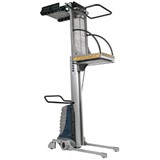
- Manual lifters: From around $1,500 to $2,800. A foot-pump hydraulic system raises the platform, suited to lighter loads and lower-frequency use.
- Battery-electric lifters: Roughly $2,800 to $5,000. A powered lift removes the manual pumping, which pays off when the same lift happens dozens of times a shift.
- Higher-capacity and specialist units: At the top of the band and beyond, for heavier loads, larger platforms, or stainless builds for food and pharmaceutical areas.
The jump between tiers usually buys reduced effort and durability, not badge value. A battery-electric lift removes the daily foot-pumping, and a heavier-duty frame survives constant use where a light unit wears out.
| Type | Typical price band | Best suited to |
|---|---|---|
| Manual foot-pump positioner | $1,500 - $2,800 | Lighter loads, occasional lifting |
| Battery-electric positioner | $2,800 - $5,000 | Repetitive lifts across a shift |
| Heavy-duty or stainless unit | $5,000+ | Heavy loads or wash-down environments |
The specs that change the price
When you request quotes, these are the specs that decide both fitness for purpose and cost:
- Lift capacity: Rated in kilograms, this is the first thing to match to your heaviest load. Underbuying risks overload and failure; overbuying adds cost you do not need.
- Lift height and range: Minimum and maximum platform height set whether the unit brings your load to a comfortable working level. A wider range usually costs more but removes bending at both ends.
- Power type: Manual foot-pump units are cheaper to buy and have nothing to charge. Battery-electric units cost more but remove the physical pumping, which matters most on high-frequency tasks.
- Platform size and mobility: A larger platform handles bigger loads; castors and an ergonomic push handle let one person reposition the unit. Both features add to the price.
- Build and finish: Stainless or corrosion-resistant units suit food, pharmaceutical, and wash-down areas. The finish adds cost upfront but lowers total cost of ownership where a painted unit would rust out.
Why the right positioner pays off
Manual handling remains the single biggest injury category in Australian workplaces. Safe Work Australia figures show body stressing, which covers injuries from lifting, pushing, pulling, and repetitive movement, accounted for 50,600 serious workers compensation claims, or 34.5 percent of all serious claims, in 2023-24. It is the most common injury mechanism across every major occupation group.
A work positioner does not remove that risk on its own, but it changes the daily physical load on your team. By bringing the load to waist height, it takes the deep bending and awkward lifting out of the task. That is the difference between a tool that reduces strain and one that quietly adds to it, which is why the cheapest option is rarely the smartest.
A work positioner is also comfortably under the $20,000 instant asset write-off threshold for 2025-26, so an eligible small business can often deduct the full cost in the year of purchase. Confirm your eligibility with your accountant, since the rules change over time.
A realistic scenario
Picture a food production business where staff lift trays and tubs off a low pallet dozens of times a shift. Two team members have reported back strain in a month, and the safety officer wants the bending designed out of the task.
A battery-electric work positioner with a stainless platform, landing around $3,500 to $5,000, raises each load to waist height at the press of a button, with no foot-pumping between lifts. The stainless finish handles the daily wash-down that would rust a painted unit. The business buys on capacity and hygiene finish rather than the lowest price, and treats the spend against the cost of a single body-stressing claim.
If your task needs both lifting and moving loads around, it is worth comparing a positioner against a scissor lift trolley or a fixed scissor lift table before deciding. For a broader view of pricing on ergonomic materials handling, the hand pallet jack price guide sets out where each option earns its place.
Frequently asked questions
Manual or battery-electric?
Manual foot-pump units are cheaper and fine for lighter, occasional lifting. Battery-electric units cost more but remove the pumping and speed up work, which pays off when the same lift repeats many times a shift.
What capacity do I need?
Match the rated capacity to your heaviest load, with a margin. Working a unit near its limit shortens its life, so size it to the worst case rather than the average.
Can one person operate it?
Most work positioners are designed for single-operator use, with castors and an ergonomic push handle so one person can reposition and lift without help. Confirm the handle height and wheel setup suit your floor.
Do I need a stainless unit?
Only if you work in food, pharmaceutical, or wash-down areas where hygiene and corrosion resistance matter. Elsewhere a painted or galvanised unit is cheaper and does the job.
What matters most
A work positioner is cheap insurance against the most common injury in Australian workplaces, but only if it fits the task. The unit that pays for itself is matched to your heaviest load, raises it to a comfortable height, and uses the power type your work frequency justifies. Get capacity, height, and power type right first, factor the finish into total cost of ownership, and buy on fit rather than the price tag alone.
Ready to compare work positioner specs and pricing? Get quotes from work positioner suppliers across Australia here.