


How to Choose the Right Compressed Air Piping Material for Your Workshop
At Focus Industrial, we offer three kinds of materials for your compressed air piping. While there are differences in cost, do not allow cost alone to determine which kind of material is best for your workshop. With each material comes a difference in sizing, installation time, parts, and capacity to move substances.
Workshop Considerations:
Workshop Sizing -
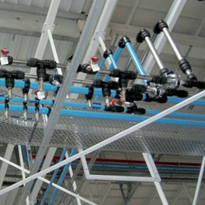
At smaller pipe diameters, poly is often the most cost-effective choice. As system size grows, that changes. Metal piping becomes more competitive when you factor in the additional bracketing poly requires (three to four times more than metal) plus the expansion joints needed on longer runs. In high-clearance warehouses with large-diameter systems, those combined costs can outweigh the savings in poly pipe material entirely.
Larger systems also achieve better laminar airflow with aluminium and stainless steel. And because metal pipe walls are significantly thinner than poly, the outer diameter selected for aluminium or stainless is often one size smaller than poly for the same internal diameter outcome.
Workshop Permanence -
If your workspace is rented or likely to change, poly is a more practical choice. It is faster to install, easier to remove, and the financial loss from leaving it behind or relocating is far lower.
For long-term or owned facilities, aluminium or stainless steel is the stronger investment. Beyond the performance benefits, customers in permanent facilities also factor in the risk of a major pipe failure years down the line. A poly pipe blowout in a high-level roof space can mean a full day of production downtime to repair. With aluminium and stainless steel, that risk is significantly reduced. Stainless Steel’s 35-year leak-free guarantee makes the upfront investment long-term operational insurance.
Your Level of Control -
If you want the flexibility to modify your piping system without calling a specialist, aluminium is the right choice. Its compression fittings are non-destructive and reusable, so your team can adjust the system without using specialist tools. Poly is similarly accessible for basic changes, though it offers less precision and neatness as the material ages and brackets accumulate.
Stainless steel, by contrast, requires a specialist crimping tool for any modifications, meaning amendments will always require a qualified compressed air installer. If a specialist will always be called for changes, stainless steel’s permanent crimp is no disadvantage, and its leak-free performance becomes the priority consideration.
Stainless steel is a leak-proof option. Its crimped permanent seal is the most reliable of the three materials. Aluminium compression fittings are also highly reliable with minimal leak risk when correctly installed. Poly, while functional, carries the greatest potential for leaks over time, particularly as the material expands and contracts with temperature changes in Australian conditions.
Polyethylene Piping
A flexible and cost-effective material. Best for smaller workshops with uneven walls or tight budgets, where layout changes are likely.
Max Pressure: 16 Bar
Seal type: Compression
Lifetime: 15-25 years
?
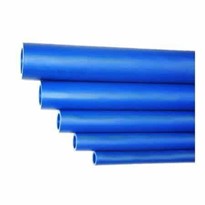
Also known as poly piping, this is a flexible, durable synthetic plastic material. It is lightweight and only semi-rigid, making it a suitable option for workshops where the mounting locations are not perfectly flat. Small beams can be curved around without needing to build complex bracketed piping elbows.
Flexibility
Poly expands with heat and shrinks with cold; this is something to be aware of during installation. The flexible nature of poly also requires 3 to 4 times more bracketing than metal piping to prevent sagging between connections. So while there are cost savings in the poly material itself, the additional bracketing and installation time can offset those savings.
Leaks
It is also worth noting that with added flexibility comes more opportunity for system flaws such as small leaks. If a workshop runs 100 metres of poly piping close to a tin roof, on a hot day that 100 metres could stretch to 101 metres, requiring expansion joints to be fitted to avoid potential sealing issues.
Sizing
Poly piping has a thicker side wall than metal alternatives, meaning it needs to be upsized to support the same interior diameter. For example, for the same workshop fit-out, you would receive a quote for 50mm poly compared to 40mm aluminium to achieve equivalent airflow capacity.
Speak with our team at Focus Industrial about your workshop specifics, and we can advise whether poly piping is suitable for your industry and application.
Aluminium Piping
The most popular choice. Rigid, lightweight, and easy to reconfigure. It is suitable for most industrial workshop fit-outs.
Max Pressure: 68 Bar
Seal type: Compression
Lifetime: 25-30 years
Aluminium piping is a versatile and widely used material solution for compressed air systems. As a metal, aluminium offers more rigid, precise fittings while remaining lightweight and easy to work with.
Stability
Compared to poly piping, aluminium is far less susceptible to expansion and contraction, meaning it fits and seals more accurately over time. Without the flexibility compromise of poly, long stretches do not sag, requiring less bracketing support. While the material itself and fittings carry a higher price point than poly, the reduced accessory requirements can make aluminium more cost-effective overall for your workshop.
Reusable
Aluminium fittings are sealed with compression, meaning the system can be installed with basic tools and does not require specialist equipment. Compression seals are also non-destructive, so if your workshop layout changes down the line, the piping can be disassembled and reconfigured using the same materials.
Unipipe
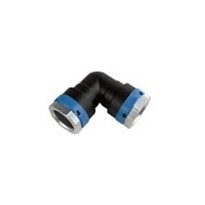
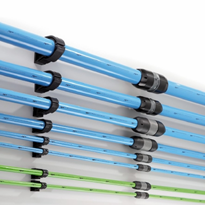
To ensure quality, Focus Industrial uses Unipipe, a premium aluminium compressed air piping system. Featuring stainless steel grip rings with cast aluminium fittings, the installation is tidy, precise, and seamlessly interlocking.
Speak with our team at Focus Industrial to find out whether aluminium piping is the right fit for your workshop and compressed air requirements.
Stainless Steel Piping
The premium long-term solution. Ideal for permanent, long-term installs and automotive workshops moving oils at high pressures.?
Max Pressure: 175 Bar
Seal type: Crimp
Lifetime: Lifetime Guarantee ?
Stainless steel piping is the most sterile and premium piping solution available. It can be the ultimate leak-proof option, with a 35-year leak-free guarantee, and delivers tight, effective seals that last for decades. It is also the cleanest and neatest-presenting piping visually. While it can have the highest upfront cost of the three materials, its longevity and leak-proof sealing capacity can make it the most cost-effective solution over the system’s lifespan.
Crimp Fittings
Stainless steel piping is joined using crimp fittings, which require a crimping tool for installation. This type of attachment creates a guaranteed, permanent seal. Because the crimp cannot be undone without compromising the fitting, the fittings themselves cannot be reused if your workshop layout changes down the line; however, the pipe itself can be recut and refitted with new fittings. This is an important cost consideration before committing to stainless steel as your piping material.
Sterility
Compared to poly and aluminium, stainless steel is the preferred choice for industries where hygiene and sterility are critical. It is commonly specified for medical, food, and beverage applications for this reason. It can also handle piping that carries oils and manages high pressures, making it a practical option for the automotive industry and other demanding environments.
Speak with our team at Focus Industrial to find out whether stainless steel piping is the right specification for your workshop, industry, and long-term requirements.












-205x205.jpg)

-205x205.jpg)

-205x205.jpg)