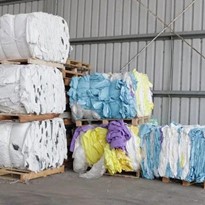


As waste volumes increase, the limitations of small balers become clear. Frequent bale changeovers, manual handling inefficiencies and growing storage requirements can impact productivity.
Medium and high-volume vertical balers are designed for businesses generating consistent daily volumes of cardboard and plastics. These machines deliver higher compaction force, larger bale weights and improved operational efficiency.
For warehouses, distribution centres, manufacturers and larger retail operations, upgrading can significantly reduce waste transport costs and improve site flow.
Signs You’ve Outgrown a Small Baler
If your operation is experiencing any of the following, it may be time to upgrade:
- Multiple bales produced daily
- Staff spending excessive time managing waste
- Overflowing cardboard cages or bins
- Increased waste collection frequency
- Growing recycling volumes due to business expansion
A properly sized baler should support growth, not restrict it.
Medium Volume Vertical Balers
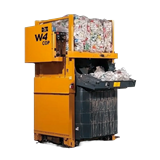
Medium volume balers are suited to sites producing steady daily cardboard volumes but not yet operating at industrial scale.
These machines typically offer:
- Higher compaction force
- Increased bale weight
- Faster cycle times
- Greater chamber depth
Models such as the WastePac 100 or WastePac 300LH provides a strong balance between footprint and throughput. They are well suited to supermarkets, distribution hubs and mid-sized manufacturing facilities.
High Volume Vertical Balers
For large industrial operations, high-volume vertical balers deliver maximum performance without requiring a full horizontal baler installation.
Common applications include:
- Large distribution centres
- Manufacturing plants
- Recycling depots
- High-output retail logistics hubs
Models like the WastePac 450HD and WastePac 550HD are designed for heavy-duty performance, producing dense, mill-size bales suitable for direct recycling markets.
These machines reduce handling time and allow sites to consolidate waste efficiently before transport.
Why Bale Size and Density Matter
Larger, denser bales provide:
- Lower transport costs per tonne
- Fewer collections
- Reduced storage footprint
- Improved recycler acceptance
Selecting the right machine ensures you are not paying to transport air.
Roto Balers and Compactors
For sites where traditional vertical baling may not suit the workflow, a rotary compaction system such as the Bergmann Roto Compactor or Bergmann Roto Baler offers an alternative approach.
Instead of producing tied bales, these machines continuously compact waste into dense, contained 1100L bins or a bag using a rotating drum mechanism. This reduces manual handling, eliminates bale tying and creates a sealed, tidy output ideal for retail, food and distribution environments.
Supplied and supported by Waste Initiatives, rotary systems are particularly effective where space efficiency, hygiene and operational simplicity are priorities.
When to Invest or Upgrade
To explore specifications, throughput capacities and application suitability, view the full vertical baler range from Waste Initiatives and compare models based on your site requirements.
Give us a call to speak with a solutions specialist to determine the right baler for your operation.





-205x205.jpg)