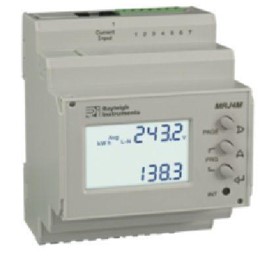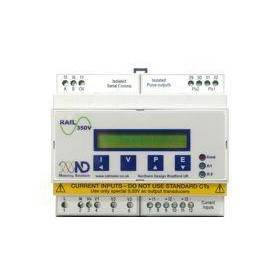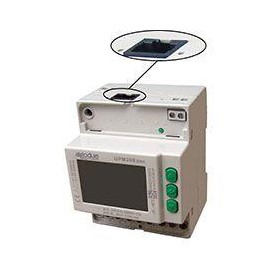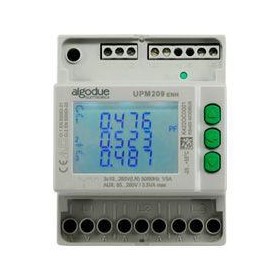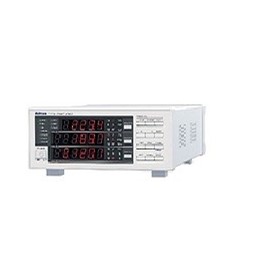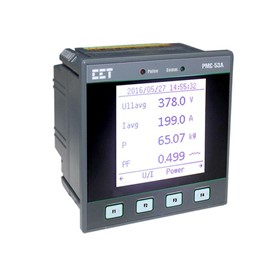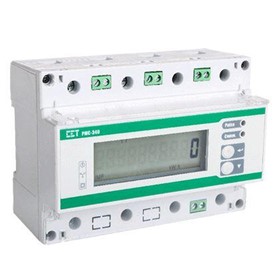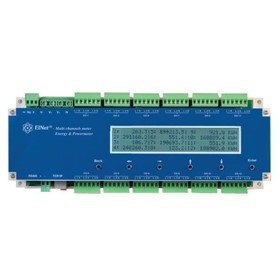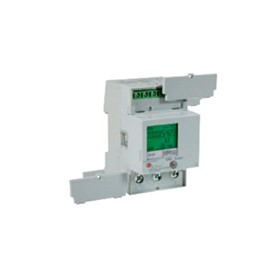
Three-Phase RS485 Energy Meter ADL400N/ADL400M ...
Parameter | Specification |
|---|---|
Electrical network | Three-phase |
Typical network configuration | Three-phase, four-wire |
Nominal voltage | 3 × 230/400 V AC |
Electrical measurements | Voltage, current, active power, reactive power, apparent power, power factor and frequency |
Energy measurement | Forward and reverse active energy; forward and reverse reactive energy |
Phase information | Phase-level electrical and energy data on supported models |
Communication interface | RS485 |
Communication protocol | Modbus RTU |
Modbus address range | 1–247 |
Supported baud rates | 1200–38,400 bps |
Display | Segmented LCD, depending on model |
Installation | DIN-rail mounted |
Current measurement | External current-transformer configurations available |
Operating environment | Indoor switchboard or control-panel installation |
Compliance scope | Selected ADL400N and ADL400M models covered by supplied RCM documentation |
The product documentation identifies three-phase measurement, forward and reverse energy metering, phase-level information and RS485 Modbus RTU communication across the ADL400N family.
Key Features
The meter measures electrical performance at the level of an individual feeder, motor, machine or distribution board. This provides greater visibility than a single building-level electricity meter.
The meter provides values including voltage, current, active power, reactive power, apparent power, power factor, frequency and accumulated electrical energy.
These measurements help operators understand both total consumption and the real-time loading of the monitored circuit.
Supported three-phase models provide phase-level information that can help identify uneven loading between phases.
This is useful in:
The meter is not a dedicated power-quality analyser, but its phase measurements can indicate conditions that require further electrical investigation.
Electrical measurements can be transmitted to a PLC, HMI, SCADA platform, building management system or industrial gateway.
Multiple meters may be connected across a shared RS485 network, subject to appropriate addressing, cable selection, topology and termination.
Forward and reverse energy measurement supports applications where electrical power may flow in either direction, including grid import/export monitoring, solar-generation systems and AC-coupled battery installations.
External-CT versions allow the current to be measured without routing the full load conductor through the meter.
This makes the meters suitable for:
DIN-rail construction supports installation within switchboards, motor-control panels, pump panels, OEM machinery and energy-monitoring enclosures.
Applications
The meter can be installed on three-phase machinery such as:
Monitoring current, power, power factor and accumulated energy can help determine:
Energy data can support maintenance investigations, but it does not replace vibration, temperature or dedicated condition-monitoring systems.
A three-phase meter installed on each production-line feeder allows energy consumption to be compared against operating hours, production volume, batch count or product type.
When integrated with a PLC or production system, this can support calculations such as:
This helps manufacturers identify inefficient lines and verify whether process improvements reduce energy use.
The meter is suitable for monitoring larger three-phase pumps used in:
When electrical measurements are combined with flow, pressure and level data, operators can compare the energy supplied to the pump with the hydraulic output it produces.
This may help identify:
Three-phase energy meters can monitor:
Facility managers can compare energy use with temperature, occupancy, operating schedules and maintenance activities.
An increase in electrical demand without a corresponding increase in heating or cooling output may justify further investigation.
Industrial compressors are significant energy consumers and may operate inefficiently when unloaded, poorly sequenced or compensating for system leakage.
The meter can monitor:
When energy data is combined with air-flow and pressure measurements, operators can assess how much electrical input is required to produce usable compressed air.
The meter can be installed at:
This allows a building operator to separate major three-phase loads and better understand where electricity is being consumed.
Large tenancies, workshops, laboratories and industrial units may use three-phase supplies.
Installing a meter at the tenancy or departmental feeder can support:
Projects involving the formal resale or billing of electricity may require additional assessment of metering and regulatory requirements.
The meter can monitor three-phase solar inverter outputs, site consumption and grid import/export.
Potential applications include:
The meter provides measurement data only. Active export limitation requires a compatible inverter, EMS, PLC or controller.
In a three-phase AC-coupled battery installation, the meter can measure energy associated with charging and discharging.
This allows the owner or system integrator to assess:
Three-phase EV chargers and grouped charging boards can represent a significant building load.
The meter can be installed on individual chargers or at the EV distribution board to provide:
The meter complements, rather than replaces, the charger-management platform.
The meter can be installed at generator outputs, automatic transfer systems or emergency distribution boards.
Measurements such as voltage, current, frequency, power, power factor and accumulated energy can help facilities verify:
Three-phase refrigeration compressors, condensers and distribution boards can be monitored for operating demand and accumulated energy consumption.
When combined with temperature, pressure and door-position sensors, the electrical data can help identify unusual compressor cycling or changes in system performance.
The meter can be used to establish a baseline before an upgrade and compare performance afterwards.
Typical projects include:
Measuring at the equipment feeder provides stronger evidence of improvement than relying only on whole-site electricity bills.
The ADL400N/ADL400M three-phase RS485 energy meter is suited to facilities that need detailed information from major electrical loads rather than only total site consumption.
Its RS485 communication capability allows energy data to become part of a broader monitoring and automation system for:
APS Technology Australia can assist with selecting the correct meter and CT arrangement, designing the RS485 network, integrating the meter into switchboards and connecting the data to local or cloud-based platforms.
To contact APS Technology Australia Pty Ltd about Three-Phase RS485 Energy Meter ADL400N/ADL400M Three-Phase RS485 Energy Meter use Get a quote.
Parameter | Specification |
|---|---|
Electrical network | Three-phase |
Typical network configuration | Three-phase, four-wire |
Nominal voltage | 3 × 230/400 V AC |
Electrical measurements | Voltage, current, active power, reactive power, apparent power, power factor and frequency |
Energy measurement | Forward and reverse active energy; forward and reverse reactive energy |
Phase information | Phase-level electrical and energy data on supported models |
Communication interface | RS485 |
Communication protocol | Modbus RTU |
Modbus address range | 1–247 |
Supported baud rates | 1200–38,400 bps |
Display | Segmented LCD, depending on model |
Installation | DIN-rail mounted |
Current measurement | External current-transformer configurations available |
Operating environment | Indoor switchboard or control-panel installation |
Compliance scope | Selected ADL400N and ADL400M models covered by supplied RCM documentation |
The product documentation identifies three-phase measurement, forward and reverse energy metering, phase-level information and RS485 Modbus RTU communication across the ADL400N family.
Key Features
The meter measures electrical performance at the level of an individual feeder, motor, machine or distribution board. This provides greater visibility than a single building-level electricity meter.
The meter provides values including voltage, current, active power, reactive power, apparent power, power factor, frequency and accumulated electrical energy.
These measurements help operators understand both total consumption and the real-time loading of the monitored circuit.
Supported three-phase models provide phase-level information that can help identify uneven loading between phases.
This is useful in:
The meter is not a dedicated power-quality analyser, but its phase measurements can indicate conditions that require further electrical investigation.
Electrical measurements can be transmitted to a PLC, HMI, SCADA platform, building management system or industrial gateway.
Multiple meters may be connected across a shared RS485 network, subject to appropriate addressing, cable selection, topology and termination.
Forward and reverse energy measurement supports applications where electrical power may flow in either direction, including grid import/export monitoring, solar-generation systems and AC-coupled battery installations.
External-CT versions allow the current to be measured without routing the full load conductor through the meter.
This makes the meters suitable for:
DIN-rail construction supports installation within switchboards, motor-control panels, pump panels, OEM machinery and energy-monitoring enclosures.
Applications
The meter can be installed on three-phase machinery such as:
Monitoring current, power, power factor and accumulated energy can help determine:
Energy data can support maintenance investigations, but it does not replace vibration, temperature or dedicated condition-monitoring systems.
A three-phase meter installed on each production-line feeder allows energy consumption to be compared against operating hours, production volume, batch count or product type.
When integrated with a PLC or production system, this can support calculations such as:
This helps manufacturers identify inefficient lines and verify whether process improvements reduce energy use.
The meter is suitable for monitoring larger three-phase pumps used in:
When electrical measurements are combined with flow, pressure and level data, operators can compare the energy supplied to the pump with the hydraulic output it produces.
This may help identify:
Three-phase energy meters can monitor:
Facility managers can compare energy use with temperature, occupancy, operating schedules and maintenance activities.
An increase in electrical demand without a corresponding increase in heating or cooling output may justify further investigation.
Industrial compressors are significant energy consumers and may operate inefficiently when unloaded, poorly sequenced or compensating for system leakage.
The meter can monitor:
When energy data is combined with air-flow and pressure measurements, operators can assess how much electrical input is required to produce usable compressed air.
The meter can be installed at:
This allows a building operator to separate major three-phase loads and better understand where electricity is being consumed.
Large tenancies, workshops, laboratories and industrial units may use three-phase supplies.
Installing a meter at the tenancy or departmental feeder can support:
Projects involving the formal resale or billing of electricity may require additional assessment of metering and regulatory requirements.
The meter can monitor three-phase solar inverter outputs, site consumption and grid import/export.
Potential applications include:
The meter provides measurement data only. Active export limitation requires a compatible inverter, EMS, PLC or controller.
In a three-phase AC-coupled battery installation, the meter can measure energy associated with charging and discharging.
This allows the owner or system integrator to assess:
Three-phase EV chargers and grouped charging boards can represent a significant building load.
The meter can be installed on individual chargers or at the EV distribution board to provide:
The meter complements, rather than replaces, the charger-management platform.
The meter can be installed at generator outputs, automatic transfer systems or emergency distribution boards.
Measurements such as voltage, current, frequency, power, power factor and accumulated energy can help facilities verify:
Three-phase refrigeration compressors, condensers and distribution boards can be monitored for operating demand and accumulated energy consumption.
When combined with temperature, pressure and door-position sensors, the electrical data can help identify unusual compressor cycling or changes in system performance.
The meter can be used to establish a baseline before an upgrade and compare performance afterwards.
Typical projects include:
Measuring at the equipment feeder provides stronger evidence of improvement than relying only on whole-site electricity bills.
The ADL400N/ADL400M three-phase RS485 energy meter is suited to facilities that need detailed information from major electrical loads rather than only total site consumption.
Its RS485 communication capability allows energy data to become part of a broader monitoring and automation system for:
APS Technology Australia can assist with selecting the correct meter and CT arrangement, designing the RS485 network, integrating the meter into switchboards and connecting the data to local or cloud-based platforms.
To contact APS Technology Australia Pty Ltd about Three-Phase RS485 Energy Meter ADL400N/ADL400M Three-Phase RS485 Energy Meter use Get a quote.
Thanks for your help!
Sorry! Unable to submit your request at this time. Please try again later.
Report this product