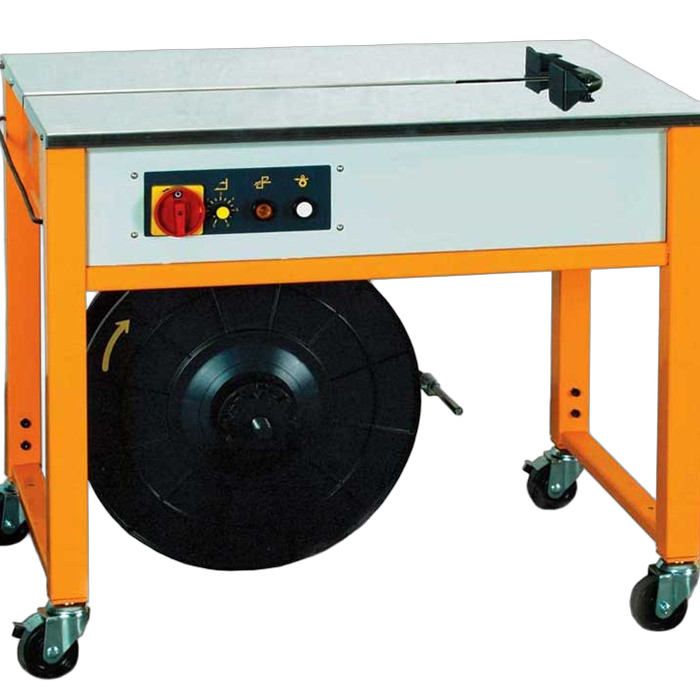

Semi-automatic strapping machine prices in Australia (2026): cost and fit
- What they cost: Semi-automatic strapping machines on IndustrySearch typically range from around $1,500 to $5,000, averaging near $3,250.
- What sets the price: Tension control type, drive system, table style, build quality, and mobility are the main cost drivers.
- Where they fit: Medium-volume bundling and carton reinforcement where hand tools are too slow but a fully automatic line is not yet justified.
- The upgrade trigger: Once an operator is strapping dozens of cartons a shift, a semi-automatic machine pays back in labour and consistency against hand tools.
- The decision: Match tension range and table style to your product, then weigh a semi-automatic unit against both hand tools below it and a fully automatic machine above.
If your team still bundles cartons with a hand tensioner and seals, a semi-automatic strapping machine is one of the cheapest ways to speed the job up and make it consistent. The operator places the strap around the load and the machine tensions, seals, and cuts in seconds. This guide covers what semi-automatic strapping machines cost in Australia in 2026, what drives the price, and how to match a machine to your operation before you request quotes.
Where a semi-automatic machine earns its place
The case is speed, consistency, and worker wellbeing. Hand strapping is slow and physically repetitive, and repetitive manual tasks are a recognised contributor to body-stressing injuries, which remain a leading source of serious workers' compensation claims, according to Safe Work Australia. A semi-automatic machine takes the tensioning and sealing off the operator's hands, delivering the same tension on every strap.
It sits in a clear middle ground. Below it are hand tools and strapping kits, cheap and portable but slow and best for low volume. Above it are fully automatic machines that feed the strap themselves for high-volume lines. The semi-automatic machine is the right answer when volume has outgrown hand tools but does not yet justify full automation.
What a semi-automatic strapping machine costs in 2026
Price tracks tension control, build, and features. As a working guide for the Australian market:
- Entry-level machines: Roughly $1,500 to $2,500. Mechanical tension control and a basic table, suited to lighter, lower-frequency bundling.
- Mid-range machines: Around $2,500 to $4,000. Electronic tension control, direct-drive heads, and sturdier builds for daily warehouse use.
- Higher-spec machines: $4,000 to $5,000. Wide tension ranges, stainless-steel tops, side-seal tables for long items, and mobility for multi-station use.
Features shift the total: electronic tension control that adjusts from a light hold to a firm bundle, low-maintenance direct-drive heads with no belts or chains, and castors for wheeling the machine between stations all add to the price tag. Because listed prices vary by brand and configuration, it pays to compare semi-automatic strapping machine quotes from Australian suppliers for your product and volume.
| Machine class | Tension control | Indicative price | Best fit |
|---|---|---|---|
| Entry-level | Mechanical | $1,500 - $2,500 | Lighter, lower-frequency bundling |
| Mid-range | Electronic | $2,500 - $4,000 | Daily warehouse use |
| Higher-spec | Wide-range electronic | $4,000 - $5,000 | Long items, multi-station, hygiene |
The specs that shape the price
When you request quotes, these are the features that change the total:
- Tension control: Mechanical control is cheaper; electronic control adjusts tension precisely, from a gentle hold on light goods to a firm bundle, and protects fragile products.
- Drive system: Direct-drive heads with no belts, chains, or clutches cut maintenance and downtime, and appear on mid and higher-spec machines.
- Table style: A standard top suits cartons; a side-seal table makes strapping long items easier; a lower table integrates with conveyors.
- Build and hygiene: Stainless-steel tops and washdown-friendly builds suit food and cleaner environments and carry a premium.
- Mobility: Rigid castors with brakes let one machine serve several stations, useful where you take the machine to the goods.
- Strap width compatibility: Machines rated for a range of strap widths give you flexibility to match strap to load, from light banding to firmer bundling, without buying a second unit.
Hand tool, semi-automatic, or fully automatic?
The core decision is volume. Hand tools and kits suit low-volume, portable, or occasional strapping. A semi-automatic machine suits medium volume where an operator stations at the machine and feeds loads through. A fully automatic machine suits high-volume lines where the strap feeds itself and the operation runs inline. Match the machine to how many loads you strap per shift, not to the cheapest or the fastest option in isolation. For a fuller comparison of the options, the guide on whether you need a strapping machine or should stay manual works through the choice by volume and strap type.
A realistic scenario
Picture a Sydney distributor bundling around 60 cartons a shift by hand, where the process is slow and two staff have complained of wrist strain.
A mid-range semi-automatic machine at around $3,000, with electronic tension control and a direct-drive head, lets one operator strap each carton in seconds at consistent tension. The wrist strain from manual tensioning goes away, throughput rises, and the machine needs little maintenance. Against the labour saved and the injury risk removed, the spend is easy to justify, and it sits well below the cost of a fully automatic line the volume does not yet need.
Frequently asked questions
What strap does a semi-automatic machine use?
These machines run polypropylene or polyester strap rather than steel. Match the strap width and break strain to the weight and value of your loads; heavier or higher-value goods call for stronger strap.
How much faster is it than hand tools?
Considerably. The machine tensions, seals, and cuts in seconds with one action, where hand strapping involves a tensioner, seal, and crimper. The gap widens the more loads you strap per shift.
Is electronic tension control worth it?
Often yes, especially for mixed products. It lets you set a light tension for fragile goods and a firm one for heavy bundles from the same machine, protecting products and improving consistency.
What maintenance does it need?
Keep the strap path clean and follow the service interval for the sealing head. Direct-drive machines with no belts or chains need less upkeep than older belt-driven designs.
What matters most
A semi-automatic strapping machine is a low-cost, fast-payback upgrade from hand tools for any operation strapping steady volumes. Anchor your choice to tension range and table style for your product, then place it correctly between hand tools below and a fully automatic line above. Get the fit right and it speeds the job, protects your products, and takes strain off your team. Get it wrong and you may overspend on capacity you never use, or underspec a machine that cannot hold your loads.
Ready to compare tension ranges, tables, and pricing on semi-automatic strapping machines? Get quotes from strapping machine suppliers across Australia here.