

Key takeaways
| Factor | Detail | What this means for you |
|---|---|---|
| Entry walkie stacker | $4,500–$9,000 AUD new | Manual straddle — suitable for occasional, low-height stacking only |
| Mid-range powered straddle | $9,000–$18,000 AUD new | The class most SME warehouses land in — covers the majority of general racking applications |
| High-spec / rider stacker | $18,000–$35,000 AUD new | Justified by high volume, longer travel distances or racking above 4.5 m |
| Licence required | No LF licence (walk-behind) — VOC mandatory | A broader range of your team can operate it — but VOC assessment is non-negotiable |
| Minimum aisle width | From 1,800mm depending on model | Measure your narrowest point before shortlisting — this is the most common disqualifying factor |
| Annual operating cost | $1,500–$5,000 | Substantially lower than a sit-down forklift ($8,000–$22,000/year) — the TCO case is strong |
Pricing reflects 2026 Australian market conditions.
What is a walkie stacker?
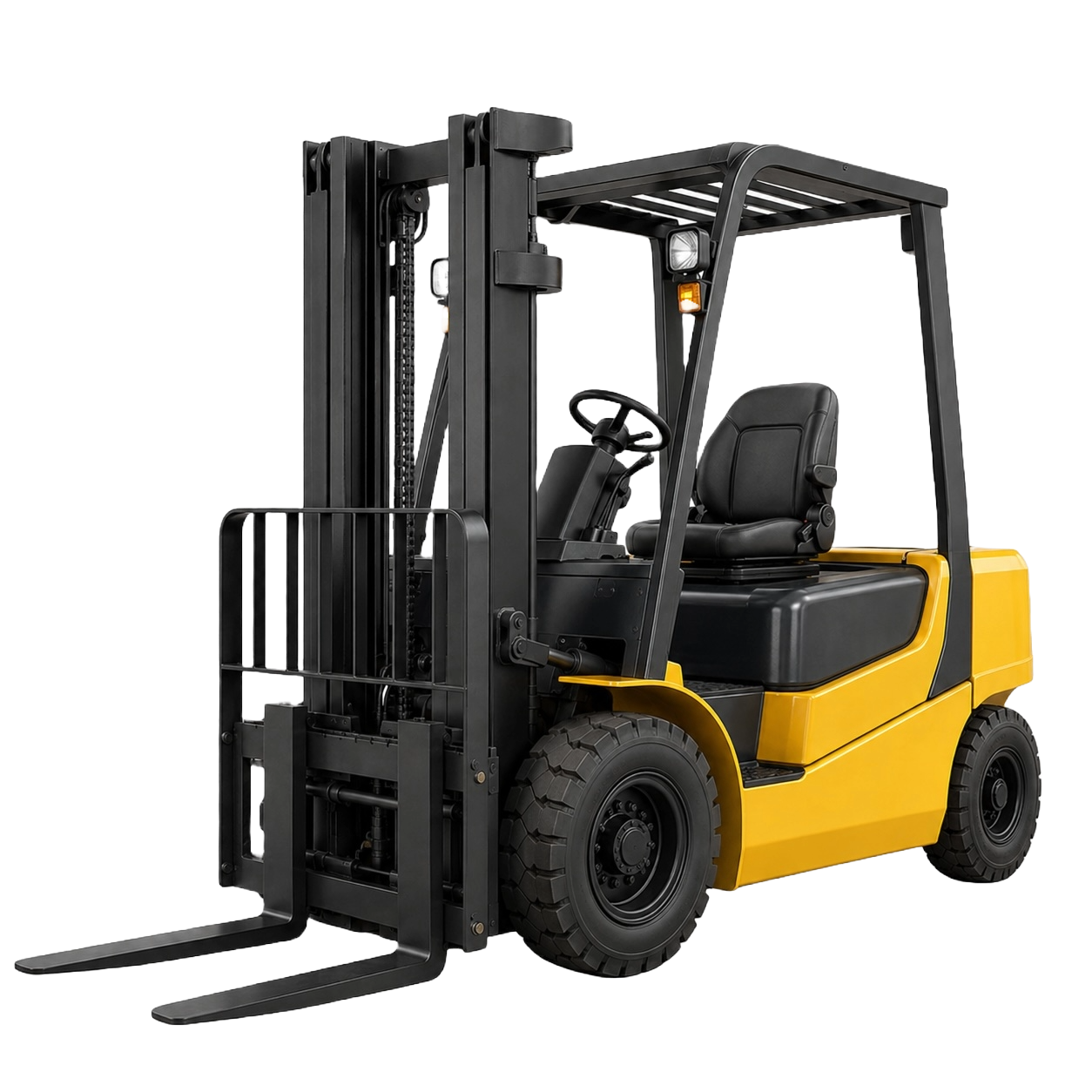
A walkie stacker (also called an electric pallet stacker or walk-behind stacker) is a compact powered machine designed to lift and stack pallets in tight warehouse aisles where a traditional sit-down forklift cannot operate. In Australia, they are the standard cost-effective solution for SME warehouses, retail backrooms and cold-storage facilities. New units range from $4,500 for a manual straddle to $35,000 for high-spec rider models, with lift height and battery type being the primary cost drivers.
They are standard specification for: small-to-medium warehouses and distribution centres; retail back-of-house storage; cold storage and cool rooms with limited aisle access; manufacturing facilities with internal material movement; and 3PL operations running a single shift.
If your operation runs fewer than two shifts, works in aisles under 3 metres wide, and stacks to under 5.5 metres — a walkie stacker is almost certainly more cost-effective than a sit-down forklift. See why businesses choose a walkie stacker over a forklift for a detailed breakdown.
When to upgrade from a manual pallet jack
The upgrade trigger is straightforward: if your operators are lifting loads above floor level or stacking to racking, you need a powered stacker. A walkie stacker handles four to six times the pallet movements per shift compared to manual methods and eliminates the manual handling injury risk that drives WorkCover claims. For operations processing more than 30–40 pallet movements per day to racking height, payback typically lands within 12–18 months.
Choose a manual pallet jack for flat floor movement only with very low volume. Choose a walkie stacker the moment your operation requires lifting pallets to any racking level.
Walkie stacker types
| Type | Lift Capacity | Lift Height | Price Range (AUD) | Best For |
|---|---|---|---|---|
| Straddle leg (manual lift) | 1,000–1,500 kg | 2.5–3.5 m | $4,500–$9,000 | Low volume, occasional stacking |
| Straddle leg (powered) | 1,000–1,500 kg | 3.0–4.5 m | $8,000–$14,000 | General warehouse, medium frequency |
| Reach stacker (powered) | 1,000–1,500 kg | 4.0–5.5 m | $14,000–$25,000 | Higher racking, narrow aisle operations |
| Counterbalanced stacker | 1,000–1,200 kg | 3.0–4.5 m | $10,000–$20,000 | Non-standard pallets, block stacking |
| Rider / stand-on stacker | 1,200–2,000 kg | 4.0–5.5 m | $18,000–$35,000 | High volume, longer travel distances |
Straddle leg stackers are the most common — outrigger legs straddle the pallet for stability but require clearance between legs, limiting use with non-standard pallets. Counterbalanced stackers suit any pallet type and block stacking at higher cost. Rider stackers suit high-volume operations where walking the machine across a full shift is impractical.
→ Most first-time buyers in SME warehouses land in the powered straddle class at $8,000–$14,000. If your racking exceeds 4.5 m or aisles are under 2.5 m, move directly to the reach stacker row.
Key specifications and aisle width reference
| Specification | Typical Range | Buyer Consideration |
|---|---|---|
| Lift capacity | 1,000–2,000 kg | Match to heaviest pallet — not average load |
| Lift height | 2.5–5.5 m | Specify at least 500mm above highest beam position |
| Aisle width requirement | 1,800–2,800mm | Confirm machine plus load width fits narrowest aisle |
| Straddle leg width | Fixed or adjustable | Adjustable essential for non-standard pallet sizes |
| Mast type | Single, duplex, triplex | Triplex provides free lift — required for low-clearance entry points |
| Battery voltage | 24V or 48V | 48V suits higher utilisation and heavier loads |
Aisle width is the single most common disqualifying factor at the shortlisting stage. Measure your narrowest aisle — including racking uprights — confirm your pallet dimensions, and provide both to every supplier before shortlisting models. Compact straddle models require from 1,800–2,200mm; standard straddle from 2,200–2,600mm; counterbalanced and rider models from 2,400–3,000mm.
Battery options: Lead-acid vs. Lithium-ion
| Factor | Lead-Acid | Lithium-Ion |
|---|---|---|
| Purchase price premium | Base | Add $1,500–$4,000 |
| Charge time (full) | 8–10 hours | 1.5–3 hours |
| Opportunity charging | Not recommended | Supported — no cycle degradation |
| Battery lifespan | 1,200–1,500 cycles (4–6 years) | 2,500–3,000+ cycles (8–12 years) |
| Cold storage performance | Loses 20–40% capacity below 5°C | Handles cold temperatures well |
| Best for | Single-shift, scheduled overnight charging | Multi-shift, cold storage, low-maintenance ops |
Lead-acid suits single-shift warehouses with overnight charging. Lithium-ion justifies the premium for multi-shift operations, cold storage and facilities without dedicated charging infrastructure — the longer lifespan and cold-weather performance typically offset the $1,500–$4,000 premium within 2–3 years.
Costs in Australia
| Category | Price Range (AUD) | Typical Configuration |
|---|---|---|
| Entry straddle stacker | $4,500–$9,000 | Manual lift, basic controls, lead-acid |
| Mid-range powered straddle | $9,000–$14,000 | Powered travel and lift, standard mast |
| Reach stacker (powered) | $14,000–$25,000 | Powered reach, triplex mast |
| Counterbalanced stacker | $10,000–$20,000 | No straddle legs, any pallet type |
| Rider / stand-on stacker | $18,000–$35,000 | High-volume, 48V battery |
| Used / refurbished | $3,000–$15,000 | Validate battery cycles, mast seals and hours |
Annual TCO runs $1,500–$5,000: servicing $600–$1,500, battery and electricity $300–$800, tyres and wear parts $200–$600. Significantly lower than the $8,000–$22,000 annual cost of a sit-down forklift.
Most businesses finance this purchase — here’s what that looks like
A mid-range powered straddle at $12,000 typically runs $220–$280/month over a 5-year commercial finance term. For many operations, this is a better cash flow decision than a lump-sum purchase — particularly when the same capital could cover the first year of servicing, battery maintenance and compliance costs.
→ See the full guide on equipment finance in Australia — loan types, deposit requirements and what lenders require on used equipment.
→ Used units at $3,000–$15,000 can offer strong value — battery condition is the critical variable. Always request cycle count and service history. Compare walkie stackers in Sydney to shortlist local suppliers.
Walkie stacker vs. Sit-down forklift
| Factor | Walkie Stacker | Sit-Down Forklift |
|---|---|---|
| Purchase price | $4,500–$35,000 | $20,000–$90,000+ |
| Annual operating cost | $1,500–$5,000 | $8,000–$22,000 |
| Aisle width required | From 1,800mm | From 2,800mm+ |
| Max lift height | 5.5 m | 7.0 m+ |
| High-risk work licence | Not required (walk-behind) | Yes — LF class |
| Best for | Indoor, tight aisles, loads under 2,000 kg, lift under 5.5 m | High volume, outdoor, heavy or high loads exceeding walkie limits |
For most SME warehouses, the walkie stacker wins on purchase price, running cost and licence overhead. A sit-down forklift only becomes the right answer when loads, heights or volumes exceed what a walkie stacker can handle.
Australian compliance requirements
These apply before your operation starts. The licence and training obligations are straightforward — but the consequences of getting them wrong sit with whoever authorised the purchase decision.
- Walk-behind models — no National High-Risk Work Licence (LF class) required in any Australian state
- Ride-on and stand-on models — LF class licence mandatory
- VOC (Verification of Competency) — required for all operators regardless of model type; assessment by a registered training organisation is recommended
- AS 2359 — governs design and performance requirements for all models sold in Australia
- AS 4084 — governs racking installation; confirm racking is rated for loads placed at height
- Pre-operational checks — required before every shift and must be documented
- Battery charging ventilation — lead-acid charging areas require ventilation for hydrogen off-gassing under WHS obligations
Supplier comparison checklist
Bring these four inputs to every supplier conversation before you request quotes: narrowest aisle width (including racking uprights), highest racking beam position, pallet dimensions, and peak daily pallet movements. Suppliers who can’t work from those inputs directly are worth deprioritising.
| Factor | What to Ask |
|---|---|
| Aisle compatibility | Minimum aisle width for this model with my pallet dimensions? |
| Lift height | Maximum lift height — does the spec include free lift? |
| Mast type | Single, duplex or triplex — what is the free lift dimension? |
| Battery type | Lead-acid or lithium-ion — what are the charging requirements? |
| Licence requirement | Is this model walk-behind or ride-on — what does the operator need? |
| Warranty | What does coverage include — mast, battery, controls, drive motor? |
| Used unit condition | Battery cycle count and full service history available? |
→ Request quotes from verified walkie stacker suppliers on IndustrySearch — compare specs and service coverage in one place, without the back-and-forth.
Frequently asked questions
How much does a walkie stacker cost in Australia in 2026?
New units range from $4,500 (manual straddle) to $35,000 (high-spec rider, lithium-ion). Most powered straddle models land at $9,000–$18,000. Used units run $3,000–$15,000. Budget separately for battery replacement — $1,500–$3,000 for lead-acid, $3,000–$6,000 for lithium-ion.
Do I need a forklift licence to operate a walkie stacker?
Walk-behind models require no LF licence in any Australian state. Ride-on and stand-on models do. All operators need a current VOC regardless of model type.
What lift height do I need?
Take your highest beam position and add at least 200mm clearance — ideally 500mm. Confirm whether the machine offers free lift if you have low ceilings, mezzanines or roller door obstructions. Underspecifying lift height is the most common purchasing mistake in this category.
What is the difference between a straddle stacker and a reach stacker?
A straddle stacker straddles the pallet to pick it up. A reach stacker extends the carriage forward without the machine entering the rack face — enabling narrower aisles and deeper access. Reach stackers cost $5,000–$10,000 more.
Can a walkie stacker be used in cold storage?
Yes, but specify lithium-ion — lead-acid loses 20–40% capacity below 5°C. Confirm the battery management system is rated for your operating temperature before purchase.
Summary
- New walkie stackers cost $4,500–$35,000 — most mid-range powered models sit at $9,000–$18,000
- Walk-behind models require no LF licence — VOC competency assessment is mandatory for all operators
- Annual operating costs $1,500–$5,000 — substantially lower than sit-down forklift running costs
- Specify lift height at least 500mm above your highest beam — underspecification is the most common buying mistake
- Lithium-ion justifies the premium for multi-shift, cold storage and opportunity-charging operations
- Confirm aisle width before purchase — measure your narrowest point and provide pallet dimensions to every supplier
Ready to source your walkie stacker?
IndustrySearch connects you with verified Australian walkie stacker suppliers — compare models, specifications and pricing in one place, then request quotes from suppliers servicing your state.
- Compare models — filter by lift height, capacity and configuration
- Request quotes — contact multiple verified suppliers with a single enquiry
- Contact suppliers directly — speak to specialists who service your state

-160x160-state_article-rel-cat.png)




-160x160-state_article-rel-cat.png)


-205x205.jpg)


