
Key takeaways
Factor | VFFS Machine | Pre-Made Pouch Machine |
|---|---|---|
Purchase price (new) |
$20,000–$250,000 AUD |
$30,000–$200,000 AUD |
Speed |
20–250+ bags/min |
15–120 bags/min |
Film / packaging cost |
Lower — roll stock film |
Higher — pre-formed pouches cost 20–40% more per unit |
Pack format flexibility |
Pillow, gusset, quad-seal with tooling |
Stand-up doy, zip-lock, spout pouch as standard |
Changeover time |
15–90 min (former change) |
5–20 min (pouch size change) |
Shelf-ready presentation |
Limited without additional tooling |
High — stand-up doy with zip is retail-ready standard |
Best for |
High-volume, single-product, cost-per-bag priority |
Premium presentation, multi-SKU, retail-facing products |
VFFS vs pre-made pouch: Two automation paths with different trade-offs
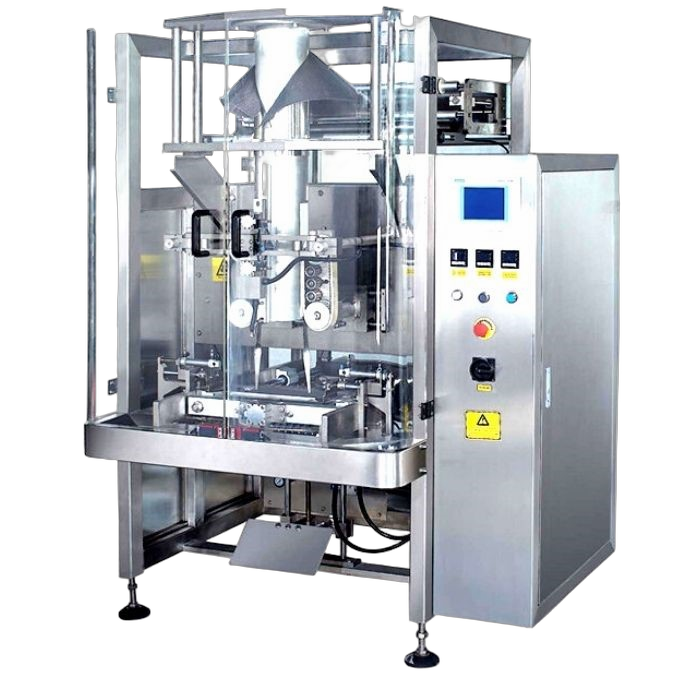
A VFFS (vertical form fill seal) machine forms bags from a flat roll of film, fills and seals them in a continuous automated sequence — the standard choice for high-volume operations where cost-per-bag and throughput speed are the primary drivers. A pre-made pouch machine fills and seals pouches that have already been manufactured — buying shelf presentation and pack format variety upfront, at a higher per-unit packaging cost.
These are not interchangeable. The right answer depends almost entirely on your product type, target retail channel and daily volume — and for most Australian food and consumer goods manufacturers the decision resolves quickly once those three variables are on the table. This guide walks through cost, speed, flexibility and the four questions that settle the comparison. Browse VFFS machines and pre-made pouch machines on IndustrySearch to compare current models alongside this guide.
This comparison is relevant across:
- Food and snack manufacturers evaluating their first automated packaging line
- Contract packaging operations adding a second machine type for a new client category
- Producers moving from manual or semi-automatic packing to full automation
- FMCG brands launching premium retail SKUs requiring stand-up doy or zip formats
- Coffee, supplements, pet food and health food producers with shelf-presence requirements
- Operations reviewing packaging costs as volume scales past 50,000 units per week
Start with your pack format requirement
Before evaluating cost or speed, confirm which pack formats your product and retail channel require. Format is the single factor most likely to resolve this comparison before anything else enters the equation.
Pack Format | VFFS | Pre-Made Pouch |
|---|---|---|
Pillow bag (standard) |
Standard |
Available |
Gusseted bag |
Standard |
Available |
Stand-up doy pouch |
Requires additional tooling ($5,000–$20,000) |
Standard |
Zip-lock / resealable |
Not standard — specialist zipper applicator required |
Standard |
Spout pouch (liquid) |
Not compatible |
Standard |
Quad-seal flat bottom |
Requires continuous motion machine + tooling |
Standard |
If your product requires stand-up doy, zip-lock or spout formats as standard, a pre-made pouch machine is the correct specification — adding these formats to a VFFS is possible but adds $5,000–$20,000 in tooling and significantly increases changeover complexity. If pillow or gusseted bags meet your retail and product requirements, VFFS delivers those formats at lower per-bag cost and higher speed. Once format is confirmed, move to Step 2.
Evaluate the key performance differences
With format confirmed, these specifications determine which machine fits your production volume, SKU mix and operational footprint.
Specification | VFFS Machine | Pre-Made Pouch Machine |
|---|---|---|
Speed range |
20–250+ bags/min |
15–120 bags/min |
Packaging material cost |
Roll stock film: $3,000–$15,000/year |
Pre-formed pouches: 20–40% more per unit than roll stock |
Changeover time |
15–90 min (former and film change) |
5–20 min (pouch size and filler adjustment) |
Seal quality consistency |
Excellent — seals formed inline under controlled conditions |
Very high — top seal only; pouch body pre-manufactured to spec |
Print and branding |
Printed film from roll — minimum order quantities apply |
Full pre-printed pouch — premium shelf presentation standard |
Machine footprint |
1.5m×1.5m to 2.5m×4m |
1.0m×1.5m to 2.0m×3.0m (typically smaller) |
Dosing system |
Integrated or inline — weigher, auger or volumetric |
Integrated — must match product type (liquid, powder, solid) |
Waste / film loss |
0.5–2% film waste during startup and changeover |
Near zero — pouches are pre-formed; waste only on fill rejects |
Understand the cost differences
Purchase price is only part of the picture — the per-unit packaging material cost is where the two machines diverge most significantly at scale, and it's the number most often missing from initial cost models.
Cost Factor | VFFS Machine | Pre-Made Pouch Machine |
|---|---|---|
Purchase price — entry |
$20,000–$45,000 |
$30,000–$60,000 |
Purchase price — mid |
$45,000–$120,000 |
$60,000–$120,000 |
Purchase price — high-spec |
$120,000–$250,000 |
$120,000–$200,000 |
Packaging material — cost per 1,000 units |
$8–$40 (roll stock film) |
$25–$80 (pre-formed pouches) |
Annual maintenance |
$8,000–$25,000 |
$5,000–$18,000 |
Tooling for additional formats |
$5,000–$20,000 per format |
Minimal — pouch size change is mechanical adjustment |
Used / refurbished |
$12,000–$60,000 |
$15,000–$50,000 |
The material cost gap is the most significant factor at volume. At 100,000 units per week, pre-formed pouches add $850–$4,000 per week in packaging material cost compared to equivalent roll stock film — $44,000–$208,000 per year per line. For high-volume commodity products this gap dominates the investment case. For premium retail SKUs where the stand-up doy format commands a higher shelf price, the cost difference is often absorbed in the margin. For context on how packaging machinery financing works in the Australian market, see the IndustrySearch packaging machinery price guide.
Decision framework — VFFS vs pre-made pouch machine
With format, performance and cost mapped, this framework resolves the decision for most Australian operations. Match your situation to the right column.
Your Situation | Choose VFFS | Choose Pre-Made Pouch |
|---|---|---|
Pack format |
Pillow or gusseted bags adequate |
Stand-up doy, zip-lock or spout required as standard |
Daily volume |
Above 20,000 units/day — material savings justify VFFS |
Below 20,000 units/day — pouch premium is manageable |
Number of SKUs |
1–3 SKUs on the same line |
4+ SKUs or frequent changeover required |
Retail channel |
Foodservice, bulk, industrial or private label |
Supermarket shelf, premium retail or DTC with brand focus |
Product type |
Free-flowing granules, powders, frozen product |
Liquids, sauces, pastes, products needing spout or zip |
Cost-per-bag priority |
Material cost is the primary driver |
Presentation and margin drive more value than material cost |
Floor space |
Larger footprint acceptable for throughput gain |
Compact footprint a priority — pouch machines run smaller |
Changeover frequency |
Infrequent — same format running for long runs |
Daily or multiple times per shift across different SKUs |
Evaluate suppliers
You're ready to go to market. Use this checklist to assess suppliers of either machine type against the same criteria.
Factor | What to Ask |
|---|---|
Format compatibility |
Which pack formats does this machine run as standard, and which require additional tooling? |
Product validation |
Has this machine been tested with my product type — granule, powder, liquid or paste? |
Film or pouch sourcing |
Do you supply compatible packaging material, or do I source independently? What are the minimum order quantities? |
Changeover time |
What is the actual changeover time between formats at my SKU mix, and is it tool-free? |
Dosing system |
Is the dosing system included or quoted separately? What fill accuracy does it achieve at my target speed? |
Local service coverage |
Do you have service technicians in my state, or is support remote or contracted? |
Spare parts availability |
Are seal jaws, forming components and wear parts stocked locally or imported to order? |
Lead time |
What is the current lead time from order to commissioning in Australia? |
Warranty |
Does warranty cover sealing components, dosing system and control system, or machine chassis only? |
Finance options |
Do you offer lease or hire-to-own arrangements, and through which finance partner? |
Frequently asked questions
What is the main difference between a VFFS machine and a pre-made pouch machine?
A VFFS machine forms bags from a roll of flat film, fills and seals them inline — lower per-bag material cost, higher speed, but limited to formats the machine can form from roll stock. A pre-made pouch machine fills and seals pouches that are already manufactured, giving immediate access to premium formats like stand-up doy and zip-lock without additional tooling, at a higher per-unit packaging cost.
Which machine is faster?
VFFS machines reach 250+ bags/min at the high end; pre-made pouch machines typically top out at 80–120 bags/min for rotary models. For operations prioritising throughput above all else, VFFS is the correct specification — pre-made pouch machines trade peak speed for format versatility and faster changeover.
Is a VFFS machine cheaper to run than a pre-made pouch machine?
At volume, yes — roll stock film costs 20–40% less per unit than pre-formed pouches. At 100,000 units per week, that gap compounds to $44,000–$208,000 per year in material cost. Below 20,000 units per day the premium is more manageable, and the presentation advantage of pre-made pouches may justify the cost depending on your retail channel.
Can a VFFS machine produce stand-up doy or zip-lock pouches?
Yes, but not as standard — stand-up doy and zip-lock formats require additional tooling costing $5,000–$20,000 per format, and typically a continuous motion machine with specific jaw configuration. If these formats are core to your product range, a pre-made pouch machine delivers them faster and with less complexity.
Which machine suits a multi-SKU operation better?
Pre-made pouch machines — changeover between pouch sizes takes 5–20 minutes versus 15–90 minutes for a VFFS former change. For operations running 4+ SKUs or changing formats daily, the pre-made pouch machine's faster changeover typically outweighs its higher material cost in real production efficiency.
What products can each machine handle?
VFFS machines handle free-flowing granules, powders, frozen product and some liquids with the right dosing system. Pre-made pouch machines handle a wider product range including sauces, pastes, liquids and products requiring spout or zip formats — product type is a secondary filter after format is resolved.
What does compliance look like for packaging machinery in Australia?
Both machine types must comply with AS 4024 machinery safety standards and WHS Act 2011 obligations as plant under the PCBU framework. Food-contact applications additionally require compliance with FSANZ food safety standards for packaging materials and hygiene. Confirm your supplier can provide an Australian Declaration of Conformity before purchase.
Can i buy a used pre-made pouch machine in Australia?
Yes — used pre-made pouch machines are available from $15,000–$50,000. Seal jaw condition and the state of the filling system are the key inspection points; pouch format compatibility should also be confirmed against your current pouch supplier's specifications before purchase.
Summary
- Pack format resolves the decision for most operations — stand-up doy, zip or spout as standard means pre-made pouch; pillow or gusset adequate means VFFS
- VFFS delivers lower material cost per unit — the gap is $44,000–$208,000 per year at 100,000 units/week and grows with volume
- Pre-made pouch machines changeover in 5–20 minutes versus 15–90 minutes for VFFS — the operational advantage for multi-SKU lines is significant
- VFFS reaches 250+ bags/min; pre-made pouch machines typically top out at 80–120 bags/min — throughput-first operations should choose VFFS
- Both machine types must comply with AS 4024 and WHS Act 2011 — food applications additionally require FSANZ-compliant packaging materials
- For premium retail channels where presentation drives margin, the pre-made pouch material cost premium is often justified by the shelf impact
Ready to compare models?
Don't waste time contacting suppliers individually. IndustrySearch gives you direct access to verified Australian packaging machinery suppliers — compare VFFS machines and pre-made pouch machines, specs and pricing in one place, then request quotes from suppliers best matched to your production line.
- Compare models — filter by speed, format and configuration
- Request quotes — contact multiple verified suppliers with a single enquiry
- Contact suppliers directly — speak to specialists who service your state
→ Compare VFFS Machines on IndustrySearch | Compare Pre-Made Pouch Machines on IndustrySearch

-160x160-state_article-rel-cat.png)