
Key Takeaways
- Two mechanisms, two jobs: A skip loader lifts open skips with chains and jib arms; a hook loader (hooklift) rolls larger containers on and off with a single hydraulic hook.
- Bin size divides them: Skip bins top out around 12 cubic metres; hook bins run to 30, 40, or more, so heavy or bulky streams favour the hook.
- Access divides them too: Skip loaders are more agile for tight urban and residential runs; hook loaders need room but swap containers faster on open sites.
- Versatility costs more: Hook loaders handle bins, compactors, and flat racks on one chassis but carry a higher purchase price than skip loaders.
- Compliance is non-negotiable: Payload equals GVM minus tare, and NHVR mass limits plus AS 4024 equipment standards must be respected whichever you choose.
If you run or are starting a waste operation, the choice between a skip loader and a hook loader shapes your whole business model: the jobs you can win, the bins you carry, the streets you can access, and the profit per run. They look similar parked side by side, and both haul waste in swappable containers, but they suit different work. This guide compares the two across function, capacity, access, cost, and compliance so you can match the truck to how you actually operate.
How each system works
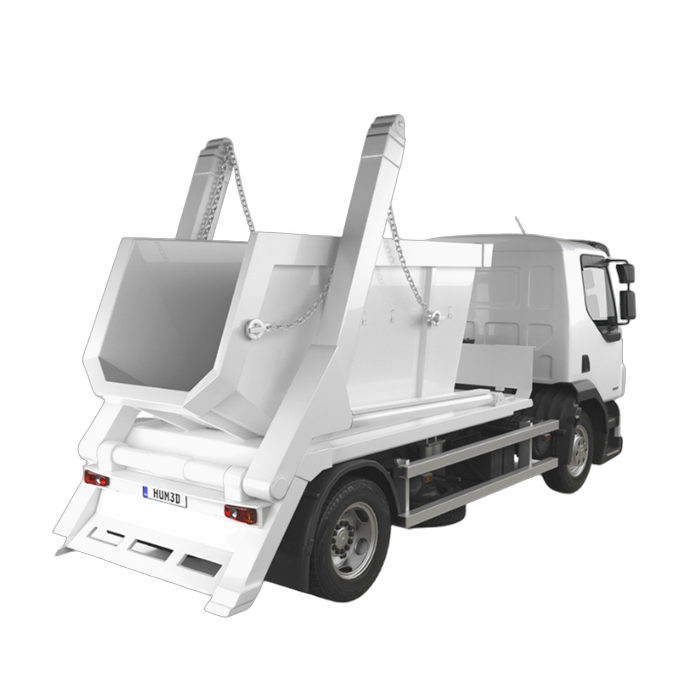
The core difference is the lifting mechanism, and it drives everything else. A skip loader uses two hydraulic arms that reach up and over an open skip, hooking chains onto lifting lugs to lift, tip, and set the bin down. A hook loader, sometimes called a hooklift or roll-on roll-off truck, uses a single articulated hook arm that engages a rail on the front of the container and rolls it onto the truck bed.
- Skip loader: Designed around open-topped skips, usually 2 to 12 cubic metres, lifted with chains and jib arms. Simpler, lighter, and cheaper, built for frequent drop-and-collect work.
- Hook loader: Rolls on a range of containers, from open bins to enclosed compactors and flat racks, on a single chassis. Heavier, more versatile, and quicker to swap without leaving the cab.
Capacity, access, and versatility compared
Three factors usually settle the decision: how much you need to carry, where you need to go, and how varied your work is.
| Factor | Skip loader | Hook loader |
|---|---|---|
| Typical bin size | 2 to 12 cubic metres | 10 to 40+ cubic metres |
| Best waste streams | Mixed, lighter, smaller volumes | Heavy or bulky: rubble, soil, C&D |
| Site access | Agile, suits tight urban streets | Needs space to operate |
| Container types | Standard skips only | Bins, compactors, flat racks |
| Purchase cost | Generally lower | Generally higher |
Skip loaders shine on high-frequency, drop-and-go work: many customers a day, small collections, quick turnarounds, and tight metro routes. Hook loaders come into their own when bins stay on site longer and volumes are high, swapping large containers quickly and letting one chassis serve multiple container types, which can shrink your fleet.
The cost picture
Hook loaders generally cost more upfront: a heavier chassis, stronger hydraulics, and larger containers all add to the bill. But for heavy-volume work they can deliver a stronger return, because fewer trips, better payload efficiency, and higher profit per run offset the higher entry price. Skip loaders are cheaper to buy and can turn over strong daily volumes on close, small jobs, often with easier route planning in metro areas.
Whichever you choose, judge on total cost of ownership rather than sticker price. Fuel, maintenance, downtime, insurance, and resale all matter, and the container fleet is a cost in its own right. For a detailed breakdown of new, used, and body-only figures, see the skip loader truck prices guide, and for spec decisions that drive the number, the skip loader truck buying guide.
Don't forget compliance
Whatever you buy, the load rules apply. Maximum payload equals the truck's Gross Vehicle Mass minus the tare weight of the chassis, the lifting system, and the empty bin, so a heavier hook system eats into the payload it can legally carry. Operators must keep within National Heavy Vehicle Regulator mass limits and hold certified mass documentation for bins to maintain compliance records. Equipment should also meet AS 4024 machinery safety standards, and bins must match the truck's system: a skip loader cannot safely lift a hook bin, or vice versa, without risking equipment damage and a serious safety hazard.
A realistic scenario
Picture two operators. The first runs residential skip hire across a dense inner-city suburb, dropping 4 and 6 cubic metre bins on driveways and nature strips, servicing many customers a day down narrow streets. The second is a demolition contractor clearing heavy concrete and brick rubble from large open sites.
For the first, a skip loader is the obvious fit: agile, cheaper, and quick to position in tight spots where small skips suit domestic jobs. For the second, a hook loader wins comfortably, moving 30 to 40 cubic metre containers of dense rubble in fewer trips and keeping a big project moving. A growing firm serving both often runs a mixed fleet, skip loaders for residential and hook loaders for commercial and construction contracts. If your work leans toward bulk collection and compaction, it is worth also weighing an enclosed garbage truck against these systems. Browse the hooklift truck listings to compare hook systems by lifting capacity.
Frequently asked questions
What is the difference between a skip loader and a hook loader?
A skip loader lifts open skips using two hydraulic arms and chains hooked to lifting lugs. A hook loader uses a single hydraulic hook arm to roll larger containers onto the truck bed. Skip loaders handle smaller open skips; hook loaders carry bigger and more varied containers, including compactors and flat racks.
Which is better for a demolition or construction site?
A hook loader usually wins on demolition and construction work. It carries much larger containers, 30 to 40 cubic metres or more, and moves heavy rubble in fewer trips. Skip loaders suit smaller builders' waste and tighter sites but reach road weight limits quickly with dense material.
Is a hook loader more expensive than a skip loader?
Generally yes. Hook loaders need a heavier chassis, stronger hydraulics, and larger containers, so they cost more upfront. For high-volume operators the extra cost can pay back through fewer trips and better payload efficiency, but for small-scale work a skip loader is the more economical choice.
Can I use the same bins on both trucks?
No. Skip bins use chain-and-lug lifting; hook bins use a hook-and-rail roll-on system. Attempting to lift a hook bin with a skip loader, or the reverse, damages equipment and creates a serious safety hazard. Bins must match the truck's lifting system.
How do I calculate my legal payload?
Payload equals the truck's Gross Vehicle Mass minus the tare weight of the chassis, the lifting system, and the empty bin. A heavier hook system reduces available payload, so check the maths against NHVR mass limits and keep certified mass documentation for each bin to stay compliant.
What matters most
There is no single best truck, only the one that matches your work. If your operation is residential, tight-access, and high-frequency, a skip loader is usually the smarter and cheaper fit. If it involves demolition, heavy waste, or large contracts on open sites, a hook loader is the stronger long-term performer, and its versatility can shrink your fleet. Weigh capacity, access, container variety, and compliance against how you actually run, and judge the decision on total cost of ownership. Match the truck to the job and it earns its keep; match it to the wrong job and no spec sheet will save the numbers.
Ready to compare waste trucks for your operation? Get quotes from hooklift and skip loader truck suppliers across Australia here.
-160x160-state_article-rel-cat.png)