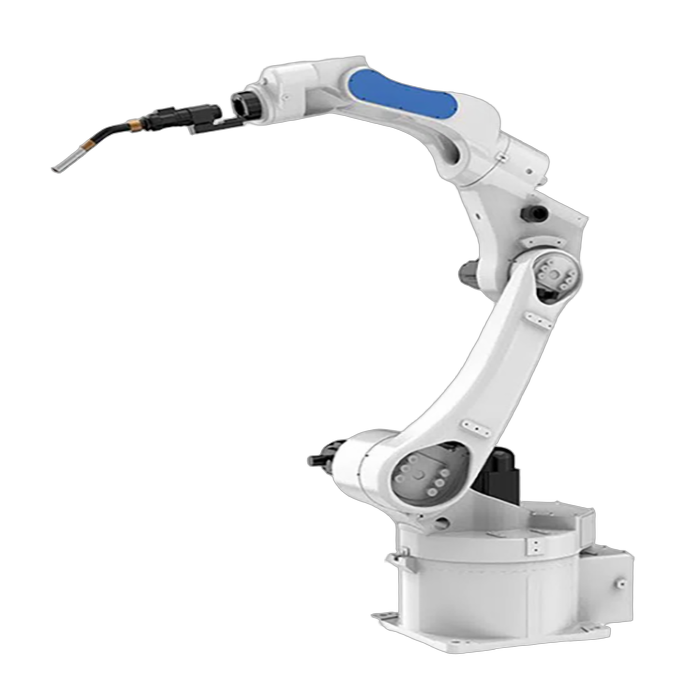

Key takeaways
- Entry-level MIG cell: $80,000-$120,000 for a single-arm cell with standard positioner, fencing and power source included.
- Mid-range multi-station: $150,000-$220,000 for dual-positioner rotary cells with offline programming and seam tracking.
- High-spec TIG/gantry: $250,000-$400,000+ for precision TIG cells or gantry-mounted systems with extended travel.
- Annual running costs: $12,000-$25,000 per year covering consumables, electricity, shielding gas and scheduled maintenance.
- Decision shortcut: If your operation runs one shift with consistent batch work, a $100,000 MIG cell typically pays for itself within 18-24 months through reduced labour cost per weld.
- Used/refurbished units: $40,000-$80,000 for cells under 10 years old with a remaining service life of 5-8 years, subject to condition and hours.
- 5-year TCO: A $150,000 mid-range cell costs approximately $270,000-$310,000 over five years including purchase, consumables, energy and maintenance.
What the money gets you: Robotic welder pricing in Australia
Robotic welders are one of the highest-return capital investments available to Australian fabrication operations in 2026 - but only when the total cost is modelled correctly before approval. The gap between purchase price and five-year total cost of ownership can exceed 80%, and cost models that miss the running cost layer are the ones that stall at sign-off.
This guide breaks down every cost layer - purchase tiers, annual running costs, consumable budgets, maintenance schedules and depreciation - so you can build a complete approval case. If you are ready to benchmark pricing, get quotes for robotic welders on IndustrySearch to compare current supplier pricing against these ranges.
Choose your configuration
Your configuration choice sets your price tier before any other specification comes into play. A single-arm MIG cell is the entry point for most operations; multi-station and TIG configurations carry a 50-100% premium. For full configuration comparisons and selection criteria, see the robotic welding cell buying guide.
Evaluate the cost-critical specifications
With your configuration confirmed, three specifications drive the largest cost differences between models. Reach above 1,800 mm adds $10,000-$20,000 to cell cost. Offline programming capability adds $15,000-$25,000 upfront but reduces changeover downtime by 60-80%, which for operations running 3+ part families is a net saving within the first year. Seam tracking (laser or touch-sense) adds $8,000-$15,000 but eliminates rework caused by part fit-up variation - at a 5% rework rate on a $200/hour production line, that saves $15,000-$25,000 annually. Incoming part tolerance from upstream cutting or forming directly affects weld quality regardless of robot specification - tightening fabrication tolerances before investing in a higher-spec cell is often the cheaper fix.
The most common mistake is approving a base-model cell without costing these additions, then discovering they are needed after commissioning. Retrofitting offline programming or seam tracking post-install typically costs 30-50% more than specifying it at order.
Understand the full cost breakdown (2026 prices)
Purchase price is only part of the picture - most cost models that get rejected at approval stage have missed the running cost layer. Here is the full breakdown.
Category | Price Range (AUD) | Typical Configuration |
|---|---|---|
Entry-level MIG cell (new) | $80,000-$120,000 | Single arm, 6 kg payload, 1,400 mm reach, single positioner, safety fencing |
Mid-range multi-station (new) | $150,000-$220,000 | Dual positioner, 12-20 kg payload, offline programming, seam tracking |
High-spec TIG/gantry (new) | $250,000-$400,000+ | TIG precision cell or gantry with 3-10 m travel, multi-axis positioner |
Used/refurbished cell | $40,000-$80,000 | Single-arm MIG, 5-10 years old, reconditioned with new consumables |
Annual consumables | $6,000-$12,000 | Contact tips, nozzles, liners, welding wire, shielding gas (based on single-shift) |
Annual maintenance | $2,000-$5,000 | Scheduled servicing, arm calibration, power source inspection |
Annual electricity | $3,000-$6,000 | Based on 15-30 kW draw at single-shift utilisation (NSW/VIC commercial rates) |
Fixturing (per part family) | $3,000-$15,000 | Dedicated jigs and clamps per part - budget 10-20% of cell cost for initial fixture set |
Over five years, a $150,000 mid-range MIG cell accumulates $120,000-$160,000 in running costs, bringing total cost of ownership to $270,000-$310,000. The largest variable is consumable spend, which scales directly with arc-on hours. Operations running two shifts will see consumable costs increase by 70-90% relative to single-shift figures above.
The break-even point for most single-shift operations investing in a $100,000-$150,000 cell is 18-24 months, calculated against the cost of a full-time manual welder ($85,000-$110,000 per year including super and overheads) producing equivalent output. For operations running two shifts, break-even compresses to 10-14 months. These figures assume the cell is fed at capacity - if upstream cutting or forming cannot keep pace with robot cycle time, real throughput drops and payback extends. If you are within 3-6 months of purchasing, get quotes for robotic welders now - lead times on mid-range cells are currently 8-14 weeks from Australian-stocked suppliers.
Depreciation and asset planning
Planning the depreciation schedule before purchase strengthens your approval case and sets realistic expectations for asset value at replacement.
Factor | Detail |
|---|---|
ATO effective life | 10 years for robotic welding equipment |
Diminishing value rate | 20% per annum |
Prime cost rate | 10% per annum |
Instant asset write-off | $20,000 threshold - robotic welders exceed this, standard depreciation applies |
Residual value at 8-10 years | $15,000-$40,000 depending on condition, brand and hours logged |
Depreciation example: A $150,000 robotic welder depreciated at 20% diminishing value writes down to approximately $47,000 at year 5. Market resale for a well-maintained mid-range cell at that age sits between $30,000-$50,000, meaning the asset retains value above its book figure if properly serviced.
Evaluate suppliers
You are ready to go to market. When comparing supplier quotes, focus on what is included in the headline price versus what is charged as an extra: installation, commissioning, training days, safety fencing and fume extraction can add $15,000-$40,000 if quoted separately. Always request a line-item breakdown rather than a single lump-sum figure - this lets you compare like-for-like across suppliers and negotiate on specific components. For a full supplier evaluation checklist covering specification, commercial and service factors, see the MIG welder selection guide.
Frequently asked questions
What does a robotic welder cost per hour to operate in Australia?
All-in operating cost including consumables, energy and maintenance averages $8-$15 per arc-on hour for a MIG cell. This compares to $45-$60 per hour for a manual welder at full employment cost including super and overheads.
Is a used robotic welder a viable option for cost-conscious operations?
Used cells under 10 years old with documented service history can deliver 5-8 years of additional production at 40-60% of new cell cost. The risk sits in undisclosed wear on gearboxes and wiring - always request a calibration report and test-weld before purchase.
How much should i budget for installation beyond the cell price?
Installation, electrical connection, fume extraction ducting and concrete pad preparation typically add $10,000-$25,000 for a standard single-arm cell. Multi-station and gantry systems can exceed $40,000 in site preparation costs.
What is the typical payback period for a robotic welder replacing manual welding?
Single-shift operations replacing one full-time manual welder typically see payback in 18-24 months. Two-shift operations or those replacing two welders compress this to 10-14 months.
Do consumable costs vary significantly between robotic and manual welding?
Robotic welding uses 15-25% less wire per metre of weld due to more consistent travel speed and reduced spatter. Shielding gas consumption is comparable, but the net consumable cost per completed weld is lower because rework rates drop from 5-8% to under 1%.
What matters most
- Model total cost of ownership over 5 years, not just purchase price - running costs add 80-100% to the initial outlay
- Single-shift break-even for a $100,000-$150,000 cell is 18-24 months against manual welding costs
- Get line-item quotes that separate installation, fencing, extraction and training from the cell price
- Used cells offer strong value if service history and calibration reports are verifiable
- Consumable spend is the largest running cost variable and scales directly with arc-on hours
Most buyers shortlist 2-4 suppliers after comparing initial quotes and running a site assessment with each.
Do not waste time contacting suppliers individually. IndustrySearch gives you direct access to verified Australian robotic welder suppliers - where industrial buyers request and compare multiple quotes so they can buy with confidence.
- Get quotes for robotic welders - contact multiple verified suppliers with a single enquiry
- Compare models - filter by capacity, configuration and region
- Contact suppliers directly - speak to specialists who service your state
Get and compare robotic welder quotes now


-160x160-state_article-rel-cat.png)