
Key Takeaways
| Factor | Guidance |
|---|---|
| Walk-behind price (AUD) | $3,000–$8,000 for short-distance and smaller warehouse use |
| Ride-on price (AUD) | $8,000–$18,000+ for large warehouses and distribution centres |
| Walk-behind travel speed | 4–6 km/h |
| Ride-on travel speed | 8–12 km/h |
| Efficient transport distance — walk-behind | Under 20–30 metres |
| Efficient transport distance — ride-on | Over 40–50 metres |
| Load capacity (both types) | 1,500–3,000 kg depending on model |
| Productivity gain from ride-on | 20–40% faster pallet transport in large facilities |
Why Buyers Are Comparing These Two Configurations
Electric pallet jacks are battery-powered ground-level material handling machines used to move palletised loads across warehouse floors. They don't lift loads to height — that's a forklift's job — but they're the workhorse of horizontal pallet movement in most warehouse and distribution operations.
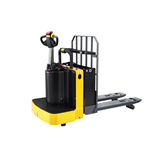
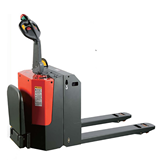
The two main configurations are walk-behind and ride-on. A walk-behind model has the operator on foot, steering from behind the machine. A ride-on model has a platform or seat so the operator travels with the load — covering ground faster and with less physical effort over long distances.
The choice between them comes down to one thing: how far your operators are travelling. Get it wrong and you either overspend on a ride-on that never leaves a 15-metre loop, or you burn out operators walking kilometres per shift on a machine that should have had a platform.
Facilities commonly facing this decision include:
- Warehouses scaling up pallet volumes or footprint
- Distribution centres evaluating equipment replacement or fleet expansion
- E-commerce fulfilment operations with growing pick-and-move requirements
- 3PL and cold storage facilities running multi-shift operations
- Manufacturing plants adding or reorganising warehouse zones
Is this guide for you? If you're deciding between walk-behind and ride-on electric pallet jacks — or building a business case for an upgrade — this guide gives you the specification and cost comparison to make the call.
Configuration Comparison
| Feature | Walk-Behind | Ride-On |
|---|---|---|
| Typical price (AUD) | $3,000–$8,000 | $8,000–$18,000+ |
| Load capacity | 1,500–2,500 kg | 2,000–3,000 kg |
| Travel speed | 4–6 km/h | 8–12 km/h |
| Operator position | Walking behind | Standing or seated on machine |
| Efficient transport distance | Under 20–30 m | Over 40–50 m |
| Aisle width requirement | Narrow aisles — compact footprint | Wider turning radius required |
| Best facility type | Small warehouses, retail backrooms | Ride-on models — Large warehouses, DCs, fulfilment centres |
Walk-behind models are the right call for compact facilities, short pallet runs and operations where aisle width limits larger equipment. The lower price point and simpler training requirements make them the default starting point for most smaller warehouses.
Ride-on models make financial sense once transport distances regularly exceed 40–50 metres. At that point the speed differential — 8–12 km/h versus 4–6 km/h — compounds across hundreds of pallet movements per shift, and operator fatigue on a walk-behind becomes a real productivity drain.
Key Specifications Buyers Should Evaluate
| Specification | Typical Range | Buyer Consideration |
|---|---|---|
| Load capacity | 1,500–3,000 kg | Size to your heaviest standard pallet, not your average. Operating consistently at the rated limit accelerates drive wheel and hydraulic wear. |
| Travel speed | 4–12 km/h | Speed matters most in facilities over 3,000 sqm. In compact warehouses the difference rarely justifies the ride-on price premium. |
| Battery technology | Lead-acid or lithium-ion | Lithium-ion adds $1,500–$3,000 upfront but eliminates maintenance and supports opportunity charging — essential for multi-shift operations. |
| Fork length | 1,150–1,220 mm standard | Suits most Australian pallet sizes. Verify against your specific pallet format before ordering. |
| Turning radius | Tighter (walk-behind) vs wider (ride-on) | Ride-on models need wider aisle intersections. Map your tightest turn before committing to a configuration. |
| Platform type (ride-on) | Standing or seated | Standing platforms suit shorter shifts. Seated configurations reduce fatigue on full-day multi-shift operations. |
Technology or Configuration Options
| Factor | Lead-Acid Battery | Lithium-Ion Battery |
|---|---|---|
| Purchase price premium | None — standard | $1,500–$3,000 higher |
| Lifespan | 3–5 years | 5–8 years |
| Charge time | 6–8 hours | 1–2 hours |
| Opportunity charging | Not recommended | Fully supported |
| Annual maintenance | Watering and inspection required | None |
| Best fit | Single-shift, overnight charging available | Multi-shift, high-throughput, continuous use |
Choose lead-acid when the unit runs one shift and overnight charging is reliable. It is a proven, lower-cost option — the trade-off is a replacement battery cost of $400–$1,200 within 3–5 years and a disciplined charging regime to protect battery life.
Choose lithium-ion when the machine runs hard. Multi-shift operations, facilities without extended downtime between shifts, and any environment where operators charge opportunistically during breaks will recover the lithium-ion price premium within 3–4 years through avoided battery replacements and zero maintenance cost.
Costs in Australia
| Category | Price Range (AUD, 2026) | Typical Configuration |
|---|---|---|
| Walk-behind — entry | $3,000–$5,000 | Lead-acid, 1.5–2t, basic controls |
| Walk-behind — mid/industrial | $5,000–$8,000 | Lead-acid or lithium-ion, 2–2.5t |
| Ride-on — entry | $8,000–$12,000 | Lead-acid, standing platform, 2t |
| Ride-on — mid/industrial | $12,000–$18,000+ | Lithium-ion, seated or standing, 2.5–3t |
Running costs are low across both configurations. Annual electricity sits under $100 per unit. Servicing runs $100–$400 per year covering wheels, brakes and hydraulics. Battery replacement remains the largest lifetime cost — $400–$1,200 for lead-acid at years 3–5, or $1,200–$2,500 for lithium-ion at years 5–8. A mid-range walk-behind typically costs around $6,500–$7,000 over five years all-in; a mid-range ride-on sits closer to $10,000–$12,000 depending on battery type and usage intensity.
Australian Compliance Requirements
- Both configurations are classified as plant under the Work Health and Safety Regulations 2017 — maintenance, inspection and operator training obligations apply.
- Walk-behind operators do not require a forklift High Risk Work Licence — but employers must provide documented training and competency assessment.
- Ride-on models where the operator is elevated with the load may be classified as a forklift and require a High Risk Work Licence — confirm with your state WHS regulator before purchasing.
- Both types must be maintained per manufacturer specifications and AS 2359 (industrial trucks standard).
- Lead-acid charging areas require ventilation compliance under WHS regulations due to hydrogen gas emission.
- Warehouse traffic management plans must account for pedestrian and equipment interaction zones under WHS obligations.
Supplier Comparison Checklist
| Factor | What to Ask |
|---|---|
| Configuration recommendation | Based on my travel distances and floor layout, which configuration do you recommend and why? |
| Battery type included | Is the listed price lead-acid or lithium-ion, and is the charger included? |
| Turning radius specification | What is the minimum aisle width required for safe operation of this model? |
| Ride-on licence requirement | Does this model require a High Risk Work Licence in my state? |
| Service network | Do you have technicians in my state, and what is the call-out rate and response time? |
| Spare parts availability | Are drive wheels, load wheels and batteries held in-country? |
| Warranty terms | What is the warranty period, and is the battery covered separately? |
| Operator training | Do you provide or recommend operator training at point of sale? |
| Multi-shift suitability | Has this model been tested in continuous multi-shift operation, and what battery management is recommended? |
| Trade-in value | What is the residual or trade-in value at end of battery life? |
Frequently Asked Questions
How much more does a ride-on pallet jack cost than a walk-behind? Walk-behind models range from $3,000 to $8,000; ride-on models start at $8,000 and reach $18,000+ for lithium-ion industrial configurations. The $5,000–$10,000 gap is only justified when travel distances, pallet volumes or operator fatigue are high enough to generate a productivity return. For most facilities under 2,000 sqm with short pallet runs, the walk-behind price point is hard to beat.
At what travel distance does a ride-on become worth it? The crossover is generally 40–50 metres of regular pallet travel. Above that threshold, the 8–12 km/h ride-on speed versus 4–6 km/h for a walk-behind compounds across dozens of return trips per shift. In large distribution centres, ride-on models typically deliver 20–40% faster pallet transport on the same routes.
Do ride-on pallet jacks require a forklift licence in Australia? Walk-behind models don't require a High Risk Work Licence. Ride-on models where the operator is elevated with the load may be classified as a forklift under WHS regulations, triggering licence requirements. Confirm the specific model's classification with your state WHS authority before purchasing — getting this wrong creates both a compliance risk and an unbudgeted training cost.
Which battery type suits a multi-shift operation? Lithium-ion is the practical choice. Its 1–2 hour charge time supports opportunity charging during breaks, while lead-acid requires 6–8 hours and isn't suited to mid-shift top-ups. The lithium-ion price premium is typically recovered within 3–4 years on a continuously-run machine.
Can a walk-behind handle the same loads as a ride-on? Most walk-behind models handle 1,500–2,500 kg, overlapping significantly with ride-on capacity. The real difference isn't lift rating — it's travel speed and operator fatigue across a full shift. A walk-behind moving 2-tonne pallets across 60-metre runs for eight hours is a fundamentally different operational proposition from doing the same on a ride-on.
What infrastructure do I need before buying either configuration? Both need a 240V outlet and dedicated charging area; lead-acid charging requires ventilation. Ride-on models need wider aisle intersections — confirm the turning radius with your supplier before purchasing. For multi-shift operations, lithium-ion's fast-charge capability usually means a single charger and break-time routine is sufficient, avoiding the cost of spare batteries or additional charging infrastructure.
Summary
- Walk-behind suits facilities under 2,000 sqm and pallet routes under 20–30 metres; ride-on delivers returns above 40–50 metres of regular travel.
- The price gap between configurations is $5,000–$10,000 — only justified by travel distance, pallet volume or fatigue-driven productivity loss.
- Ride-on models may require a High Risk Work Licence depending on configuration — confirm with your state WHS regulator before purchasing.
- Lithium-ion is the practical battery choice for any operation running more than one shift.
- Running costs are low for both types — the real financial difference is purchase price, battery technology and whether the productivity gain offsets the ride-on premium.
- Map your actual travel distances and shift patterns before choosing — the right answer is an operational decision, not a product one.
Ready to Source Your Electric Pallet Jack?
Don't waste time chasing individual suppliers. IndustrySearch gives you direct access to verified Australian electric pallet jack suppliers — compare models, specs and pricing in one place, then request quotes from suppliers best matched to your operation.
- Compare models — filter by capacity, configuration and region
- Request quotes — contact multiple verified suppliers with a single enquiry
- Contact suppliers directly — speak to specialists who service your state
Compare Electric Pallet Jacks on IndustrySearch Now →