
Key Takeaways
- Manual walkie stackers typically cost $1,000–$4,000 in Australia, making them a low-cost option for occasional pallet lifting and small warehouse environments.
- Electric walkie stackers usually range from $6,000–$18,000+, depending on lift height, battery technology and industrial build quality.
- Most walkie stackers support load capacities between 1,000 kg and 1,600 kg, while heavier-duty electric models can exceed 2,000 kg capacity.
- Manual stackers rely on hydraulic hand pumping and manual pushing, which limits productivity when pallet handling volumes increase.
- Electric stackers use battery-powered lift and drive motors, allowing faster pallet movement while reducing operator fatigue.
- Walkie stackers are widely used in warehouses, distribution centres, manufacturing facilities and retail backrooms where forklifts may be unnecessary or impractical.
- Many businesses upgrade from manual to electric stackers when pallet movement exceeds roughly 10–20 pallets per day or warehouse racking height increases.
Introduction
Walkie stackers are widely used across Australian warehouses for lifting and stacking palletised goods where forklifts may be unnecessary or impractical.
They are commonly found in environments such as:
- warehouse and logistics operations
- manufacturing facilities
- retail stockrooms
- spare parts storage areas
- e-commerce fulfilment centres
For businesses evaluating pallet handling equipment, one of the most common decisions is whether to use a manual walkie stacker or an electric walkie stacker.
Both machines perform similar tasks but differ significantly in productivity, operating effort, purchase cost and long-term operational efficiency.
Understanding these differences helps warehouse managers and procurement teams determine which equipment configuration best suits their facility layout, workload and operational growth plans.
Types of Walkie Stackers
Manual Walkie Stackers
Manual walkie stackers use a hydraulic lifting system powered by a hand-operated pump.
Operators manually:
- pump the handle to raise pallets
- push the stacker to move loads
- position pallets onto shelving or racking
Typical Specifications
| Specification | Typical Range |
| Load capacity | 1,000–1,500 kg |
| Lift height | 1.6–3.0 m |
| Power source | Manual hydraulic pump |
| Travel movement | Manual push |
Advantages
- low purchase cost
- simple mechanical design
- minimal servicing requirements
- no electrical infrastructure required
Limitations
- slower lifting speed
- increased operator fatigue
- reduced efficiency for high pallet volumes
Manual stackers are commonly used in smaller warehouses or facilities where pallets are stacked occasionally rather than continuously.
Electric Walkie Stackers
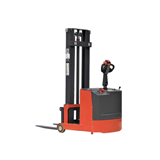
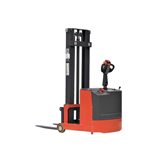
Electric walkie stackers use battery-powered motors to lift pallets, and most models also include powered travel systems.
Operators control lifting and movement using a handle-mounted control system.
Typical Specifications
| Specification | Typical Range |
| Load capacity | 1,200–2,000+ kg |
| Lift height | 2.5–5.5 m |
| Power source | Rechargeable battery |
| Travel movement | Electric drive motor |
Advantages
- faster lifting cycles
- improved pallet throughput
- reduced operator fatigue
- greater suitability for taller racking systems
Limitations
- higher purchase cost
- battery charging requirements
- additional maintenance compared with manual systems
Electric stackers are commonly used in distribution centres, logistics warehouses and manufacturing operations with frequent pallet handling.
Manual vs Electric Walkie Stackers: Key Differences
| Feature | Manual Walkie Stacker | Electric Walkie Stacker |
| Typical price | $1,000–$4,000 | $6,000–$18,000+ |
| Lift system | Hydraulic hand pump | Electric lift motor |
| Travel system | Manual push | Electric drive |
| Productivity | Low–moderate | Moderate–high |
| Operator effort | High | Low |
| Typical lift height | Up to ~3 m | Up to ~5.5 m |
| Ideal warehouse use | Occasional pallet stacking | Frequent warehouse operations |
The core difference between these machines is automation and productivity.
Manual stackers rely entirely on operator effort, while electric stackers automate lifting and movement to increase operational efficiency and reduce labour intensity.
Productivity Comparison: Manual vs Electric Stackers
Productivity differences between manual and electric stackers can be significant in active warehouse environments.
| Performance Metric | Manual Stacker | Electric Stacker |
| Typical pallets moved per hour | 10–20 | 30–60 |
| Lift speed | Slow | Fast |
| Operator fatigue | High | Low |
| Suitable workload | Occasional use | Continuous operation |
| Ideal shift length | Short tasks | Full warehouse shifts |
For warehouses handling dozens or hundreds of pallets daily, electric stackers can significantly improve workflow efficiency.
Warehouse Scenarios: Which Stacker Works Best?
The ideal stacker type depends heavily on the operating environment.
| Warehouse Scenario | Recommended Equipment |
| Small retail storeroom | Manual walkie stacker |
| Workshop or spare parts warehouse | Manual stacker |
| Medium warehouse with pallet racking | Electric walkie stacker |
| Distribution centre moving pallets continuously | Electric stacker |
| Warehouse with racking above 3 metres | Electric stacker |
Manual stackers typically suit low-volume environments, while electric models are better suited for high-frequency pallet handling operations.
Key Specifications Buyers Should Consider
Load Capacity
Walkie stackers typically support 1,000–2,000 kg capacity.
Businesses should consider:
- average pallet weight
- maximum load weight
- safety margin requirements
Choosing insufficient capacity can reduce equipment stability and workplace safety.
Lift Height
Lift height determines how high pallets can be stacked.
Typical ranges include:
- 1.6–2.0 m: low storage shelving
- 2.5–3.5 m: standard warehouse racking
- 4.0–5.5 m: high storage racking systems
Higher lift heights generally favour electric stackers for better lifting control.
Battery Technology (Electric Models)
Electric walkie stackers commonly use:
Lead-acid batteries
- lower purchase cost
- longer charging times
- periodic maintenance required
Lithium-ion batteries
- faster charging
- opportunity charging between shifts
- longer service life
Lithium batteries are increasingly used in modern warehouse equipment fleets.
Typical Price Range in Australia
Equipment pricing varies based on lift height, capacity, battery system and equipment build quality.
Manual Walkie Stackers
| Equipment Category | Typical Price |
| Entry-level models | $1,000 – $2,000 |
| Industrial manual stackers | $2,000 – $3,000 |
| Heavy-duty manual stackers | $3,000 – $4,000 |
Manual stackers are inexpensive because they do not include motors, batteries or electronic systems.
Electric Walkie Stackers
| Equipment Category | Typical Price |
| Compact electric stackers | $6,000 – $9,000 |
| Industrial warehouse stackers | $9,000 – $14,000 |
| High-lift lithium stackers | $14,000 – $18,000+ |
Higher prices usually reflect:
- greater lift height
- stronger drive motors
- lithium battery technology
- heavier-duty construction
Operating Costs and Total Cost of Ownership
Businesses evaluating equipment should consider lifecycle costs rather than purchase price alone.
Manual Stacker Costs
Manual stackers have very low operating expenses.
Typical costs include:
- hydraulic servicing
- wheel replacement
- occasional mechanical maintenance
Annual maintenance costs are usually below $300.
However, manual equipment can increase labour effort and operational time when pallet movement volumes increase.
Electric Stacker Costs
Electric stackers involve slightly higher lifecycle expenses.
Typical operating costs include:
- electricity for battery charging
- battery replacement every 3–8 years
- routine equipment servicing
Charging costs are typically $0.30–$0.50 per charge depending on battery size.
Despite these costs, electric stackers often deliver lower cost per pallet moved in high-volume operations.
Safety and Compliance in Australia
Warehouse material-handling equipment must comply with Australian Work Health and Safety (WHS) regulations.
Important considerations include:
- operator training requirements
- safe load handling procedures
- equipment inspection and maintenance schedules
- workplace risk assessments
Although walkie stackers generally do not require a forklift licence, operators must still be adequately trained to operate the equipment safely.
Employers are responsible for ensuring equipment is maintained and used in accordance with manufacturer recommendations.
When Businesses Typically Upgrade to Electric Stackers
Many warehouses initially use manual stackers but upgrade as operations grow.
Common upgrade triggers include:
- increased pallet handling volumes
- installation of taller warehouse racking
- expanding warehouse space
- multi-shift operations
- operator fatigue concerns
Once pallet movement exceeds 10–20 loads per day, electric stackers often deliver significantly better operational efficiency.
How to Choose the Right Walkie Stacker for Your Warehouse
Businesses evaluating stacker options should consider several operational factors.
Pallet Handling Volume
- Under 10 pallets per day → manual stacker may be sufficient
- 10–50 pallets per day → electric stacker improves efficiency
- High-volume warehouses → electric stacker usually required
Warehouse Racking Height
Higher storage racking often requires electric stackers due to improved lifting stability and control.
Warehouse Layout
Facilities with narrow aisles often benefit from walkie stackers instead of forklifts.
Long-Term Productivity
Manual stackers offer low upfront cost, while electric stackers often deliver higher long-term operational productivity.
Budget and Future Growth
Warehouses expecting increased pallet movement may benefit from investing in electric stackers earlier to support operational expansion.
FAQ: Walkie Stacker Buyer Questions
How much does a walkie stacker cost in Australia?
Manual walkie stackers typically cost $1,000–$4,000, while electric walkie stackers generally range from $6,000–$18,000+ depending on capacity, lift height and battery technology.
Do walkie stackers require a forklift licence in Australia?
Walkie stackers usually do not require a forklift licence, but operators must still receive appropriate workplace training.
What capacity walkie stacker do I need?
Most warehouses require 1,200–1,600 kg capacity, suitable for standard pallet loads.
What lift height is common in warehouses?
Many warehouses require 2.5–3.5 metre lift height to reach standard pallet racking.
Are electric stackers worth the higher cost?
Electric stackers improve productivity and reduce operator fatigue, making them beneficial for facilities with frequent pallet handling.
How long do walkie stackers typically last?
With proper maintenance, walkie stackers often last 8–12 years depending on usage intensity.
Conclusion
Manual and electric walkie stackers both play important roles in warehouse pallet handling.
Manual stackers provide a low-cost solution for occasional pallet stacking and smaller warehouse environments, while electric stackers deliver higher productivity, improved operator safety and reduced labour effort.
Selecting the right stacker depends on factors such as pallet movement volume, warehouse layout, lift height requirements and long-term operational efficiency.
Compare Walkie Stackers on IndustrySearch
On IndustrySearch, businesses can explore walkie stackers from verified Australian suppliers, compare key specifications such as lift height, load capacity and battery technology, and request quotes directly from suppliers servicing their region.
By comparing multiple suppliers, buyers can evaluate:
- pricing across brands and configurations
- equipment specifications and performance
- servicing and warranty support
- installation and delivery timelines
Requesting quotes helps businesses identify the most suitable walkie stacker configuration for their warehouse operations.


-160x160-state_article-rel-cat.png)