
Large excavator prices in Australia (2026): what you pay and why
- What you pay: Large excavators on IndustrySearch list between $150,000 and $500,000, averaging around $325,000, with mining-class machines running past $1 million.
- What drives price: Operating weight, engine power, bucket capacity, brand tier, and new versus used are the main cost levers on a large excavator.
- Running costs: Fuel, maintenance, and insurance can add tens of thousands a year, and a hydraulic repair alone can run into five figures.
- Why it matters: A large excavator is a capital-heavy asset in a construction sector worth $641.1 billion, so getting the size and cost model right protects your return.
- The decision: Match operating weight and reach to your heaviest, deepest work, then buy on total cost of ownership rather than the price tag.
A large excavator is one of the biggest single purchases a civil, mining, or earthmoving business will make. Get the class right and the machine earns its keep for a decade or more; get it wrong and you carry a costly asset that cannot reach half your jobs or is oversized for your sites. This guide covers what large excavators cost in Australia, the specs that change the price, and how to match a machine to your work before you compare quotes.
Why demand holds firm in 2026
Large excavators sit at the centre of two strong markets. Australia's construction industry is expected to reach $641.1 billion in revenue in 2025-26, growing at an annualised 2.8 percent, according to IBISWorld, driven by non-residential building and infrastructure work. Mining adds a second engine: the Australian Bureau of Statistics tracks private new capital expenditure by mining businesses, which keeps earthmoving fleets busy across resource states.
That demand is why used values stay firm and why buying the right class matters. A large excavator is rarely idle if it fits the work, but it is a heavy commitment either way.
What large excavators cost in Australia
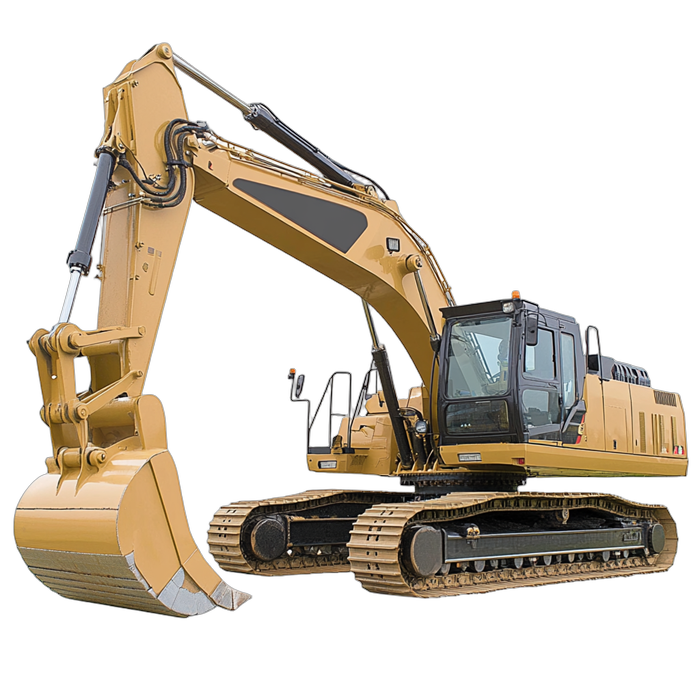
On IndustrySearch, listed prices for large excavators range from roughly $150,000 to $500,000, averaging about $325,000. Mining-class and specialist machines run higher again, past $1 million. Here is how the money maps to the machine:
- Standard large excavators: From around $150,000 to $350,000. The core earthmoving tier for civil construction, quarrying, and bulk excavation.
- Heavy and high-reach machines: Roughly $350,000 to $500,000. Reinforced structures, higher engine power, and demolition or deep-dig configurations.
- Mining-class excavators: Above $500,000 and past $1 million. Ultra-heavy operating weights, large bucket capacities, and continuous-duty builds.
Used machines can save you a meaningful share of new price, but a large excavator with high hours carries repair risk, so factor inspection and service history into any used comparison.
| Class | Typical price band | Best suited to |
|---|---|---|
| Standard large excavator | $150,000 - $350,000 | Civil construction, quarrying, bulk earthmoving |
| Heavy / high-reach | $350,000 - $500,000 | Demolition, deep dig, heavy structural work |
| Mining-class | $500,000 - $1m+ | Mine load-out and continuous heavy duty |
The specs that change the price
When you request quotes, these are the specs that decide both capability and cost:
- Operating weight: This sets the machine's digging force and stability. Heavier machines cost more and need heavier transport, so buy for your toughest routine job, not the occasional outlier.
- Engine power: More power shifts more material per hour but burns more fuel. Match power to your production target, since it drives both purchase price and running cost.
- Bucket capacity: A larger bucket shifts more per pass, lifting productivity, but it raises price and demands more engine and hydraulic power to swing.
- Attachments and hydraulics: A quick hitch, breakers, grapples, or shears widen what the machine can do. Each attachment adds cost, and high-flow hydraulics for demolition tools cost more again.
- Brand tier and telematics: Premium brands hold resale value and carry stronger dealer networks. GPS, telematics, and fuel-efficient engines add upfront cost but can lower running cost over the machine's life.
Running costs and total cost of ownership
The purchase price is only the start. Budget for total cost of ownership across the machine's working life:
- Fuel: Large diesel excavators are thirsty, and fuel is often the biggest single running cost. Engine choice and operator habits change the bill.
- Maintenance and wear: Tracks, ground-engaging tools, and filters wear steadily. A hydraulic system repair can run into five figures, so preventive servicing pays off.
- Insurance and transport: Covering and floating a machine this size adds real annual cost, especially if it changes sites often.
- Finance: Most buyers spread the cost with a chattel mortgage or equipment loan. Weigh repayments against the machine's earning capacity, not just the headline price.
A realistic scenario
Picture a civil contractor in regional Queensland winning a bulk earthworks package that needs steady, high-volume digging and loading across an 18-month build. The current 20-tonne machine cannot keep pace, and hire costs are climbing each month.
A standard large excavator in the $250,000 to $350,000 range, matched to the site's dig depth and truck-loading height, brings that work in-house and ends the hire bill. The contractor sizes on operating weight and bucket capacity for the routine load, adds a margin for the next job, and treats fuel and wear as planned running costs rather than surprises. Finance spreads the capital across the contract term so the machine pays as it works.
If your workload sits at the lighter or occasional end, it is worth weighing a large machine against a standard excavator or a well-inspected used excavator before committing new capital. For a full breakdown of pricing across sizes, the excavator prices and buying guide sets out where each class earns its place.
Frequently asked questions
What counts as a large excavator?
Broadly, machines above roughly 40 tonnes operating weight sit in the large class, running up to mining-scale units of several hundred tonnes. Size is set by operating weight, engine power, and bucket capacity rather than a single number.
Should I buy new or used?
Used machines can save a meaningful share of new price, but hours and service history matter. A well-maintained used excavator is good value; a high-hour machine with unclear history carries repair risk that can erase the saving.
How long does a large excavator last?
A well-maintained machine can run 10,000 to 20,000 hours, which is roughly 10 to 20 years depending on duty. Consistent servicing and correct operation are what stretch that lifespan.
What are the biggest running costs?
Fuel usually leads, followed by wear parts like tracks and ground-engaging tools, then major component repairs such as hydraulics. Insurance and transport add to the annual total, especially for machines that change sites often.
What matters most
A large excavator is a facility-scale investment, not an impulse buy. The machine that pays for itself is matched to your heaviest, deepest work, powered for your production target, and specced with the attachments your jobs demand. Get operating weight, reach, and bucket capacity right first, factor fuel and wear into total cost of ownership, and choose the cost model that suits your cash position.
Ready to compare specs and pricing on large earthmoving machines? Get quotes from large excavator suppliers across Australia here.



-160x160-state_article-rel-cat.png)