

-720x400.jpg)

-720x400.jpg)

Why a 10 mm Steel Rod Changed the Shredder Selection for an Australian Product Destruction Project
An Australian company needed a way to destroy returned products before they could be reused or passed on for secondary use.
The company is not a recycler. Its requirement was to make returned products unusable so they could not be recovered and put back into use by a third party.
The project covers four sites, with an estimated total processing volume of around 20 tonnes per month. The returned products include lawn mowers, standard printers, 3D printers, suitcases, agricultural sprayers, plastic containers and steel drums.
The customer initially wanted to determine whether one machine could handle the different products.
The answer depended on the material.
A 10 mm Steel Rod Changed the Shredder Selection
The customer initially considered a single-shaft shredder with a working width of at least 1,200 mm.
Then we reviewed the suitcases in more detail.
The suitcases contain a high proportion of plastic, but they also have metal hinges and steel rods in the wheel assemblies. Some of the steel rods can reach approximately 10 mm in diameter.
This ruled out treating the material as a simple plastic shredding application.
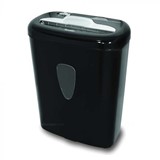
ENERPAT recommended the MSB-E1200 Two Shaft Shredder instead.
The two-shaft configuration is better suited to bulky mixed products where hard metal components are present together with plastic.
The customer agreed with the recommendation.
The shredder solution includes an infeed conveyor, discharge conveyor and pressing device. A magnetic head is also planned at the discharge to remove ferrous metal from the shredded material.
The Customer Was Not Looking for a Recycling Line
This was different from a conventional recycling project.
The customer did not need to sort the materials into different recyclable fractions. The purpose was to destroy returned products and prevent them from being reused as complete products.
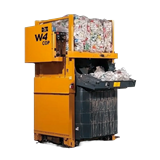
The customer was also considering the AMB-H2014-250 Hopper Type Metal Baler for part of the application.
They asked about the compression chamber dimensions and whether the machine had cutting blades.
ENERPAT confirmed the chamber dimensions and provided a video showing the blades operating inside the baler.
The planned material flow was:
Infeed Conveyor ? AMB-H2014-250 ? Discharge Conveyor ? Big Bag Collection
The customer also requested a layout drawing to calculate the required floor space and design safety guarding around the equipment.
Agricultural Sprayers Brought Another Requirement
Agricultural sprayers created a separate issue.
The sprayers are mainly plastic, but some may arrive with up to 15 litres of liquid remaining inside.
The question was therefore not only whether the shredder could process the plastic. The system also needed to handle liquid released during destruction.
A waste-liquid collection arrangement was therefore added to the shredder requirements.
This was particularly relevant because the returned products can contain different substances depending on their previous use.
Dust, Fumes and Contaminants
The returned products may also contain oil, ink, chemicals and other contaminants. Plastic products can produce dust and odors during processing.
The customer therefore requested dust and fume extraction for both the baler and shredder installations.
The extraction arrangement needs to be coordinated with the machine layout, conveyors, collection system and safety guarding.
Since the equipment will be installed across four sites, the customer also needs the layout information to plan the available floor space and safety enclosure at each location.
Why Not Use Only a Shredder?
The customer initially considered using only a shredder.
The logic was simple: if one shredder could destroy all of the returned products, there would be no need to purchase a separate baler.
After reviewing the actual materials, however, the customer decided that the two machines had different roles.
The MSB-E1200 Two Shaft Shredder is intended for bulky and difficult products containing a high proportion of plastic together with hard metal components, such as suitcases with steel wheel rods.
The AMB-H2014-250 Hopper Type Metal Baler provides another way to cut, damage and compress returned products and collect the output in big bags.
The final solution was therefore based on matching the equipment to the material rather than trying to process every product through one machine.
Local Australian References Helped Confirm the Purchase
The customer already knew ENERPAT through another Australian company that was using our equipment.
During the purchasing process, they also contacted other ENERPAT customers in Australia to verify the equipment in operation.
The customer was satisfied with the feedback and the equipment they saw at local customer sites.
This gave them additional confidence before placing the final order.
Final Equipment
ENERPAT AMB-H2014-250 Hopper Type Metal Baler
For returned products that can be fed into the hopper, cut and compressed, with conveyor feeding, discharge conveying and big-bag collection planned for the installation.
ENERPAT MSB-E1200 Two Shaft Shredder
For bulky mixed products containing a high proportion of plastic together with hard metal components, including products with steel rods of approximately 10 mm diameter.
The project will cover four Australian sites, with an estimated total processing volume of around 20 tonnes per month.
The customer initially had a simple question: Could one shredder handle all of the returned products?
After reviewing the materials, site requirements and handling process, the answer was not to force every product through one machine. The final solution combined a two-shaft shredder for the more difficult mixed products with a hopper-type baler for products that could be cut and compressed.
What started as an uncertain choice between a shredder and a baler ended with a two-machine destruction solution matched to the customer's actual products, site requirements and handling process.





-205x205.jpg)

-205x205.jpg)


-205x205.jpg)






-205x205.jpg)