
Key Takeaways
Size from fuel demand, not tank size. Daily litres × days between refills, plus a 15-20% reserve, gives the capacity to target.
Diesel weighs about 0.84 kg per litre. A 13,000 litre load is close to 11 tonnes before the tank and equipment, which is why larger capacities need 6x4 or 8x4 chassis and an HR licence.
Typical advertised pairings: about 6,000 litres on a 4x4, 10,000-14,000 litres on a 6x4, and 17,000-18,000 litres on an 8x4.
Match flow rate and nozzles to the fleet. Fast-fill suits large plant fitted with receivers. Standard nozzles cover light vehicles and smaller machines.
Get the site's vehicle standard before requesting quotes. Mine-spec items like ROPS and IVMS change the build and the price.
Start with daily fuel demand
Work out how many litres your fleet burns each day. Add up each machine's typical hourly burn multiplied by its working hours, or use a month of fuel records divided by working days.
As an illustration, ten machines averaging 30 litres an hour over a 10-hour shift burn 3,000 litres a day. If the truck returns to the depot bowser daily, 3,000 litres plus a 20% reserve (3,600 litres) fits comfortably in a 6,000 litre unit. If it refills every second day, you need about 7,200 litres, which puts you in 10,000 litre, 6x4 territory.
Other factors push the number up: long travel distances between machines, remote sites with irregular bulk deliveries, and night shifts where refilling isn't practical.
Match capacity to chassis and payload
Payload decides the chassis, and the chassis decides the licence. At roughly 0.84 kg per litre, the diesel alone in a 13,000 litre tank weighs about 10.9 tonnes. Add the tank, pumps, reels, rear deck and any ROPS structure.
Configuration | Typical capacity | Licence class | Best suited to |
|---|---|---|---|
4x2 light or medium rigid | 2,000-6,000 L | LR or MR | Small fleets, good access roads |
4x4 medium rigid | ~6,000 L | MR | Rough or wet sites, exploration, rural |
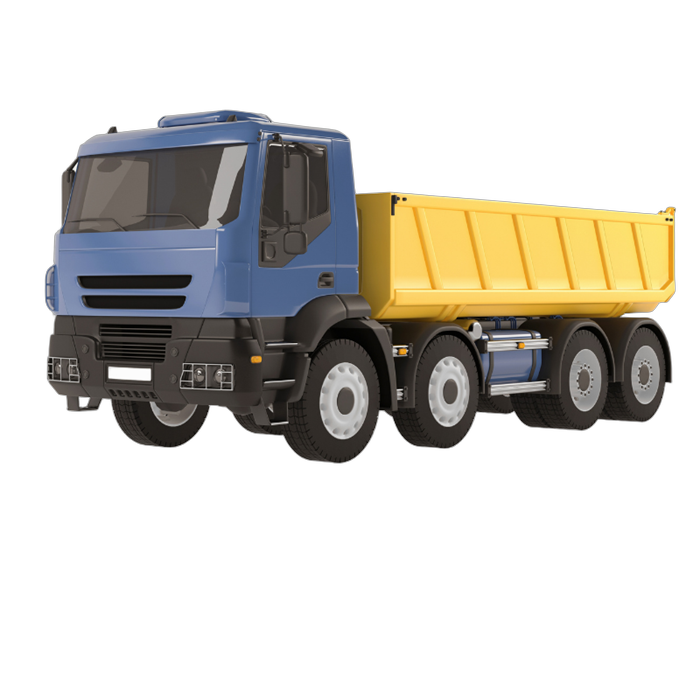
6x4 heavy rigid | 10,000-14,000 L | HR | Civil projects and mid-size mines |
8x4 heavy rigid | 17,000-18,000 L | HR | Large fleets, long refuelling runs |
These pairings reflect advertised builds. One dry-hire 4x4 fuel truck pairs a 6,000 litre diesel tank with a 14,500 kg GVM Hino GT. ORH offers diesel modules from 10,000 to 14,000 litres, and STG Global lists a 17,000 litre diesel truck in 6x4, 8x4 or 10x4 configurations. Across one builder's range, Plantman's fuel tankers hold 3,000 to 18,000 litres, on vehicles weighing from about 10,400 kg to 28,500 kg.
4x2, 4x4 or bogie drive?
Terrain matters as much as volume. A 4x2 is cheapest and easiest on tyres, but it struggles on wet haul roads. A 4x4 keeps a smaller truck moving on soft or steep ground. Bogie drive (6x4, 8x4) carries more and handles site roads well, but the truck is longer and less agile around tight work fronts. If your operators only hold MR licences, a two-axle 4x4 may be the practical ceiling regardless of volume.
Dispensing: pumps, flow rates and fast-fill
Flow rate should match what your machines can accept. Tanker pumping systems can be built with single or multiple outlets and flow rates ranging from 50 to 1,000 litres per minute. Large plant fitted with fast-fill receivers can take high-flow automatic nozzles. Fuel Equipment's 10,000 litre tanker, for instance, refuels standard top-fill machines and also fast-fills equipped plant through a Wiggins automatic nozzle, with overfill protection.
Many sites specify both. One mine-spec hire truck carries a 6,000 litre tank with high- and low-flow nozzles, gantry fill and Wiggins quick fill. Hydraulic PTO-driven pumps are common on larger builds, and electric pumps suit smaller units.
If you also service equipment, consider a multi-product build. Plantman lets buyers adjust the arrangement and number of tanks for diesel, oil, water, coolant and evacuated fluids, which turns a fuel truck into a full service truck.
Fuel management and metering
A fuel management system that records who dispensed what, into which machine, is now standard on most commercial builds. It controls fuel theft, supports machine-level cost tracking and backs up fuel tax credit claims. If you charge anyone else for fuel, specify a meter that is pattern-approved and verified for trade.
Mine and civil site specifications
Mines and major projects publish their own vehicle standards, and they vary. Common requirements include:
Rollover protection: one hire fleet fits ROPS to AS 2294, and other builders design ROPS to ISO 3471 and 3449.
In-vehicle monitoring (IVMS), duress systems, beacons and flags
Emergency stops, fire extinguishers and handrails
Automatic transmission and retarders for haul road descents
Send the site standard with your quote request. Retrofitting a mine pack after delivery costs more than building it in.
Truck, trailer or static tank?
Option | Best for | Trade-offs |
|---|---|---|
Fuel truck | Mobile refuelling across large or multiple sites | Highest cost; needs a licensed driver |
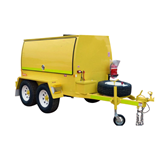
Fuel trailer | Low daily volume, smaller sites | Needs a tow vehicle; smaller capacity |
Static bunded tank | Machines that come to the fuel | No mobility; storage compliance applies |
Static tanks are the cheapest way to hold volume. New bunded 10,000 litre diesel tanks are advertised from about $16,800 ex GST. Many sites combine a static tank as the bulk store with a truck that refills from it. Browse diesel trailers if a trailer fits your volumes.
Spec checklist for your quote request
Daily fuel demand and refill interval
Target capacity and any split for oils or other fluids
Chassis preference, drive type and your drivers' licence classes
Flow rates, nozzle types and fast-fill requirements
Fuel management and trade-metering needs
Site vehicle standard (attach it)
Whether the truck will travel on public roads and carry petrol now or in future (this affects tank design approval)
Send your specification to fuel tanker truck suppliers and compare the builds side by side.
Frequently asked questions
What size fuel truck do I need for a mine site?
Size it from the fleet's daily burn and how often the truck can refill. Mid-size mines commonly run 10,000-14,000 litre 6x4 units, and larger fleets step up to 17,000-18,000 litre 8x4 trucks.
How many litres can a 6x4 fuel truck carry?
Most advertised 6x4 builds carry 10,000-14,000 litres. The exact figure depends on GVM, tank design and how much other equipment the truck carries.
Can one truck carry diesel and oils?
Yes. Service truck builds combine a diesel tank with separate compartments for engine oil, hydraulic oil, coolant and waste fluids.
Do I need fast-fill?
Only if your plant is fitted with fast-fill receivers. It cuts refuelling time on large machines, but standard nozzles are still needed for light vehicles and smaller equipment.
-160x160-state_article-rel-cat.png)
-160x160-state_article-rel-cat.png)