
Key takeaways
| Factor | Guidance |
|---|---|
| Entry-level manual bin lifter | $1,500–$4,000 AUD — hand-pump hydraulic, mild steel, 100–150 kg SWL |
| Mid-range electric bin lifter | $5,000–$12,000 AUD — battery-powered, 150–250 kg, powder-coated |
| High-spec electric bin tipper | $12,000–$25,000+ AUD — stainless steel, high-tip, IP65+, 300–500 kg |
| Forklift-mounted tipper attachment | $2,000–$6,000 AUD — hydraulic fork-mount, fits standard forks |
| Biggest cost driver | Construction material (stainless steel adds 40–60% over mild steel) |
| Annual running cost | $300–$800 servicing + $500–$1,500 battery replacement every 3–5 years |
→ Request pricing from verified bin lifter suppliers on IndustrySearch
What determines bin lifter & tipper pricing?
Bin lifter prices in Australia vary by a factor of 10× or more — from around $1,500 for a basic manual hydraulic unit to $25,000+ for a food-grade stainless steel high-tip tipper. The price you pay depends on four primary variables: power source, safe working load, construction material and tip height.
This price guide breaks down what Australian buyers can expect to pay in 2026 across every major category, including purchase price, ongoing running costs and total cost of ownership.
Purchase price by category (AUD, 2026)
| Category | Price Range (AUD) | What You Get |
|---|---|---|
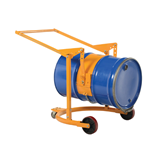
| Manual hydraulic bin lifter | $1,500–$4,000 | Hand-pump operation, 80–150 kg SWL, mild steel frame, basic cradle, 900–1,200 mm tip height |
| Electric bin lifter (standard) | $5,000–$10,000 | Battery or mains-powered, 150–250 kg SWL, powder-coated steel, 1,200–1,800 mm tip |
| Electric high-tip bin tipper | $10,000–$20,000 | Hydraulic ram, 300–500 kg SWL, 2,000–2,500 mm tip, safety interlocks, mild steel |
| Stainless steel food-grade tipper | $12,000–$25,000+ | 304/316 SS, IP65+, washdown-rated, HACCP-compatible, custom cradle options |
| Forklift-mounted tipper attachment | $2,000–$6,000 | Hydraulic fork-mount, 200–500 kg, skip/IBC compatible, no separate power source |
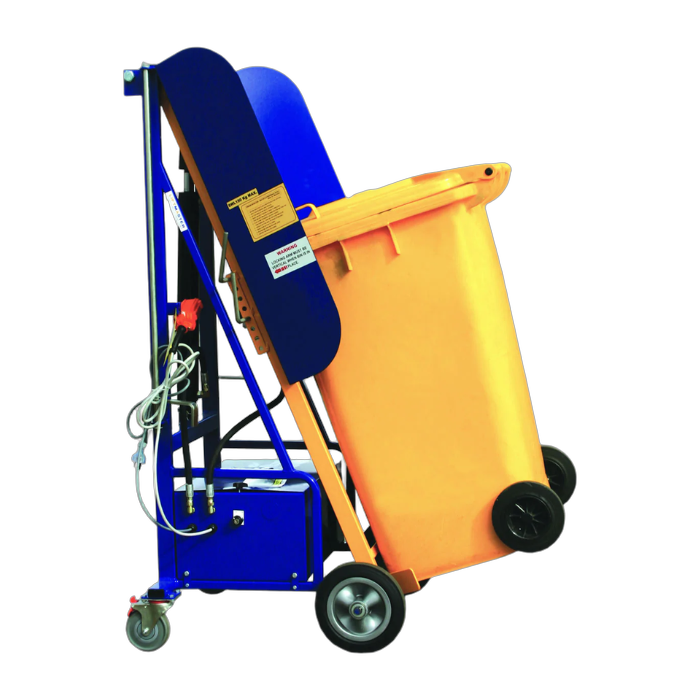
| Wheelie bin lifter (MGB-specific) | $3,000–$8,000 | Electric or pneumatic, fits 120/240 L MGB bins, ~120 kg capacity |
What drives the price up?
| Cost Driver | Impact on Price | When It Applies |
|---|---|---|
| Stainless steel construction | +40–60% over mild steel | Food processing, pharmaceutical, any washdown environment |
| Higher SWL rating | +$2,000–$5,000 per capacity tier | Heavy waste streams, full skip bins, IBC tipping |
| Extended tip height (2,000 mm+) | +$3,000–$6,000 | Elevated hoppers, compactors, production machinery inlets |
| Custom cradle or clamp | +$500–$3,000 | Non-standard bin sizes, proprietary containers |
| IP65/IP66 rating | +$1,000–$2,500 | Washdown areas, outdoor exposure, high-humidity zones |
| Safety guarding and interlocks | +$500–$2,000 | Multi-operator environments, automated production lines |
Running costs & total cost of ownership
| Ongoing Cost | Typical Range (AUD) | Frequency |
|---|---|---|
| Preventive servicing | $300–$800 | Annually (six-monthly for high-duty units) |
| Hydraulic seal replacement | $200–$600 | Every 2–4 years |
| Battery replacement (electric models) | $500–$1,500 | Every 3–5 years |
| Electricity consumption (electric models) | $100–$400 per year | Continuous (depends on duty cycle) |
Over a 10-year ownership period, a mid-range electric bin lifter purchased at $8,000 typically accumulates $4,000–$7,000 in running costs — bringing total cost of ownership to $12,000–$15,000. That equates to roughly $25–$30 per week, which most operations offset within months by eliminating manual handling injuries and reducing bin-emptying labour time.
New vs used bin lifters
Used electric bin lifters typically sell for 40–60% of new price depending on age, hours of operation and condition of the hydraulic system. Before purchasing used, verify the unit’s load test certificate is current, inspect hydraulic seals for leakage, and confirm battery health on electric models. Refurbished units from established suppliers — with new seals, repainted frame and fresh load testing — offer the best value in the secondary market.
Manual hydraulic lifters hold their value poorly because the mechanical simplicity means buyers prefer new units at relatively low cost. Forklift-mounted tipper attachments have a strong secondary market because they’re durable and standardised across fork dimensions.
How to reduce your upfront cost
Lease or rent. Several Australian industrial equipment suppliers offer bin lifter rental from $80–$200 per week for electric models. This eliminates capital expenditure and can be preferable for seasonal operations or short-term projects.
Choose mild steel when stainless isn’t required. If your application is general warehouse or manufacturing waste — not food or pharma — mild steel with powder coating delivers the same structural performance at 40–60% lower cost.
Right-size the unit. Overspecifying SWL and tip height inflates purchase price. A 150 kg lifter with a 1,200 mm tip is substantially cheaper than a 500 kg unit with a 2,500 mm tip — only pay for the capacity you actually need.
Supplier comparison checklist
| Factor | What to Ask |
|---|---|
| Quoted price inclusions | Does the quoted price include delivery, installation and commissioning? |
| Warranty terms | Is the warranty structural only, or does it cover hydraulics and electrics? |
| Servicing availability | Does the supplier offer on-site servicing in your state? |
| Spare parts lead time | Are hydraulic seals, batteries and electrical components stocked locally? |
| Rental or lease option | Is a rental or lease arrangement available as an alternative to outright purchase? |
| Custom build capability | Can the supplier build to custom specifications if standard models don’t fit? |
| Trade-in or buyback | Does the supplier accept trade-ins against a new unit purchase? |
| Volume pricing | Are discounts available for multi-unit orders across sites? |
| Delivery lead time | What is the lead time? Are ex-stock units available for urgent requirements? |
| Compliance documentation | Does the supplier provide load test certificates and WHS compliance statements? |
Frequently asked questions
How much does a basic bin lifter cost?
A basic manual hydraulic bin lifter starts from around $1,500 AUD for a light-duty model (80–100 kg SWL). Electric models start from $5,000 for standard-capacity units with powder-coated steel frames.
Why is stainless steel so much more expensive?
304 and 316 stainless steel cost significantly more as raw material and are harder to fabricate. The 40–60% premium covers both material cost and specialist welding. However, in food or pharmaceutical environments, stainless is non-negotiable for compliance and hygiene.
Is it cheaper to rent or buy a bin lifter?
For permanent daily use, purchase delivers better long-term value. Rental ($80–$200 per week) makes sense for seasonal operations, temporary projects or while trialling a specific model before committing to purchase.
What hidden costs should i budget for?
Beyond purchase price, budget for annual servicing ($300–$800), battery replacement every 3–5 years ($500–$1,500) and hydraulic seal kits every 2–4 years ($200–$600). Delivery and installation may or may not be included in the quoted price — always confirm.
Can i claim depreciation on a bin lifter?
Bin lifters are depreciable assets under ATO guidelines. The ATO assigns an effective life of 10 years for general industrial lifting equipment. Businesses using the instant asset write-off (where eligible) can deduct the full cost in the year of purchase up to the applicable threshold.
Get bin lifter pricing from verified suppliers
IndustrySearch connects you directly with verified Australian bin lifter and tipper suppliers — compare pricing, specs and availability in one place.
- Compare manual, electric and stainless steel models side by side
- Request quotes from multiple suppliers with a single enquiry
- Speak directly with specialists servicing your state
→ Compare Bin Lifter Prices on IndustrySearch Now →