
Key takeaways
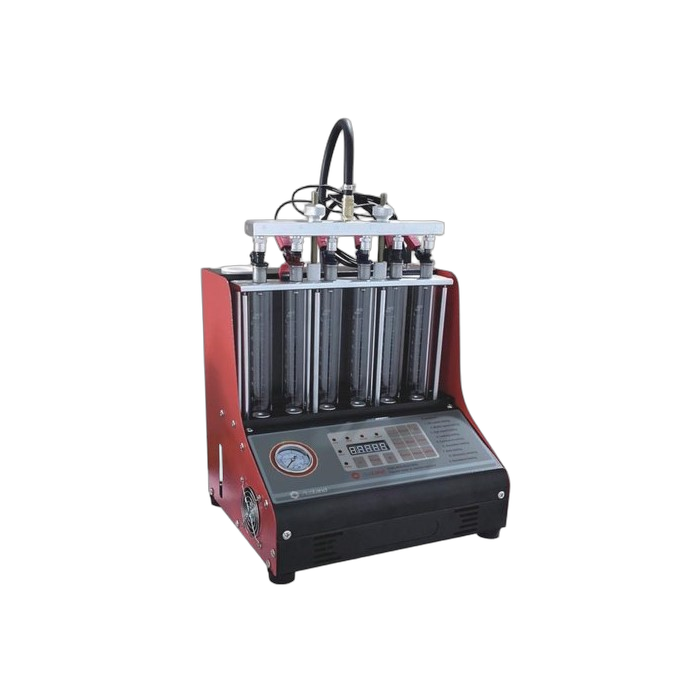
- What they are: Bench machines that flow-test, clean, and ultrasonically bathe removed injectors, plus on-car units that flush the fuel rail without pulling injectors out.
- What you will pay: Fuel injector cleaner equipment on IndustrySearch lists between $300 and $1,500, averaging around $900. Professional bench testers with ultrasonic baths sit at the upper end, and GDI-capable and high-pressure diesel rigs run well above the category average.
- Petrol or diesel decides the machine: A standard low-pressure petrol bench unit will not test common rail diesel injectors, which operate at far higher pressures and need a dedicated rig.
- Where the return sits: Cleaning a set of injectors is a fraction of replacing them, so the machine turns a parts-replacement job into a labour job you bill for.
- The decision: Match cylinder count, injector type, and test functions to the vehicles you actually service before you compare price.
Fuel injector cleaner equipment is one of the cheapest ways to add a billable service to an Australian workshop. A clogged injector shows up as rough idle, poor economy, misfires, and a check-engine light, and the default fix is replacement. That is expensive for the customer and easy for them to decline. A bench cleaner and tester lets you diagnose the injectors properly, clean them, and prove the result, all at a price the customer will say yes to. This guide covers what the equipment costs in Australia in 2026, the specs that change the price, and how to pick a machine that suits your work.
Why injector service is worth adding
The demand is structural. Australia's motor vehicle engine and parts repair and maintenance industry is worth around $17.3 billion across roughly 28,323 businesses, according to IBISWorld, and it is servicing an ageing fleet. There were more than 22.3 million registered road vehicles at 31 January 2025, per the Bureau of Infrastructure and Transport Research Economics, and the average age of that fleet keeps climbing. Older engines with higher kilometres are exactly the ones carrying injector deposits.
Labour is the other pressure. Motor mechanics, diesel mechanics, and automotive electricians all remain on the national shortage list, as tracked by Jobs and Skills Australia. With fewer hands available, the jobs worth taking are the ones with good margin per bay hour. Injector cleaning fits: the machine runs its cycle largely unattended while your technician works on something else, and the consumable cost per job is small. That is a better use of a scarce technician than a full injector replacement that ties up the same bay for longer.
What fuel injector cleaner equipment costs in Australia
Treat the bands below as a price guide for comparison rather than fixed quotes, since cylinder count, test functions, and injector type all change the figure.
| Equipment type | Typical price range | Best suited to |
|---|---|---|
| On-car fuel system flush kit | $150 - $600 | Quick service add-on, no injector removal |
| Entry 4-cylinder bench cleaner and tester | $300 - $800 | Light general workshops, low volume |
| 6 or 8-cylinder bench unit with ultrasonic bath | $800 - $1,500 | Most general repair workshops |
| GDI and high-pressure petrol capable unit | $1,500 - $4,000 | Modern direct-injection petrol engines |
| Common rail diesel injector test bench | $5,000 - $30,000+ | Diesel specialists, fleet and heavy vehicle |
The fuel injector cleaner equipment category on the marketplace lists between $300 and $1,500 with an average around $900, which covers the petrol bench machines most general workshops buy. Common rail diesel is a separate world: those injectors run at pressures an order of magnitude higher, and a proper diesel test bench is a five-figure investment aimed at specialists. Whichever tier you sit in, look at total cost of ownership rather than the price tag alone. Cleaning solvent, ultrasonic bath fluid, filter baskets, O-rings, and adaptor kits are recurring costs, and the adaptors matter more than buyers expect. A machine that cannot connect to a common local injector is a machine that sits idle.
The specs that change the price
These are the numbers to line up when you request quotes:
- Cylinder capacity: Units are built for 4, 6, or 8 injectors at once. A 4-cylinder machine forces two runs on a V6 or V8, which doubles your cycle time and quietly caps how many jobs you can turn in a day.
- Injector type supported: Standard benches handle low-pressure port injection such as MPI, TBI, and motorcycle injectors. GDI and high-pressure petrol need a purpose-built unit, and common rail diesel needs a dedicated test bench. Buying the wrong type is the single most expensive mistake in this category.
- Ultrasonic bath: A built-in or separate stainless bath, commonly around 100W at roughly 25 kHz, is what actually removes carbon deposits from the injector body. Without it you are flushing, not cleaning, and results are inconsistent.
- Test functions: Look for flow rate, spray pattern, leak-down, resistance, and waveform testing. These are what let you charge for diagnosis and prove the before-and-after to the customer, so they change your billable output, not just the machine cost.
- Pulse width modulation and pressure control: PWM control lets you simulate idle, mid-range, high speed, and acceleration conditions. A machine that only runs one fixed mode gives you far less diagnostic value per job.
- Glass measuring tubes and display: Graduated tubes or a digital readout show flow variation between injectors at a glance. This is how you demonstrate an imbalance to a customer, which is what converts the quote.
- Adaptor and coupler kit: Confirm the supplied kit covers the injector rails you see most. Buying adaptors separately after the fact adds cost and downtime.
On-car flushing or bench cleaning?
The two approaches solve different problems. An on-car flush kit connects to the fuel rail and runs cleaning solvent through the system with the engine running. It is fast, cheap, needs no injector removal, and suits a service add-on or a light case of deposits. What it cannot do is tell you which injector is failing or clean the outside of the injector body.
A bench machine requires you to pull the injectors, which is real labour, but it delivers the ultrasonic clean and the flow and spray pattern test that turn guesswork into evidence. Most workshops end up with both: the flush kit as a cheap upsell on routine services, and the bench unit for diagnosis and the jobs where a customer is weighing a $1,500 injector replacement quote.
A realistic scenario
Picture an independent general repair workshop in outer Melbourne with three bays, mostly servicing petrol passenger cars around ten years old. Customers regularly present with rough idle and poor economy. Without test equipment the workshop can only recommend replacement injectors, and a large share of those quotes get declined on price.
A 6-cylinder bench cleaner and tester with an ultrasonic bath around the $1,200 mark changes the conversation. The technician pulls the injectors, runs a flow and spray pattern test, shows the customer the uneven tubes, cleans the set, and re-tests to prove the result. The job bills as diagnosis plus labour plus a small consumable cost, and the customer pays a fraction of a replacement quote. The workshop wins because the acceptance rate on the smaller job is far higher, and because the ultrasonic cycle runs while the technician is on another car. Before committing, it is worth weighing purchase against hire, and the hiring versus buying machinery guide works through the cash flow and tax trade-off for Australian businesses. If deposit removal is a broader problem across your engine work, an industrial ultrasonic cleaner handles larger components the injector bath cannot fit.
Fitting it into the workshop
Injector equipment is rarely a standalone purchase. It works alongside the diagnostic gear that identifies the fault in the first place, so plan the pair together:
- Diagnostics come first: A misfire code points you at a cylinder, not a cause. A diagnostic scan tool, listing from around $100 to $2,000 and averaging about $1,050, is what tells you an injector is worth pulling before you spend the labour.
- Bench space and power: Most petrol units are benchtop and run single phase, so the practical constraint is a dedicated bench with ventilation for solvent fumes, not your electrical supply.
- Solvent handling: Cleaning fluids are flammable and give off fumes. Budget for correct storage, ventilation, and disposal, and factor that into your workshop safety plan rather than treating it as an afterthought.
- Consumables: Cleaning solvent, ultrasonic fluid, filter baskets, and O-ring kits recur with every job. They are small per job but they set your true cost per service, so price them before you set your customer rate.
Frequently asked questions
How much does fuel injector cleaner equipment cost in Australia?
Bench cleaner and tester units list from around $300 to $1,500, averaging about $900. Entry 4-cylinder machines sit at the lower end, while 6 and 8-cylinder units with an ultrasonic bath sit at the top. GDI-capable machines run higher again, and common rail diesel test benches are a separate five-figure category.
What is the difference between an on-car flush kit and a bench cleaner?
An on-car kit pushes solvent through the fuel rail with the injectors still fitted, which is fast and cheap but tells you nothing about individual injector condition. A bench machine requires removal but adds ultrasonic cleaning plus flow rate, spray pattern, and leak-down testing, so you can diagnose and prove the result.
Can one machine clean both petrol and diesel injectors?
Generally no. Standard bench units are built for low-pressure port petrol injectors. Common rail diesel injectors operate at far higher pressures and need a dedicated test bench costing several thousand dollars or more. Confirm the injector types you service before you shortlist a machine.
Does a fuel injector cleaner need an ultrasonic bath?
For proper cleaning, yes. The bath uses high-frequency sound waves to lift carbon deposits from the injector body and internal passages, which solvent flow alone does not achieve consistently. Units are commonly around 100W at roughly 25 kHz, either integrated or supplied as a separate stainless trough.
What matters most
Fuel injector cleaner equipment is a revenue decision dressed up as a tooling purchase. Match the injector type to the vehicles you service, size the cylinder capacity to avoid doubling your cycle times, and insist on an ultrasonic bath and real test functions rather than a flush-only unit. Confirm the adaptor kit covers your common rails, and cost the solvent and consumables alongside the price tag. Get that right and a machine under $1,500 converts declined replacement quotes into accepted service jobs. Get the injector type wrong and the machine will not touch the work you actually see.
Ready to match cylinder capacity, test functions, and injector type to your workshop? Get quotes from fuel injector cleaner equipment suppliers across Australia here.
-160x160-state_article-rel-cat.png)
-160x160-state_article-rel-cat.png)