
Key takeaways
- New counterbalance forklifts: $15,000-$75,000+ AUD in 2026 depending on capacity, fuel type and specification level.
- Used units: $8,000-$30,000 AUD for serviceable machines with documented maintenance history.
- Annual running costs: Electric models cost $6,000-$10,000 per year (energy + maintenance); LPG models cost $14,000-$25,000 per year on single shift.
- 5-year TCO: A 2.5T electric counterbalance on single shift totals approximately $55,000-$80,000 including purchase, energy and maintenance. An equivalent LPG unit totals $80,000-$120,000.
- If your operation runs under 1,500 hours per year indoors, electric delivers the lowest total cost. Above 2,000 hours or in mixed indoor/outdoor environments, compare LPG TCO before committing.
- Depreciation: ATO effective life is 11 years. Instant asset write-off threshold of $20,000 covers most entry-level electric models.
What counterbalance forklifts actually cost in Australia
Counterbalance forklifts represent one of the most common capital equipment purchases in Australian warehousing and manufacturing. The purchase price varies significantly by capacity, fuel type and specification - but the purchase price alone does not tell you what the machine will cost over its working life. Energy, maintenance, tyres, compliance and eventual disposal or trade-in all contribute to the real number that hits your operating budget.
This price guide breaks down 2026 purchase pricing, running costs, total cost of ownership and depreciation treatment so you can build an approval-ready cost model. For guidance on choosing the right configuration and evaluating suppliers, the reach forklift vs counterbalance forklift comparison covers the specification decision.
Operations where counterbalance forklift pricing is most relevant:
- Warehouse and distribution centres replacing or expanding fleet
- Manufacturing plants budgeting for production line support equipment
- Construction and building materials yards sourcing outdoor-rated units
- Food and cold storage operations specifying electric for emissions compliance
Purchase price by configuration
Before building a cost model, confirm which price tier matches your capacity and fuel type requirement. Your configuration choice here sets the baseline for every cost that follows.
Category | Price Range (AUD) | Typical Configuration |
|---|---|---|
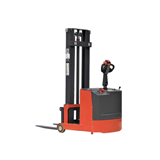
3-wheel electric (1.3-2.0T) | $15,000-$28,000 | Lead-acid battery, 3,000-4,000 mm 2-stage mast, cushion tyres |
4-wheel electric (2.0-3.5T) | $25,000-$50,000 | Lead-acid or lithium, 4,500 mm 3-stage mast, cushion or pneumatic tyres |
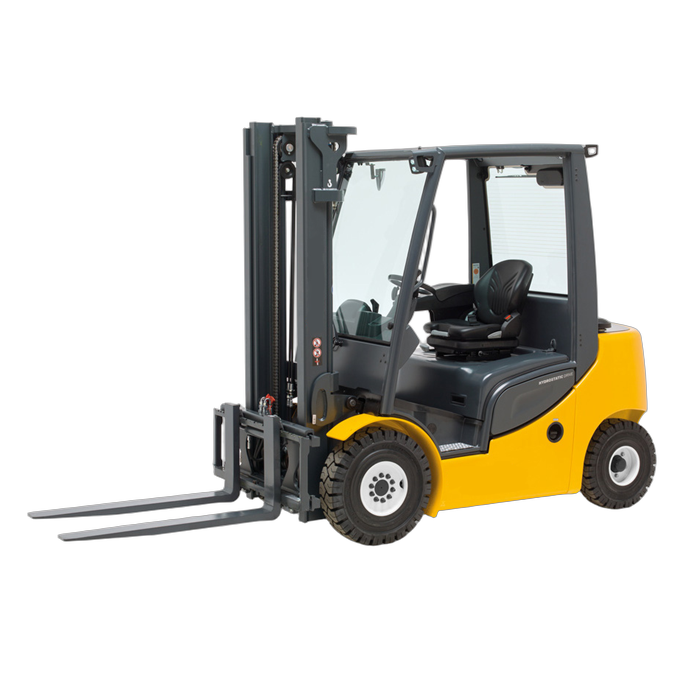
LPG counterbalance (1.8-3.5T) | $28,000-$55,000 | Pneumatic tyres, 4,500 mm mast, cylinder-swap refuelling |
Diesel counterbalance (2.5-7.0T) | $40,000-$75,000+ | Heavy-duty pneumatic, outdoor rated, high-capacity mast |
Used / refurbished (all types) | $8,000-$30,000 | Price varies by hours, brand, condition and service documentation |
Lithium battery upgrade | +$8,000-$15,000 | Added to base electric price; eliminates watering, enables opportunity charging |
Pricing reflects 2026 Australian supplier and dealer market data. All prices exclude GST and delivery. Get quotes for counterbalance forklifts to compare current supplier pricing for your specific capacity and configuration.
Running costs and total cost of ownership
With purchase price confirmed, these are the annual running cost components that determine whether a machine is genuinely cheaper over its working life - or just cheaper to buy.
Running Cost Component | Electric (2.5T, single shift) | LPG (2.5T, single shift) |
|---|---|---|
Energy / fuel | $1,500-$3,000/year | $9,000-$15,000/year |
Scheduled maintenance | $3,000-$5,000/year | $4,000-$9,000/year |
Tyres (annualised) | $800-$1,500/year | $1,000-$2,000/year |
Compliance (inspections, LPG cert) | $500-$800/year | $800-$1,500/year |
Total annual running cost | $6,000-$10,000 | $14,000-$25,000 |
The most common mistake is comparing purchase price without modelling running costs. An LPG unit priced $5,000 below an equivalent electric model costs $8,000-$15,000 more per year to run. At 1,500 hours per year on a single indoor shift, electric reaches lower cumulative cost within 2-3 years. For the full LPG forklift cost breakdown, see the dedicated guide.
Revenue impact and payback
Purchase price is only part of the approval case - the payback calculation matters more. A counterbalance forklift replacing manual handling or an end-of-life unit directly affects labour cost, throughput and downtime risk.
A 2.5-tonne counterbalance handling 80-120 pallets per shift replaces approximately 1.5 FTE of manual labour or pallet jack handling at a loaded cost of $65,000-$85,000 per FTE per year in NSW and VIC. Against a total annual ownership cost of $15,000-$25,000 (finance repayment plus running costs), the payback period on a new unit is typically 6-14 months depending on utilisation. For operations running under 500 hours per year, short-term hire at $250-$400 per week is lower risk than ownership.
Depreciation and asset planning
The ATO effective life for a counterbalance forklift is 11 years. Under diminishing value, the rate is 18.18% per annum; under prime cost, 9.09%. The instant asset write-off threshold for businesses under $10 million aggregated turnover is $20,000 (2024-25) - covering most entry-level 3-wheel electric models at $15,000-$20,000.
For mid-range units above the write-off threshold, a chattel mortgage over 5 years at 7% on a $40,000 unit runs approximately $790 per month. Hire-to-own arrangements at $800-$1,400 per month suit operations with unproven volume where a walk-away option reduces balance sheet risk.
Evaluate suppliers on cost
You are ready to go to market. Use this checklist to assess each counterbalance forklift supplier on cost-related factors specifically.
Factor | What to Ask |
|---|---|
Delivered price | What is the total delivered price including GST, delivery, commissioning and operator familiarisation? |
Service contract cost | What does a full-service maintenance contract cost per year, and what does it include (labour, travel, parts, tyres)? |
Battery cost (electric) | Is the battery included in the quoted price? If lithium, what is the warranty period on the battery pack? |
Fuel cost estimate (IC) | What is the estimated annual fuel cost at my operating hours, and what consumption rate is that based on? |
Tyre replacement cost | What is the cost per set of tyres for this model, and what is the expected replacement interval at my hours? |
Warranty scope | Does the warranty cover powertrain, hydraulics and battery? Is on-site labour included or charged separately? |
Residual / trade-in value | What trade-in or buy-back value can you offer at 5 and 8 years, subject to condition and hours? |
Finance structure | Do you offer chattel mortgage, operating lease or hire purchase, and what rate and term apply? |
Spare parts pricing | What do common wear items (filters, brake pads, forks) cost, and are they Australian-stocked? |
Downtime cost protection | Do you offer a loan unit or priority response if the machine is down during a critical period? |
Frequently asked questions
What is the cheapest counterbalance forklift available in Australia?
Entry-level 3-wheel electric models from established brands start at $15,000-$18,000 AUD for 1.3-1.6 tonne capacity with a basic mast. Budget imports can be lower but carry higher parts and service risk over the machine's life.
How much does it cost to run a counterbalance forklift per year?
A 2.5T electric on single shift costs $6,000-$10,000 per year in energy and maintenance. An equivalent LPG unit on the same shift pattern costs $14,000-$25,000 including fuel, servicing and gas system certification.
Is a used counterbalance forklift worth buying?
Used units at $8,000-$30,000 can deliver good value if supported by documented service history, a pre-purchase inspection and confirmed compliance status. Units without records carry hidden maintenance liability.
What finance options are available for counterbalance forklifts?
Chattel mortgage, equipment lease and hire purchase are all widely available through equipment finance brokers and dealer finance arms. Rates from 6.5-8.5% over 3-5 years are typical for established businesses with clean credit.
How does the instant asset write-off apply to forklifts?
Businesses with aggregated turnover under $10 million can write off assets costing under $20,000 in the year of purchase. Most entry-level electric counterbalance forklifts fall within this threshold at $15,000-$20,000.
What matters most
- Electric models cost $8,000-$15,000 less per year to run than LPG equivalents on single-shift indoor operations.
- A 2.5T counterbalance replacing manual handling typically pays back within 6-14 months at standard utilisation.
- 5-year TCO - not purchase price - is the correct comparison metric when evaluating electric versus IC fuel types.
- ATO depreciation at 18.18% diminishing value over 11 years, with instant write-off available for sub-$20,000 assets.
- If you are building a business case, request at least three quotes to lock in delivered pricing, service contract rates and finance terms.
Most buyers shortlist 2-4 models after comparing quotes and running a 5-year TCO model against their actual shift pattern and operating hours.
Do not waste time contacting suppliers individually. IndustrySearch gives you direct access to verified Australian counterbalance forklift suppliers - where industrial buyers request and compare multiple quotes so they can buy with confidence.
- Get quotes for counterbalance forklifts - contact multiple verified suppliers with a single enquiry
- Compare models - filter by capacity, configuration and region
- Contact suppliers directly - speak to specialists who service your state
? Get and compare counterbalance forklift quotes now

-160x160-state_article-rel-cat.png)




-160x160-state_article-rel-cat.png)