How to use this page
How this page helps you choose the right wheel loader
Choosing the right wheel loader comes down to a handful of decisions, and this page walks you through them in the order that matters most. Get those right and you end up with a machine that suits the work and the budget, without the expensive surprises that tend to show up after delivery. When you are ready, a single brief puts your spec in front of several verified Australian suppliers at once, so every quote you compare is built on the same requirements.
Common setups
The three most common wheel loader setups
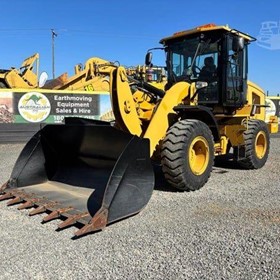
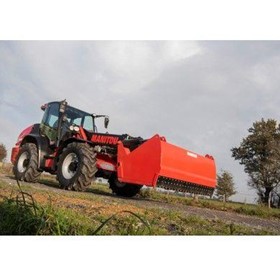
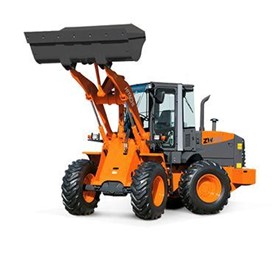
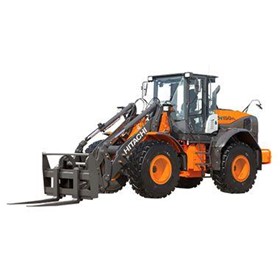
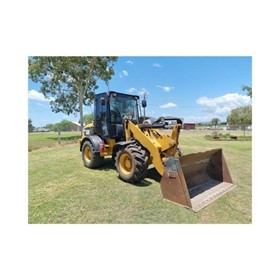
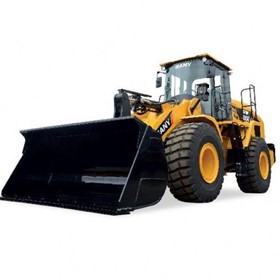
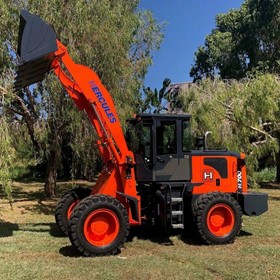
You will likely land on one of these three. Find the one closest to your work, then use the sections below to fine-tune the spec before you send for quotes.
Cost breakdown
What a wheel loader costs, by size class
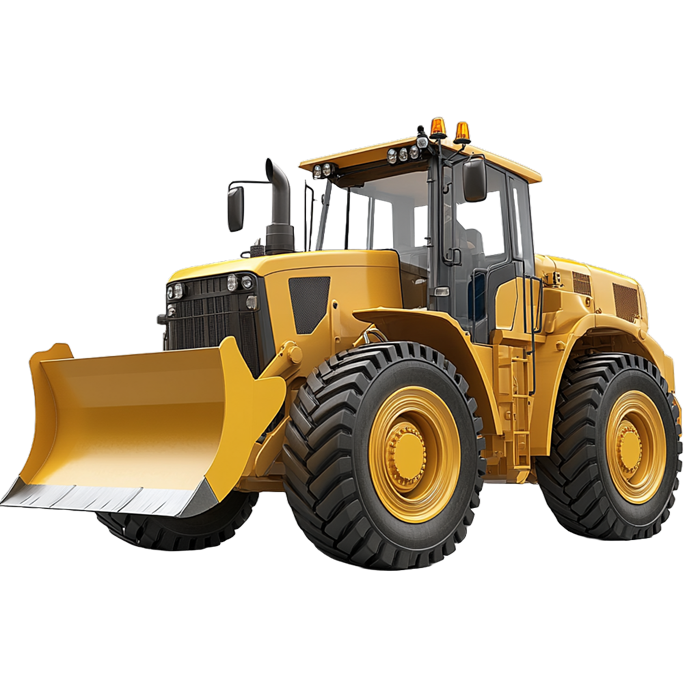
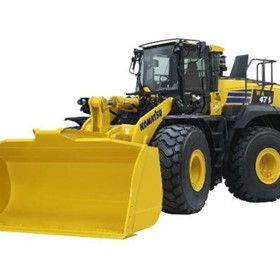
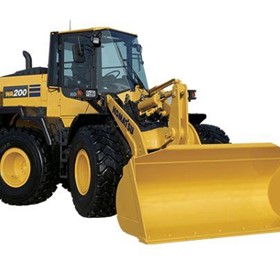
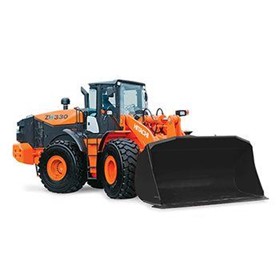
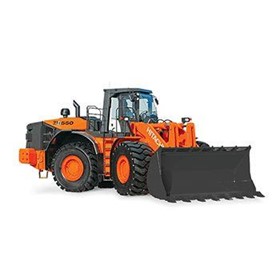
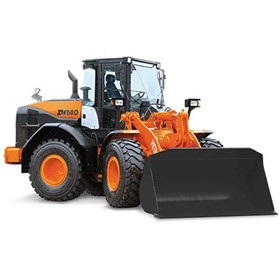
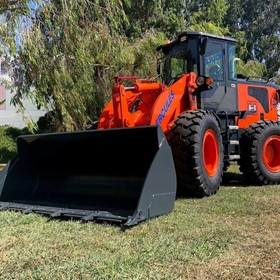
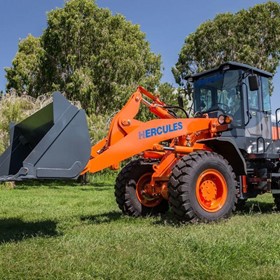
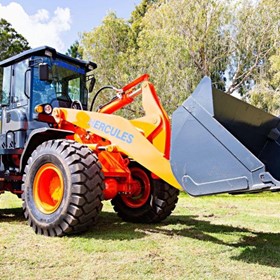
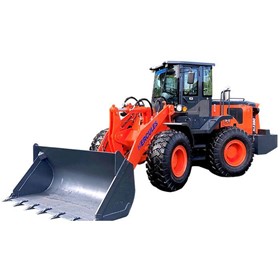
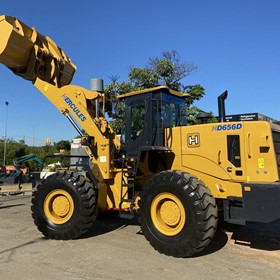
A wheel loader for sale, also called a front end loader, FEL, or payloader, runs from about $30,000 for a compact yard machine to $450,000 or more for a large production loader, with mining-class units climbing past $1,000,000. Operating weight and bucket size set the band. Brand tier then swings the price hard within it.
| Size class | Price AUD, usually quoted before GST | Best fit |
|---|---|---|
| Compact (under 6 t, 0.4 - 1.2 m³) | $30,000 - $90,000 | Yards, landscaping, agriculture, and hire fleets: light material and tight spaces |
| Small (6 - 12 t, 1.5 - 2.5 m³) | $80,000 - $180,000 | Small construction sites, councils, and mixed bulk materials |
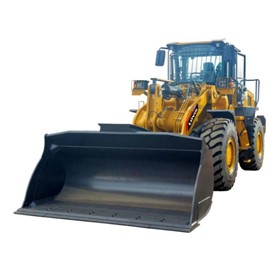
| Medium (12 - 25 t, 2.5 - 5 m³) | $120,000 - $450,000 | The most common construction and quarry class: loading trucks, stockpiling, general earthmoving |
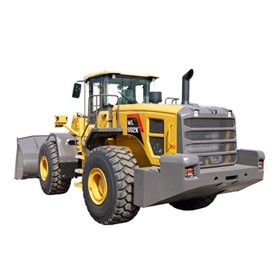
| Large and mining (25 t+, 5 m³+) | $450,000 to $1,000,000+ | Large wheel loaders for high-volume quarry and mine sites: loading haul trucks at production rates |
Size and capacity
Sizing the loader to your material and trucks
One connected decision: how much the loader moves per cycle and what it loads into. Bucket capacity, tipping load, and dump height have to match your material and your trucks. Get this right and the machine works at rate. Get it wrong and you either stall on dense material or buy more loader than the job needs. As a rough guide, a 3 t machine is compact yard work, 12 t is the small-to-medium construction crossover, and 20 t is the common mid-size construction and quarry loader.
| Spec | What it controls | Why it matters |
|---|---|---|
| Bucket capacity | How much you move per pass, measured in cubic metres. | Size it to your material, not just volume. A bucket rated for light mulch overloads on wet sand or rock |
| Tipping load | The safe load before a loaded machine tips forward on a full turn. | This caps real payload more than bucket volume does. Dense material fills the limit fast |
| Breakout force | How hard the bucket digs into a stockpile or bank. | Matters for compacted or bonded material, less for free-flowing loose material |
| Dump and reach height | Whether the bucket clears the side of your truck or hopper. | A loader that cannot dump cleanly over your truck sides slows every cycle. Give suppliers your truck height |
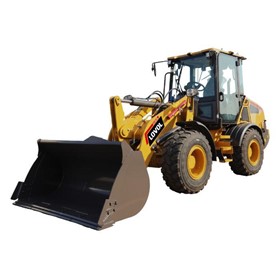
Drivetrain mostly follows size. Compact machines run a hydrostatic drive for smooth stop-start loading. Larger machines run a powershift transmission built for sustained load-and-carry. Most are articulated wheel loaders, with a hinged chassis that turns tightly on confined sites. A compact articulated wheel loader is the pick for tight yards and landscaping, where that turning circle matters most.
Buckets and attachments
Choosing the bucket, coupler and attachments
The bucket and coupler change the spec and the quote as much as the machine itself. Match them to your material and to how often you swap jobs.
- General purpose bucket: the default for sand, soil, and loose aggregate. Most buyers start here.
- Rock or heavy-duty bucket: reinforced with bolt-on edges and teeth for quarry and abrasive material. Costs more and adds weight, which trims payload.
- Light-material or high-capacity bucket: a larger, lighter bucket for mulch, grain, woodchip, and snow. Wrong for dense material.
- High-tip bucket: extra dump height to clear tall truck and hopper sides.
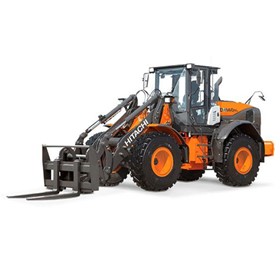
- Quick coupler (quick hitch): lets one machine swap buckets, pallet forks, or a grapple in seconds. Worth it if you change jobs through the day. Confirm whether it is hydraulic or pin-on.
- Auxiliary hydraulics: a third hydraulic line runs grapples, brooms, and other powered attachments. Spec it now if you plan to add them, because fitting it later costs more.
Tyres
Choosing your tyres: solid or pneumatic
Tyres are a real fork on a wheel loader, not an afterthought. They drive a large share of running cost, and they set how the machine copes with your ground. The main choice is pneumatic or solid, then the tread class.
New or used
Buying new and used wheel loaders for sale
Wheel loaders hold up well, so a deep market for used wheel loaders sits alongside new. The right call comes down to hours, warranty, and how exactly the spec has to match your work.
Ownership costs
What the loader costs to run and own
The purchase price is the start. Tyres, fuel, ground engaging tools, servicing, and how close your dealer sits all feed into what the loader costs to run over its life.
| Cost area | What to expect | What moves it |
|---|---|---|
| Tyres | A major running cost on a wheel loader. A full set is a large bill, and it tends to arrive all at once. | Tread class, your ground, travel distance, and pneumatic vs solid |
| Fuel | Diesel is the main running cost. Primary producers and some operators can claim fuel tax credits for eligible off-road diesel. | Engine size, hours, and how hard you load under draft |
| Ground engaging tools | Bucket teeth and cutting edges wear with use and need replacing, more so in abrasive material. | Material abrasiveness, bucket type, and hours worked |
| Servicing | Scheduled services at set hour intervals, plus filters, fluids, and driveline checks. | Hours worked, machine size, and in-house vs dealer servicing |
| Parts and dealer support | Downtime is the hidden cost. A nearby dealer with parts and service keeps the machine working. | Brand support network and distance to the nearest service agent |
Before you quote
What to decide before you request quotes
You do not need every spec nailed down to get useful quotes. Pin these five down and suppliers can price the right loader the first time, instead of sending back a guess.
| 1 | Material and trucks: your main material and its density, the trucks or hoppers you load, and your target cycles per hour. This sets the size class and bucket. |
| 2 | Size and capacity: your operating weight range, bucket capacity, and the tipping load and dump height you need to clear your trucks. |
| 3 | Bucket and attachments: bucket type, whether you want a quick coupler to swap attachments, and any auxiliary hydraulics. |
| 4 | Tyres and ground: your surface and material, so suppliers fit the right tread class, or solid tyres if punctures are a daily problem. |
| 5 | New, used, or budget basis: new or used, whether you are comparing on purchase price or monthly finance, and your delivery location. |
Finance options
Finance options for your wheel loader purchase
A wheel loader is a large upfront cost, and the bucket, coupler, and tyres add to it. To spread that into a regular repayment, many buyers weigh equipment finance alongside the quote comparison. What finance looks like for your business comes down to the answers below. It is also worth checking how the purchase sits under the ATO small business depreciation rules.
| Finance question | What it helps you decide | Why it matters |
|---|---|---|
| What could the repayment be? | Whether the loader fits your cash flow before committing to a quote. | Loaders sit in a price range where a regular repayment is easier to weigh against the work it does than the upfront cost alone. |
| Am I likely to get approved? | Whether your business, trading history, and the loader's value are financeable. | IndustrySearch finance works across a panel of lenders, which can improve the chance of finding a suitable approval pathway. |
| Which finance structure suits the purchase? | Whether to compare chattel mortgage, lease, rental, or a balloon payment. | The right structure can affect ownership, cash flow, and how repayments line up with your income through the year. |
Finance calculator
Estimate my repayment
Adjust the sliders to estimate your wheel loader repayments. Speak with our team for an exact quote based on your profile.
Estimate only, not an offer of finance. Compare quotes and finance options for wheel loaders.
Common questions
Common wheel loader questions to ask before quoting
Quick answers to the most-searched questions about wheel loaders and how IndustrySearch works.
Why use IndustrySearch to buy a wheel loader?
Most buyers want to compare a few quotes before committing to a machine this expensive, and the bucket, tyres, and brand tier make those quotes hard to line up. IndustrySearch gets you 3+ quotes from verified Australian suppliers in one go, so you can compare class, bucket, tyres, lead time, and dealer support side by side without ringing around dealers one by one.
Does it cost more to buy a wheel loader through IndustrySearch?
No. The service is free for buyers, and suppliers quote you their normal direct prices with no markup. Getting multiple quotes side by side often sharpens pricing, because suppliers know they are competing for your job.
Why do suppliers list with IndustrySearch?
IndustrySearch has connected Australian buyers with industrial and construction equipment suppliers since 2005. Suppliers list with us because they get pre-qualified leads from buyers who are actively in market, rather than tyre-kickers from generic search. Every supplier is vetted before listing, so you only see reputable Australian brands with the service capability to back up what they sell.
What size wheel loader or front end loader do I need?
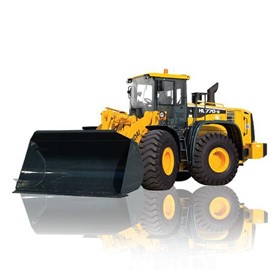
Work back from the job. Under 6 t with a 0.4 to 1.2 m³ bucket suits yards, landscaping, and light material. 6 to 12 t covers small sites and councils. 12 to 25 t with a 2.5 to 5 m³ bucket is the common construction and quarry class. 25 t and above is production and mining territory. Tell suppliers your main material, the trucks you load, and your target cycles per hour so they size it right.
Do I need a licence to operate a wheel loader?
A wheel loader is not a forklift, so it does not need a national high risk work licence. The duty sits with the employer instead: under work health and safety law, the business must make sure the operator is trained and competent, usually through a verification of competency against the national unit for wheeled front-end loader operations. Mining and some sites add their own requirements, and a road-registered machine brings in licensing rules that vary by state. See Safe Work Australia and check your state regulator.
What bucket capacity should I get?
Size it on the material, not just the volume. A bucket rated for light material like mulch will overload on dense material like wet sand or rock and hit the machine's tipping limit. Match the bucket to your material density and check the tipping load and dump height against the trucks you load. Suppliers can match all three as a set once you give them your material and truck details.
Should I get solid or pneumatic tyres?
Pneumatic tyres are the standard choice for most construction and yard work: they ride better, travel faster, and cost less. Solid tyres cannot puncture, so they suit scrap, recycling, and steel sites where flats are constant, but they ride harder and cost more. For pneumatic, match the tread class to your ground: L2 for soft, L3 for general loading, L4 to L5 for quarry and sharp rock.
How many hours is too many on a used wheel loader?
Hours matter less than service history and how the loader was used. A well-maintained machine at higher hours can beat a neglected low-hour one. Many loaders work well past 10,000 to 15,000 hours when serviced properly. When comparing used wheel loaders for sale, check the driveline, hydraulics, pins and bushes, bucket, and tyres, not just the meter.
How quickly can I get a wheel loader delivered?
In-stock machines from Australian dealers can arrive within 1-2 weeks, including pre-delivery checks. Used and ex-demo are often fastest. Built-to-order new units, especially with a specific bucket, coupler, and tyre setup, can take longer. Ask each supplier what is in stock against your spec before you finalise it.
How long does finance pre-approval take?
Equipment finance pre-approval is usually quick, often within a few business days once you provide basic business and financial details. Pre-approval lets you compare quotes knowing your repayment and borrowing capacity, without committing to a purchase.
What documents do I need to apply for equipment finance?
For most equipment finance under a set threshold, lenders ask for limited paperwork: your business ABN and trading history, recent bank statements, and details of the loader being financed. Larger amounts can need business financials or tax returns. IndustrySearch finance works across a panel of lenders, so the exact requirements vary by amount and lender.
Why IndustrySearch
Why buyers choose IndustrySearch
Helping Australian buyers compare wheel loaders for sale since 2005.