
Key takeaways
Factor | Typical Range / Value | Buyer Implication |
|---|---|---|
Towing capacity range |
500 kg – 10,000 kg |
Match to your heaviest loaded trolley or cart — not the empty weight |
Price range (new, AUD 2026) |
$5000 – $60,000+ |
Capacity and coupling type set the price bracket |
Battery runtime |
4 – 10 hours per charge |
Match to shift length; lithium-ion charges faster than lead-acid |
Licence requirement |
No HRWL required |
Pedestrian tugs do not require a forklift licence — operator training is still a WHS obligation |
Duty cycle |
Intermittent vs continuous |
Continuous-use sites need higher-rated motors and lithium batteries |
Key sizing factor |
Rolling resistance, not just load weight |
Floor surface, castors and gradient all affect the tug size you need |
Annual maintenance cost |
$300 – $1,200 |
Significantly lower than forklift servicing — factor into ROI |
Why Australian operations are switching to electric tugs
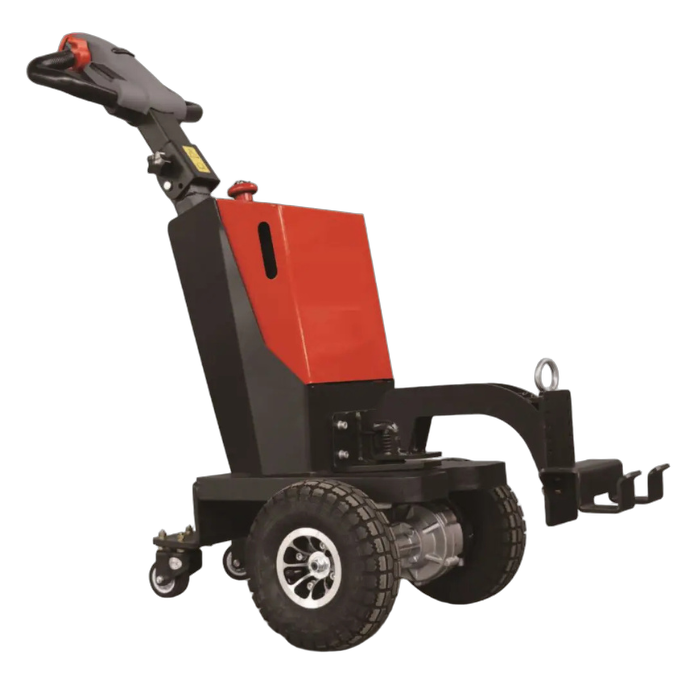
Electric tugs are pedestrian-operated battery-powered machines that allow a single operator to push or tow wheeled loads from 500 kg to over 10,000 kg. Australian warehouses, hospitals, food processors and manufacturers are adopting them to cut manual handling injuries — the single largest category of workplace compensation claims in NSW and Victoria — while reducing reliance on licensed forklift operators.
This guide walks you through the four variables that determine the right tug size: towing capacity, load type, duty cycle and floor conditions. By the end, you will know which capacity class fits your site and what to budget. Compare electric tugs from verified Australian suppliers on IndustrySearch once you have your spec locked in.
Electric tugs are standard equipment across:
- Warehousing and distribution — moving roll cages, loaded trolleys and pallet trains
- Food and beverage manufacturing — stainless steel tugs for washdown environments
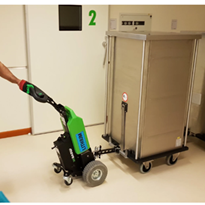
- Hospitals and aged care — moving bed frames, linen trolleys and meal carts through tight corridors
- Aviation and airports — towing baggage carts and light aircraft
- Manufacturing and assembly lines — pulling heavy components or finished goods between stations
Choose your capacity class
Before costing anything, confirm which capacity class suits your operation. Your choice here sets your price bracket and most of the specs that follow.
Capacity Class | Towing Range | Best For |
|---|---|---|
Compact / light-duty |
500 – 1,500 kg |
Hospitals, retail back-of-house, linen and meal carts |
Mid-range |
1,500 – 5,000 kg |
Warehouse roll cages, food manufacturing, loaded trolley trains |
Heavy-duty |
5,000 – 10,000+ kg |
Aircraft towing, vehicle assembly, heavy plant movement |
If your heaviest loaded trolley weighs under 1,500 kg and you operate on flat, smooth floors — a compact pedestrian tug in the $5000–$8,000 range will handle it. These units suit hospital corridors, retail stockrooms and office mail runs where manoeuvrability matters more than raw power.
If you are moving roll cages, pallet trains or industrial bins between 1,500 kg and 5,000 kg — you need a mid-range unit with weight-transfer technology or a heavier chassis. This is the most common bracket for Australian warehouse and manufacturing operations. Budget $8,000–$25,000 depending on coupling and battery type.
Heavy-duty tugs above 5,000 kg suit specialised applications — aircraft hangars, bus depots and heavy plant. These start at $25,000 and can exceed $60,000 for custom-engineered models.
Evaluate the key specifications
With your capacity class confirmed, these are the specs that determine whether a given model fits your site.
Specification | Typical Range | Buyer Consideration |
|---|---|---|
Towing capacity |
500 – 10,000+ kg |
Always rate to the heaviest loaded weight you will move — add 20% buffer for slope or poor castors |
Battery type |
Lead-acid or lithium-ion |
Lithium charges in 2–3 hours and lasts 2–3× longer per cycle; lead-acid is cheaper upfront but needs 8–10 hour charge |
Runtime per charge |
4 – 10 hours |
Must cover a full shift; if running two shifts, lithium-ion with opportunity charging is the only realistic option |
Coupling type |
Universal hitch, pin coupling, custom |
Confirm your trolleys or carts have a compatible tow point — custom couplings add $500–$2,000 |
Turning radius |
800 mm – 1,600 mm |
Measure your tightest corridor or doorway — compact tugs fit under 1,000 mm |
Travel speed |
3 – 6 km/h |
Pedestrian tugs are capped at walking pace for safety; ride-on tugs reach 8–10 km/h |
IP rating |
IP44 – IP65 |
Washdown environments (food, pharma) need IP65 minimum — stainless steel housings available |
Understand the full cost breakdown (2026 prices)
Purchase price is only part of the picture — most cost models that get rejected at approval stage have missed the running cost layer. Here is the full breakdown.
Category | Price Range (AUD) | Typical Configuration |
|---|---|---|
New — compact (up to 1,500 kg) |
$5000 – $8,000 |
Lead-acid battery, universal hitch, pedestrian-operated |
New — mid-range (1,500–5,000 kg) |
$8,000 – $25,000 |
Lithium-ion, weight-transfer chassis, adjustable coupling |
New — heavy-duty (5,000–10,000+ kg) |
$25,000 – $60,000+ |
Custom coupling, electric steer, remote control optional |
Used / refurbished |
$2,000 – $15,000 |
Check battery age and remaining cycle life before purchase |
Annual maintenance |
$300 – $1,200 |
Battery checks, wheel/castor replacement, coupling inspection |
Battery replacement (lithium-ion) |
$1,500 – $5,000 |
Every 5–8 years depending on charge cycles |
Total cost of ownership over five years on a mid-range tug typically sits at $12,000–$32,000 including purchase, maintenance and one battery replacement on lead-acid models. Lithium-ion units cost more upfront but avoid battery replacement within the first five years and charge faster, reducing downtime. For multi-shift operations in NSW or VIC distribution centres, lithium-ion pays back the premium within 18–24 months through reduced charging downtime alone. Request quotes from verified electric tug suppliers on IndustrySearch to compare TCO across capacity classes.
Plan the asset (depreciation and financing)
The ATO effective life for electric tugs and powered trolleys falls under “materials handling equipment” at 10 years. Under the diminishing value method, the depreciation rate is 20%; under the prime cost method, 10% per annum. The instant asset write-off threshold for the 2025–26 financial year is $20,000 for eligible small businesses — compact and many mid-range tugs fall within this.
Residual value on a well-maintained electric tug at 8–10 years sits at roughly 10–15% of new price. For operations where load volumes are seasonal or unproven, short-term hire at $80–$250 per week (depending on capacity) lets you validate before committing to a capital purchase.
Evaluate suppliers
You are ready to go to market. Use this checklist to assess each supplier against the same criteria.
Factor | What to Ask |
|---|---|
Rated towing capacity |
Is the stated capacity tested on flat concrete, or does it account for slope and castor resistance? |
Coupling compatibility |
Can the supplier provide a coupling that fits your existing trolleys or carts — and is it included in the price? |
Battery type and warranty |
Lithium-ion or lead-acid? What is the warranty period on the battery pack? |
Charger included |
Is the charger supplied with the unit or priced separately? |
On-site trial |
Will the supplier run a paid or free trial on your actual loads and floors before purchase? |
Service network |
Where is the nearest service technician? What is the standard response time in your state? |
Spare parts availability |
Are common wear parts (wheels, couplings, batteries) held in Australian stock? |
IP rating / washdown suitability |
If operating in food, pharma or wet environments — is the unit rated IP65 and available in stainless steel? |
Warranty terms |
What does the warranty cover (motor, electronics, battery, frame) and for how long? |
Hire and lease options |
Is short-term hire or hire-to-own available if you need to validate before a capital commitment? |
Frequently asked questions
How much does an electric tug cost in Australia?
New electric tugs in Australia range from $5000 for a compact 500 kg pedestrian model to over $60,000 for a heavy-duty 10,000 kg unit with custom coupling and electric steer. Used units start from around $2,000 depending on age and battery condition.
What towing capacity do i need for roll cages in a warehouse?
A fully loaded roll cage typically weighs 300–500 kg. If you are towing a train of three to four cages, you need a tug rated to at least 2,000 kg — budget for the mid-range bracket starting at $8,000.
Do i need a forklift licence to operate an electric tug?
No. Pedestrian-operated electric tugs do not require a High Risk Work Licence. Under the WHS Act 2011, the PCBU must provide documented operator training and maintain training records.
How long does the battery last on a single charge?
Lead-acid batteries typically deliver 4–6 hours of runtime and require 8–10 hours to recharge. Lithium-ion units run 6–10 hours and recharge in 2–3 hours, making them the only practical option for multi-shift sites.
What is the expected lifespan of an electric tug?
A quality electric tug lasts 8–12 years in a commercial environment. The main wear items are batteries (replace every 3–5 years for lead-acid, 5–8 years for lithium-ion) and drive wheels, which cost $150–$400 per set.
Summary
- Size to your heaviest loaded weight plus 20% buffer for slope, castors and floor surface
- Compact tugs (under 1,500 kg) suit healthcare, retail and light warehouse work — from $5000
- Mid-range tugs (1,500–5,000 kg) cover most warehouse and manufacturing applications — $8,000–$25,000
- Lithium-ion batteries pay back the premium on multi-shift sites within 18–24 months
- No forklift licence required, but operator training is a WHS obligation
- Request an on-site trial before committing — rolling resistance varies significantly between sites
Ready to source your electric tug?
Don’t waste time contacting suppliers individually. IndustrySearch gives you direct access to verified Australian electric tug suppliers — compare models, specs and pricing in one place, then request quotes from suppliers best matched to your operation.
- Compare models — filter by capacity, configuration and region
- Request quotes — contact multiple verified suppliers with a single enquiry
- Contact suppliers directly — speak to specialists who service your state
→ Compare Electric Tugs on IndustrySearch Now →




-205x205.jpg)