
Key takeaways
- Tower cranes are critical to Australia’s vertical build pipeline, with over 70% of high-rise construction projects in capital cities relying on at least one tower crane at peak build stages.
- Purchase prices typically range from $750,000 to over $3 million, depending on crane type, jib length, lifting capacity and height under hook.
- Climbing strategy matters: Internal climbing cranes can reduce footprint but add 15–25% to installation and engineering costs.
- Downtime is expensive: One idle tower crane can cost $10,000–$25,000 per day in lost productivity on major projects.
- Compliance is non-negotiable:Tower cranes must meet AS 1418, WHS Regulations, and state-based high-risk work licensing requirements.
- Financing and hire-to-own models are increasingly common, helping contractors preserve working capital amid rising construction costs.
Introduction: Why tower cranes matter in Australia’s construction market
Australia’s construction industry is undergoing a structural shift. With land scarcity in metro areas, infrastructure densification, and continued demand for residential and mixed-use developments, building “up” rather than “out” has become the norm.
According to the Australian Bureau of Statistics, building approvals for high-density residential projects have consistently outpaced detached housing approvals in Sydney, Melbourne and Brisbane since 2022. Tower cranes are no longer specialist assets reserved for mega-projects; they are now core infrastructure for Tier 2 and Tier 3 builders.
Choosing the right tower crane directly affects:
- Construction timelines
- Labour efficiency
- Safety outcomes
- Project profitability
This guide walks you through everything you need to know before buying a tower crane in Australia.
What is a tower crane and how does it work?
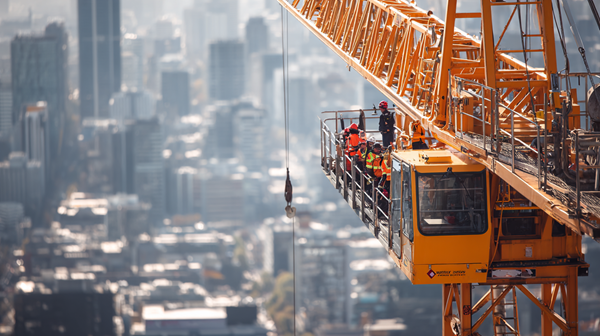
A tower crane is a fixed or climbing crane designed to lift heavy materials vertically and horizontally across large construction sites. It consists of:
- A mast (tower) anchored to a concrete base or building structure
- A slewing unit allowing 360-degree rotation
- A jib (working arm) and counter-jib
- A hoist system for lifting loads
- A cab or remote-control system
Tower cranes excel where reach, height and load precision are required simultaneously.
Types of tower cranes used in Australia
Flat-top (hammerhead) tower cranes
Best suited for congested sites and multi-crane projects.
Key features
- No apex or tie bars
- Easier to erect near other cranes
- Popular on CBD projects
Typical capacity
- 6–20 tonnes maximum load
- 50–80 metres jib length
Luffing-jib tower cranes
Common in dense urban environments with airspace restrictions.
Key features
- Variable jib angle reduces oversailing
- Higher purchase and operating costs
- Preferred in Sydney and inner Melbourne
Typical capacity
- 10–64 tonnes
- Jib length up to 60 metres
Self-erecting tower cranes
Often used for smaller commercial or residential builds.
Key features
- Faster installation
- Lower height and load capacity
- Limited reach
Typical capacity
- 1–8 tonnes
- 20–40 metres reach
Internal and external climbing cranes
Used for high-rise developments.
- Internal climbing: climbs within the building core
- External climbing: tied to the structure as it rises
These cranes reduce ground footprint but increase engineering and coordination requirements.
Tower crane pricing in Australia
Tower crane costs vary widely depending on configuration and project requirements.
Indicative purchase prices
- Self-erecting tower crane: $300,000 – $800,000
- Flat-top tower crane: $900,000 – $2.5 million
- Luffing-jib tower crane: $1.8 – $3.5 million+
Additional costs to factor in
- Foundations and base design: $80,000–$300,000
- Erection and dismantling: $150,000–$400,000
- Engineering and wind analysis
- Transport between sites
For many contractors, total lifecycle cost matters more than sticker price.
Operational considerations before you buy
Load charts and lift planning
You must match crane capacity to your heaviest lift at maximum radius, not just headline tonnage. Over-specifying wastes capital; under-specifying creates safety and scheduling risks.
Wind conditions
Australia’s variable wind profiles are a critical factor. Coastal and high-rise sites often require cranes rated for higher wind tolerance and advanced anti-collision systems.
Operator availability
The industry faces ongoing skills shortages. According to Master Builders Australia, crane operators remain one of the hardest roles to fill in 2025, increasing the value of:
- Ergonomic cabs
- Remote or assisted operation systems
- Predictive maintenance tech
Maintenance and lifecycle management
Tower cranes are long-life assets, often operating for 20–30 years if properly maintained.
Routine maintenance includes
- Daily pre-start inspections
- Weekly lubrication
- Monthly mechanical and electrical checks
- Annual major inspections
Planned maintenance reduces unscheduled downtime, which can cost tens of thousands per day on active sites.
Spare parts and aftermarket support
Parts availability is a critical buying consideration.
Key components to assess
- Hoist motors
- Slew rings
- Control systems
- Wire ropes
- Braking systems
In Australia, buyers favour manufacturers with local parts warehouses and service technicians, reducing lead times and project risk.
Financing, hire and ownership models
Outright purchase
Best for large contractors with consistent crane utilisation.
Hire-to-own
Increasingly popular for mid-tier builders, allowing:
- Lower upfront capital
- Predictable monthly costs
- Ownership at term end
Finance lease or chattel mortgage
Commonly used to preserve working capital while retaining asset control.
With interest rates stabilising in 2025, many buyers are revisiting ownership as a hedge against rising hire costs.
Warranties and manufacturer support
Standard tower crane warranties typically range from 12 to 36 months, covering:
- Structural components
- Mechanical systems
- Electrical controls
Extended warranties and service contracts can significantly reduce risk, especially for cranes deployed across multiple projects.
Compliance and certification in Australia
Tower cranes are among the most heavily regulated items of plant in Australia.
Key compliance requirements
- Must comply with AS 1418 (Cranes, Hoists and Winches)
- Registration as registrable plant with the state regulator
- Operators must hold a High Risk Work Licence (Tower Crane – CT)
- Regular inspections by a competent person
- Safe Work Method Statements (SWMS) for erection and climbing
Failure to comply can result in site shutdowns, fines and serious liability exposure.
Common buyer questions about tower cranes
Should i buy or hire a tower crane?
If your utilisation exceeds 65–70% annually, ownership often becomes more cost-effective than long-term hire.
How long does installation take?
Typical erection times range from 3 to 7 days, depending on crane size, site access and weather conditions.
What is the lifespan of a tower crane?
With proper maintenance, many tower cranes remain operational for 25 years or more.
Are used tower cranes a good option?
They can be, provided:
- Full service history is available
- Structural inspections are completed
- Control systems meet current safety standards
Do i need council approval?
While councils don’t approve cranes directly, oversailing, height and road occupancy approvals are often required as part of the development consent.
Final thoughts: Buying with confidence
A tower crane is not just a piece of equipment; it is the backbone of your vertical construction capability. The right crane improves productivity, reduces risk and protects margins in an industry where delays are costly.
By focusing on fit-for-purpose capacity, lifecycle costs, compliance, and local support, you position your business to deliver projects safely, efficiently and profitably in Australia’s demanding construction environment.
If you approach the purchase strategically, a tower crane becomes not a cost centre, but a competitive advantage.