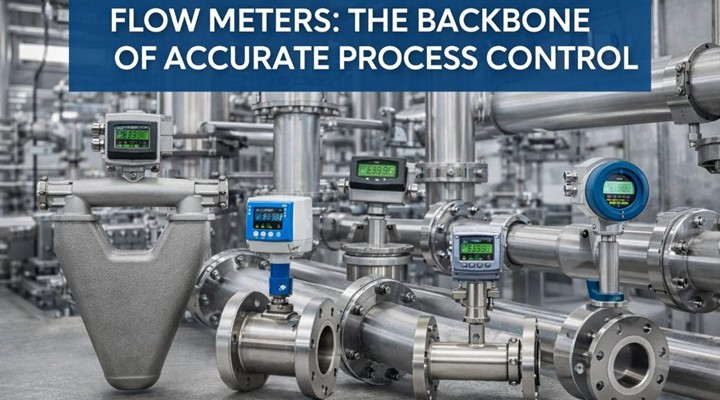
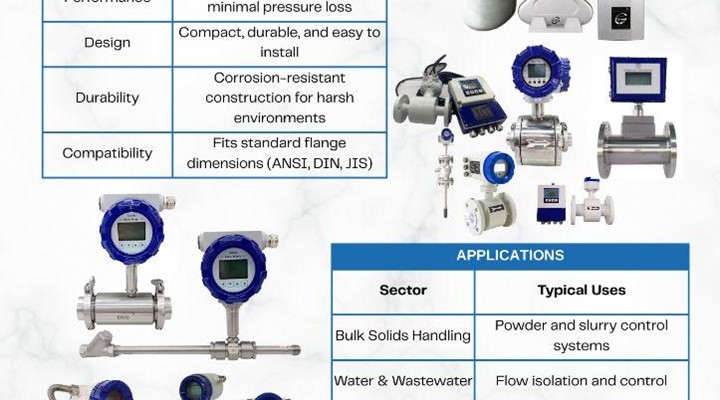

In industrial environments, flow measurement is not merely an instrumentation function — it is a primary control variable that directly influences operational efficiency, regulatory compliance, and energy performance.
Across water treatment facilities, oil and gas processing plants, steam distribution networks, food manufacturing lines, and HVAC infrastructure, inaccurate flow measurement introduces systemic inefficiencies that compound over time.
The impact can include:
-
Overdosing treatment chemicals
-
Boiler inefficiencies
-
Unstable batching processes
-
Increased energy consumption
-
Premature equipment wear
Selecting the appropriate flow measurement technology is therefore a strategic engineering decision rather than a routine purchasing task.
Understanding Flow Measurement Technologies
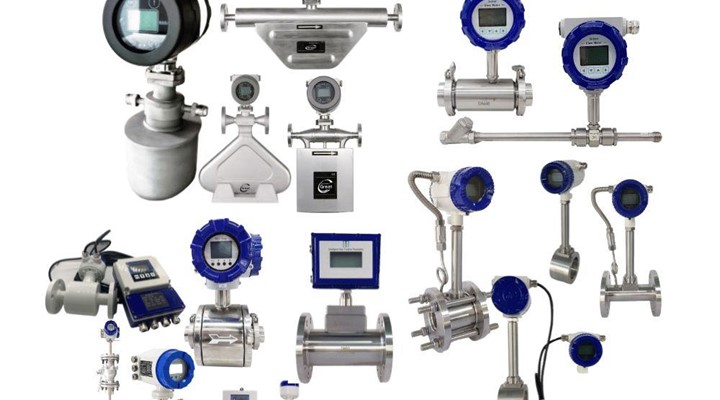
Industrial flow measurement technologies are designed to address specific process conditions. There is no universal meter suitable for every application. Proper selection depends on fluid properties, operating conditions, accuracy requirements, and system integration needs.
Coriolis Mass Flow Measurement
Coriolis meters measure mass flow directly by vibrating flow tubes and detecting the induced Coriolis force. The resulting phase shift allows precise mass flow calculation, typically within ±0.1–0.5% accuracy.
They are widely used in:
-
Custody transfer applications
-
High-value chemical dosing
-
Multi-phase flow measurement
-
Slurry and viscous fluid handling
Coriolis technology is often selected where measurement accuracy directly impacts revenue, safety, or compliance.
Electromagnetic Flow Measurement
Magnetic flow meters operate based on electromagnetic induction and are designed exclusively for conductive liquids.
Key advantages include:
-
No moving parts
-
Minimal maintenance requirements
-
Strong long-term stability
-
Resistance to pressure loss
They are commonly deployed in water treatment plants, wastewater systems, slurry pipelines, and chemical processing environments where reliability and durability are critical.
Turbine Flow Measurement (Gas & Liquid)
Turbine meters measure flow rate based on rotational velocity proportional to fluid movement.
-
Gas turbine meters are suited for natural gas distribution and compressed air systems.
-
Liquid turbine meters are designed for clean, low-viscosity fluids and are commonly used in batching and fuel measurement systems.
They provide high accuracy in stable, clean flow conditions.
Vortex Flow Measurement
Vortex meters operate by detecting vortex shedding frequency created by fluid passing a bluff body.
They are particularly effective in:
-
Steam systems
-
Energy management applications
-
Utility measurement environments
Vortex meters offer durability, high-temperature resistance, and strong performance in demanding industrial conditions.
Integration into Modern Control Systems
Modern industrial facilities rely on interconnected control platforms such as PLC, SCADA, and DCS systems. Flow meters must integrate seamlessly through standard communication protocols, including:
-
4–20 mA
-
Modbus
-
HART
-
Profibus and Fieldbus
When properly integrated, flow measurement data becomes actionable process intelligence. When poorly specified, it creates noise and instability within control loops.
Operational & Financial Impact
Accurate flow measurement contributes directly to measurable performance improvements, including:
-
Energy optimisation
-
Reduced process variability
-
Improved compliance documentation
-
Stable product quality
-
Extended equipment lifespan
Measurement accuracy influences profitability. Even small deviations in high-volume systems can translate into significant financial impact over time.
Final Engineering Perspective
Flow measurement is not an auxiliary instrument. It is foundational to process control architecture.
When correctly specified and integrated, flow instrumentation becomes a strategic asset that supports operational stability, compliance, and long-term efficiency.








-160x160-state_article-rel-cat.png)



-205x205.jpg)
-205x205.jpg)